
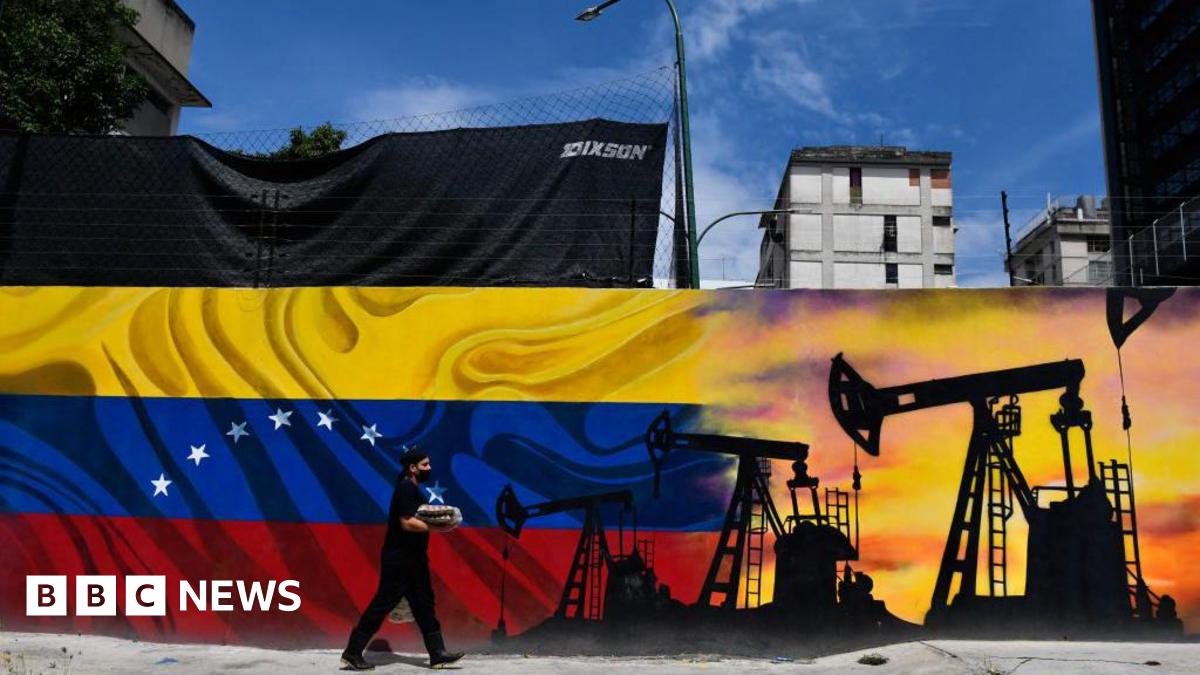
It is true that with an estimated 303 billion barrels, Venezuela is home to the world’s largest proven oil reserves.
But the amount of oil the country actually produces today is tiny by comparison.
Output has dropped off sharply since the early 2000s, as former President Hugo Chavez and then the Maduro administration tightened control over the state-run oil company, PDVSA, leading to an exodus of more experienced staff.
Though some Western oil firms, including the US company Chevron, are still active in the country, their operations have shrunk significantly as the US has widened sanctions and targeted oil exports, aiming to curb Maduro’s access to a key economic lifeline.
Sanctions – which the US first put in place in 2015 during President Barack Obama’s administration over alleged human rights violations – have also left the country largely cut off from the investment and the parts it needs.
“The real challenge they’ve got is their infrastructure,” says Callum McPherson, head of commodities at Investec.
In November, Venezuela produced an estimated 860,000 barrels per day, according to the latest oil market report from the International Energy Agency.
That is barely a third of what it was 10 years ago and accounts for less than 1% of world oil consumption.