
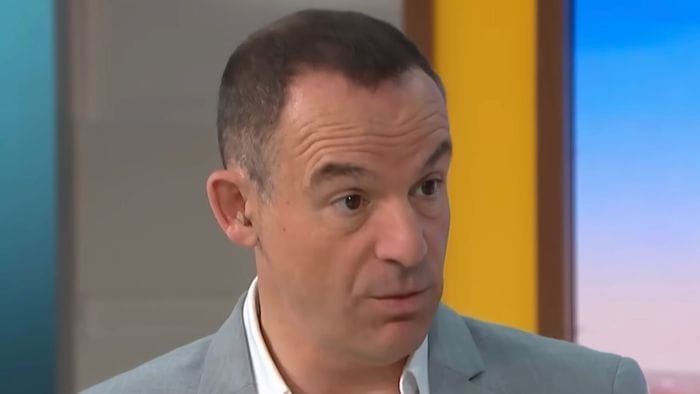
PENSION SHOCK: Lewis warns pensioners with only small top-ups could be penalised when the State Pension rises (Image: ITV)
Martin Lewis has issued a fresh warning to millions of State Pension recipients as he revealed some could soon be dragged into paying income tax – even if the pension is their only source of income. Speaking on his new BBC podcast, the MoneySavingExpert founder said growing concern among pensioners is justified after Chancellor Rachel Reeves confirmed income tax thresholds will remain frozen until 2031.
The move means more people will fall into tax bands each year as inflation pushes up wages and pensions, a phenomenon known as ‘fiscal drag’. At present, people begin paying income tax once they earn above £12,570. But because the State Pension rises each year under the triple lock – by at least 2.5% – it is on track to cross that threshold in 2027, pushing those on the full new State Pension into the tax system for the first time.
Lewis was responding to a question from listener Jinx, who asked whether the ‘tiny amounts’ mentioned in the Budget referred to her situation. She currently receives a full State Pension plus a small private pension of £100 a month and already pays £7 tax.
MORE ON MONEY
He said: “I suspect this is someone who saw the interview I did with the Chancellor on my TV show and which I put on social media. It was a really interesting one because I asked the Chancellor ‘we know that from 2027 someone on the full new State Pension will start to pay tax even with no other earnings’.”
Lewis explained that from April 2026, the full new State Pension will sit just £25 below the tax-free personal allowance – and with the triple lock pushing it up each year, by 2027 it will exceed the threshold while the allowance remains frozen. He continued: “So my concern when I asked the Chancellor about this… I wanted to understand from an administrative basis how she was going to protect… my father is an 85-year-old with onset dementia, is he going to have to do a self-assessment return.”
Reeves’ response caught his attention. Lewis said: “The Chancellor answered, and I caught something in her answer, so I said ‘sorry, are you saying they won’t have to do the self-assessment return, or are you saying that people won’t have to pay tax?’ And she said ‘no I’m saying that people who get the full new State Pension and have no other earnings will not have to pay tax in the terms of this Parliament.’”

He noted that some people on the older pension system – who receive both the basic State Pension and the additional SERPS payment – are already slightly over the personal allowance solely through pension income. Lewis said he has received a surge of questions since the interview but stressed that the Government has yet to reveal how the system will be implemented, reported Ben Hurst from the Express.
“What was fascinating was that in the Budget, that’s what she’d thought she’d said. But nobody picked up on it… what she actually meant was they wouldn’t actually have to pay tax,” he said.
He then raised a scenario involving someone with the full new State Pension plus a very small private pension of just £50 a year. According to Reeves, the guarantee only applies to people who receive only the full new State Pension and no other income.
For Jinx, the news offered no relief. Lewis told her: “I’m afraid to say that in your case you’re a tiny bit over the threshold because you have other income, £100 a month, you will have to pay tax.”
He added that the Chancellor has said the Government is still ‘working through how we will do this’, and that final details are not yet confirmed. Looking ahead, Lewis warned that some people could end up in an unfair position.
He said: “You could have somebody who has the new State Pension but doesn’t have the full new State Pension… has a private pension but tops it up a little bit, is earning over the threshold but less than the full new State Pension but because it’s a mix of state pension and private pension would have to pay tax on it. That does feel a little bit unjust.”
READ NEXT