
(Credits: Far Out / Album Cover)
Sat 13 December 2025 2:00, UK
One could argue that the song ‘Psycho Killer’ has generated more attention in 2025 than it did when it became the first and arguably still most recognised hit by the Talking Heads back in 1977.
Not only did the pioneering post-punk track finally get the “official video” treatment this year, but several early demos and alternative versions of the song have also drawn renewed interest, including a newly discovered first-ever demo that David Byrne and Chris Frantz recorded with their pre-Talking Heads art school band in the mid-1970s.
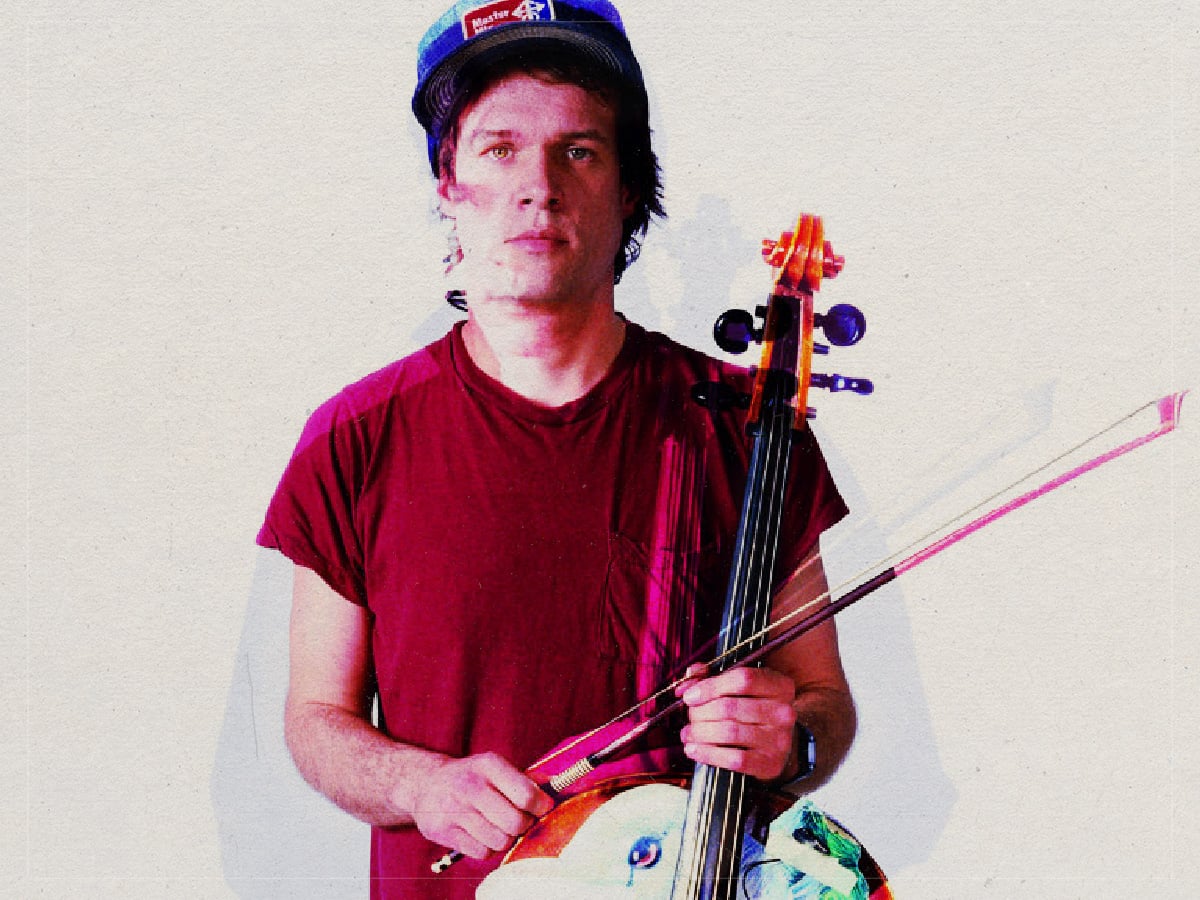
Arguably the most interesting and legendary of the ‘Psycho Killer’ variants from the multiverse, however, is the early “acoustic” version featuring the great Arthur Russell on cello. This recording has been around since the beginning, released as a B-side to the original single, but its inclusion on the recent “Super Deluxe” edition of Talking Heads: 77 has introduced many more listeners to Russell’s contributions.
Opinions certainly vary on whether the added depth and heft of the acoustic take on ‘Psycho Killer’ actually suits the song better. Talking Heads guitarist Jerry Harrison seemed to be in the “no cello” camp, writing in the liner notes to the band’s 1992 ‘Best Of’ collection that he was “glad we persuaded [producers] Tony [Bongiovi] and Lance [Quinn] that the version with the cellos shouldn’t be the only one.”
David Byrne always had a soft spot for the B-side, though. “Somewhat perversely,” he explained in the press kit for the Super Deluxe release, “I always saw [‘Psycho Killer’] as being a slightly more intimate folk rock thing rather than the rock song that folks seemed to love. So I had a special attachment to this version.”
It’s important to note that Byrne also had a special attachment and admiration for Arthur Russell, as did countless other boundary-pushing artists of the 1970s and ‘80s. Look no further than the fact that three New York icons, Byrne, composer Philip Glass, and poet Allen Ginsberg, all sat down together in 1994 just to discuss their appreciation for Arthur Russell and his music. It was a conversation recorded to promote a posthumous album of Russell’s recordings, released two years after his death from AIDS in 1992.
In that video, David Byrne goes into further detail about Russell’s contributions to the early sound of the Talking Heads, and how it went well beyond his work on ‘Psycho Killer’: “Talking Heads was just getting started, I had just moved [to New York], and at one point [Russell] did some horn arrangements for a couple of our songs. And they were peculiar horn arrangements. I had to completely reorient my thinking, and I found that that was often the case with Arthur.”
“He seemed to have such a wide range of musical interests,” Byrne added, “that at one point he would do something that would seem very avant-garde, or whatever word you want to use, and then the next minute he would say, ‘What I really wanna do is sound like ABBA.’”
Russell was a fellow art school kid and roughly the same age as Byrne, but he’d discovered, a bit sooner than the Talking Heads did, that the merits of a musical influence had nothing to do with its supposed coolness or street cred among journalists or hipsters. Russell embraced disco and pop just as much as he did Philip Glass’s high-brow minimalism, and that open-mindedness rubbed off on Talking Heads as the band evolved, picking up more elements from funk, afrobeat, and electro-pop as they hit their creative peak in the early 1980s.
“He left a huge legacy of recordings, which are still filtering out 40 years after his passing,” Byrne said of Russell in 2024.
Related Topics