
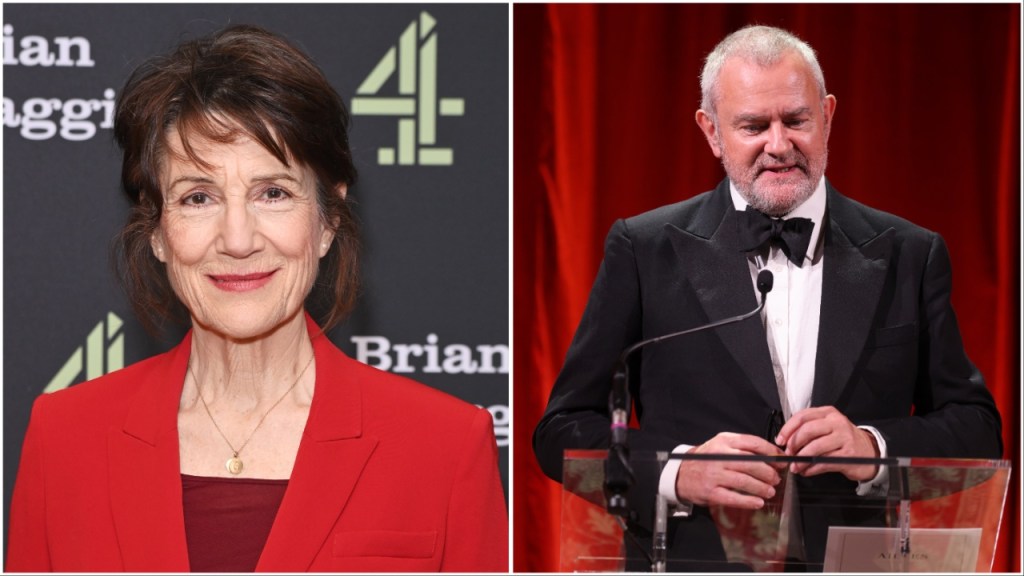
Harriet Walter and Hugh Bonneville have urged actors union members to vote “yes” in the landmark ballot that could lead thousands of actors to refuse to be digitally scanned on set.
The Succession and Downton Abbey stars are among thousands of performers who have backed Equity’s campaign.
Via an indicative ballot, Equity is asking its 7,000 film and TV members whether they would refuse to be scanned as it seeks artificial intelligence guardrails in its contracts with producer trade body Pact. The indicative ballot isn’t binding but could lead to a statutory ballot that is, and this could eventually lead to strike action.
“Our likenesses and our voices are unique and must be valued accordingly, not exploited for the benefit of others without license or consent,” said Bonneville.
Walter added: “AI may be able to write novels, paint pictures and even simulate human actors but none of that can have any meaning beyond its own cleverness. We can admire the technology, but it is ultimately meaningless and damaging. Nothing can replace the experience of watching living sentient actors making thoughtful choices from moment to moment in response to other actors doing the same. That’s what turns us on.”
Deadline revealed the ballot last week and it runs down on Thursday, at which point Equity General Secretary Paul Fleming will reveal the results outside its West End HQ.
Fleming has said the move boils down to the Pact-Equity negotiations – which have been rumbling for two years – still failing to meet in the middle on AI. Equity’s fear is that actors are being digitally scanned and their data is then used without their consent, which could train AI models. There is no suggestion that this is happening at present.
Earlier this month, Pact Deputy CEO Max Rumney told us his members are “well aware of their obligations under data protection law” and have “scanned actors for many years, long before AI was used in production.”
Government reveals results of AI consultation
Elsewhere in the AI debate, a UK government response to the thorny copyright issue has been published, revealing that the vast majority (88%) of the respondents to its consultation want there to be strengthened copyright, which would require licensing in all cases before works were used for AI models.
The initial respnse is a victory for those who have been campaigning on stronger copyright laws. The government, which preferred an “opt out” option for licensing, now has until March 18 to publish its report and impact assessment.
“It’s loud and clear, there is widespread opposition from the creative industries to the Government’s initial preferred option of an ‘opt out’ and a copyright exception for text and data mining,” said Writers Guild of Great Britain General Secretary Ellie Peers. “If we are to see an end to the industrial-scale theft of writers’ and other creators’ work, and to protect the creators and creative industries of the future, then UK copyright needs to be enforced not weakened. We will see whether Ministers have been listening when they come back with their full report next year.”