
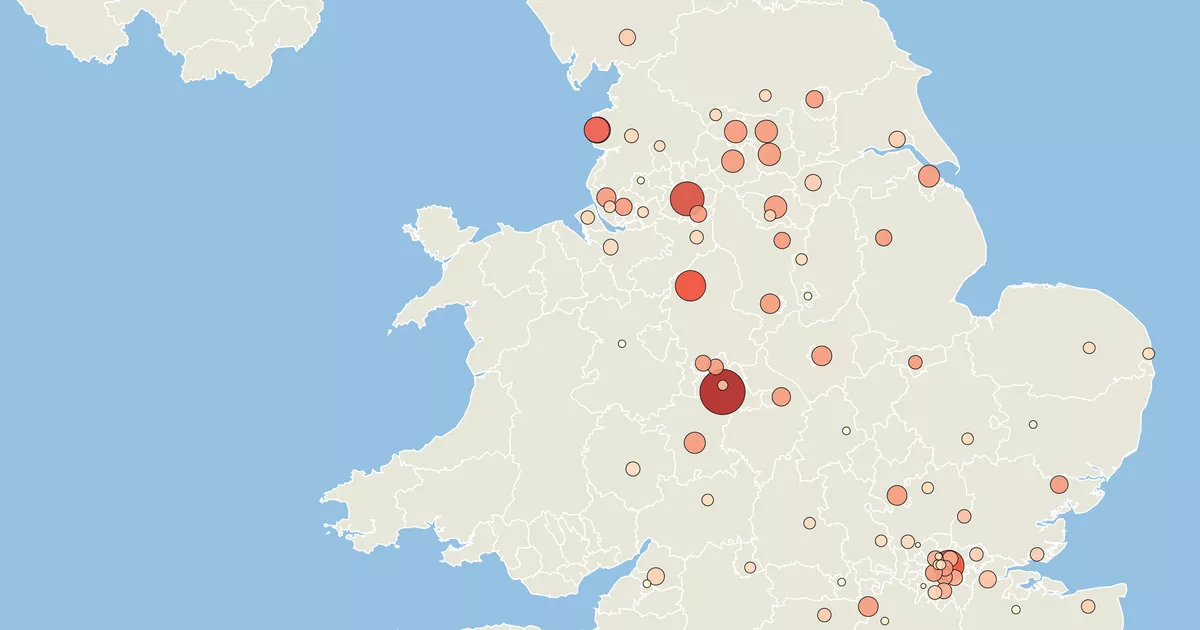
The latest NHS data shows which areas are worst affected – see if your local hospital is under pressure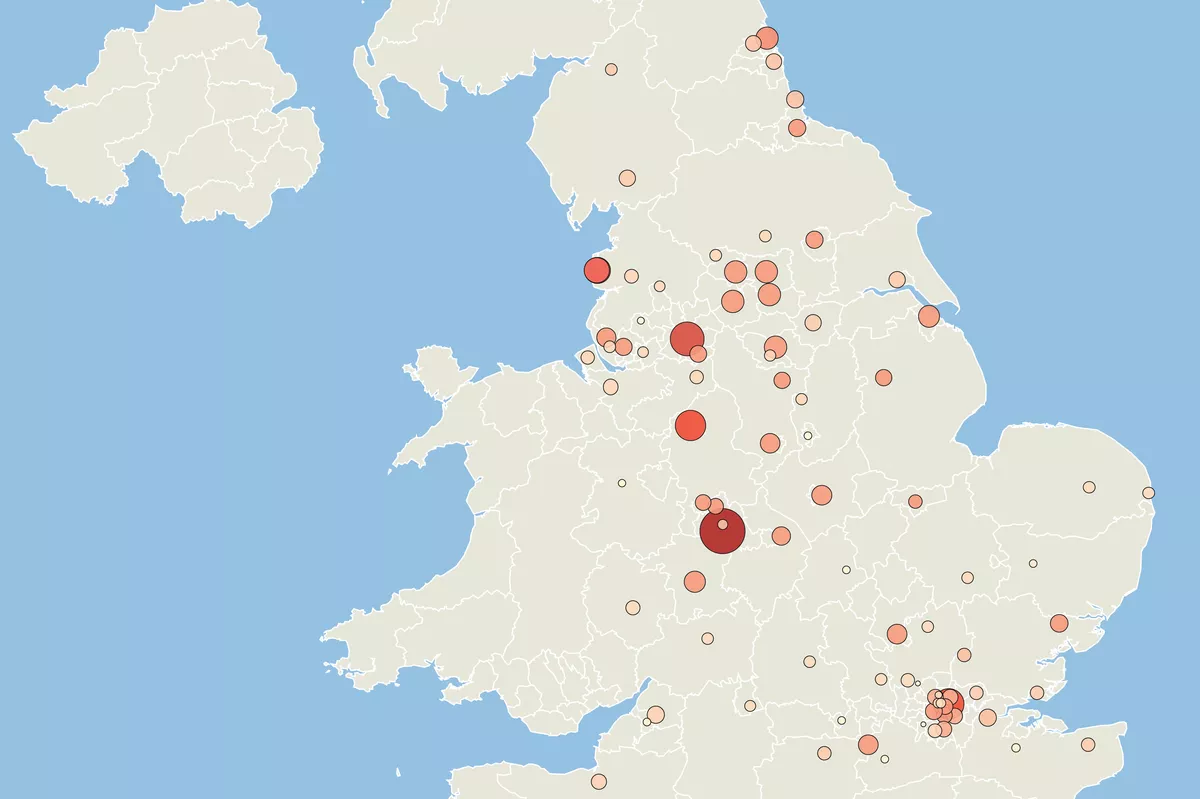
Health officials have warned of a “tidal wave of flu” driving up hospital admissions throughout the UK. You can check how your local area is affected with an interactive map as the Royal Stoke University Hospital remains one of the worst hit trusts.
NHS statistics indicate a sharp rise in flu-related hospitalisations, with concerns raised about potential disruption on hospital wards throughout the Christmas period. Recent figures, released before Thursday’s forthcoming update, revealed that approximately 2,660 people were being admitted to hospital with influenza daily last week – marking an unprecedented level for this stage of the year.
This constituted a 55 per cent jump from the previous week, whilst ambulance callouts also climbed to 48,814 compared with last year’s figures. The H3N2 flu strain has evolved into a more aggressive variant, raising concerns it may place additional burden on the NHS as relatives come together for Christmas celebrations.
It comes as a five-day strike is set to get underway at the Royal Stoke in in a row over pay from 7am on tomorrow (December 17) until 7am on Sunday, December 22.
The University Hospital of the North Midlands – which runs the hospital – said that the planned strikes come ‘at a real cost to patients and the wider workforce’.
It has warned that some appointments and procedures at Royal Stoke and Stafford’s County Hospital may need to be postponed despite efforts to ‘minimise disruption’. Patients who have not been contacted should attend their appointments as planned, and those whose appointments need to be rescheduled will be contacted directly.
The trust stressed that consultants, specialist doctors and all other NHS staff will continue to work ‘with a focus on maintaining as many services as possible safely’. Staff will prioritise life-saving care during the strikes, which may mean longer waits for less urgent cases.
Nationally, the NHS is working closely with the BMA to address any patient safety concerns, ensuring emergency care remains available.
This year’s flu outbreak compared to previous ones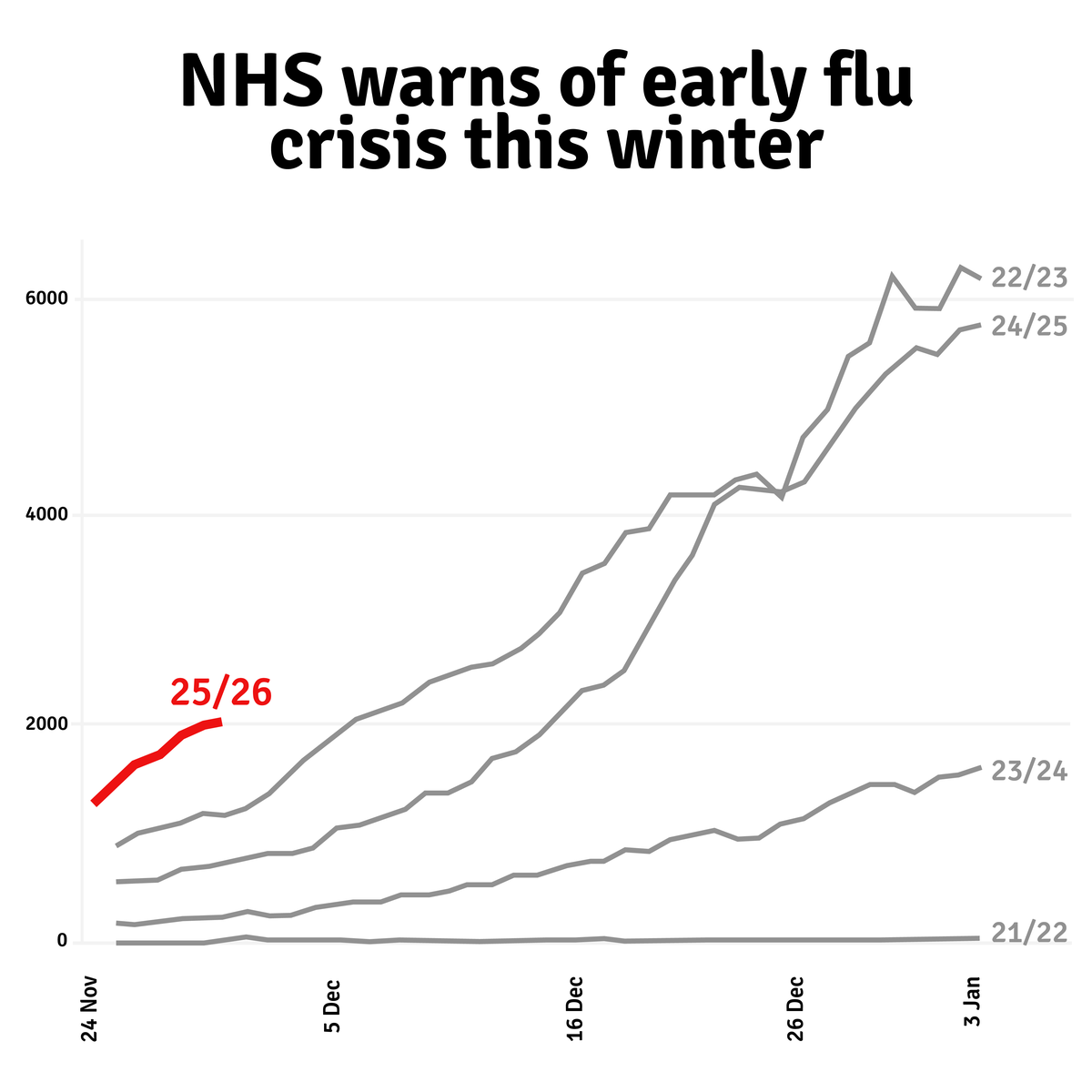
Specialists from the Royal College of Paediatrics and Child Health have cautioned that this new variant could, in exceptionally rare instances, prove fatal to otherwise well children through complications including sepsis. And healthcare settings may face heightened pressure over the festive period as junior doctors have approved a five-day walkout in England.
The spike in infections has been partially attributed to the influenza season commencing roughly a month earlier than during the previous three years. Dr Ed Hutchinson, a professor of Molecular and Cellular Virology at the University of Glasgow’s Centre for Virus Research, previously spoke to the Mirror about the new strain’s acquisition of several new mutations.
“In temperate climates influenza is mainly a winter illness, caused by three types of influenza virus – H3N2, H1N1 and influenza B virus,” he explained. “They all continually acquire mutations which mean that our immunity against them goes out of date.
“At the end of this year’s flu season in the southern hemisphere (i.e. our summer) the H3N2 strain of the virus suddenly acquired seven new mutations. This is a lot more than normal, and it meant that when the flu season took off in the northern hemisphere we had less protection than normal against the H3N2 component of seasonal flu.”
Trusts with highest flu patients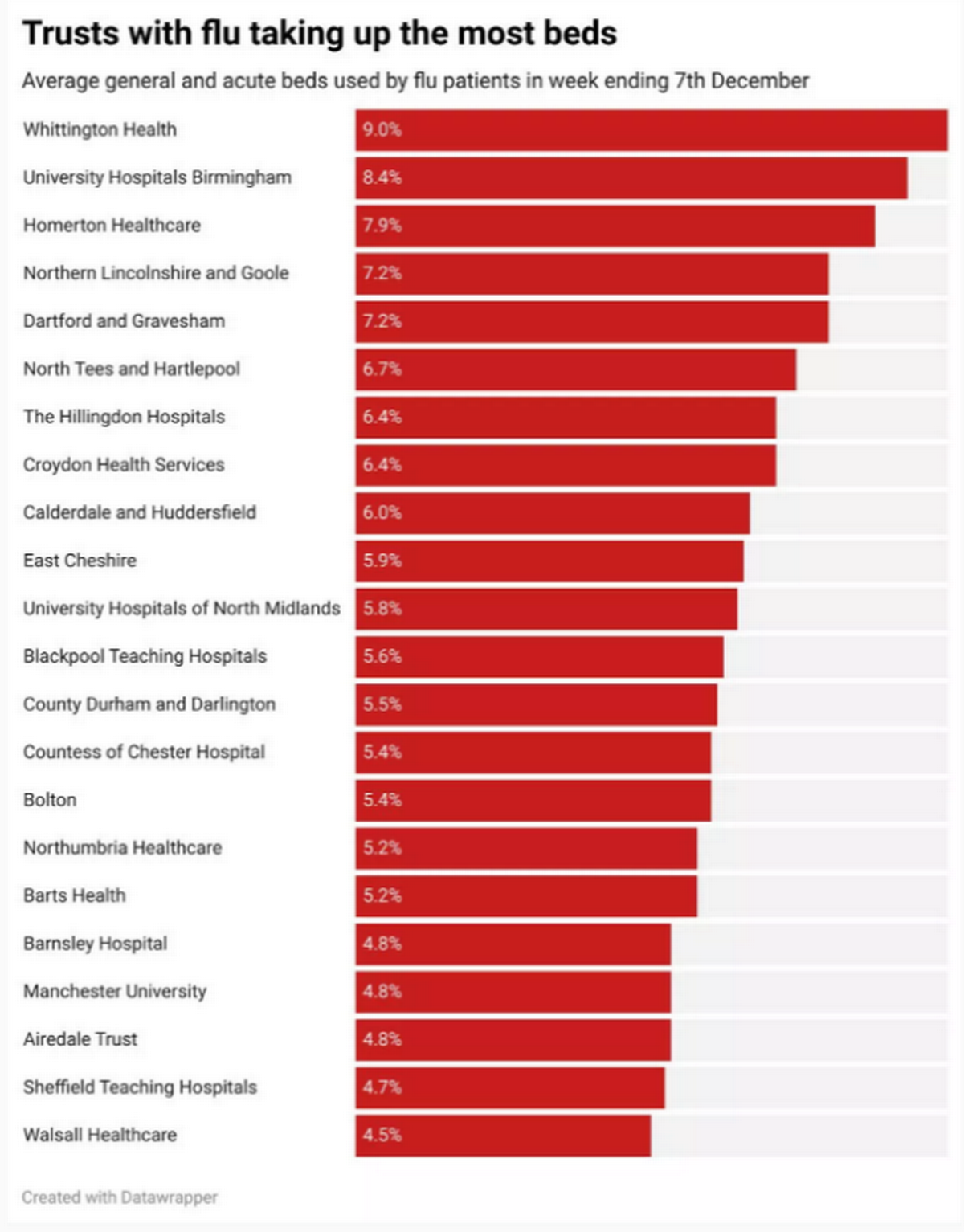
The severity of flu symptoms can be mitigated through vaccination. People aged 65 and above, those with pre-existing conditions, and their caregivers are strongly encouraged to receive a seasonal vaccine.
It can take up to 14 days for the effects to manifest. The flu typically spreads when infected individuals interact with larger groups.
Flu hotspotsPatients hospitalised with flu
Week ending December 7
In a recent NHS England update, Health and Social Care secretary Wes Streeting commented: “There is a tidal wave of flu tearing through our hospitals.”
Get daily headlines and breaking news emailed to you – it’s FREE