
A new active travel in Wales report has revealed that more people are cycling, but progress is losing momentum as funding allocation decreases.
The report revealed that adult cycling participation increased from 6% to 7%, which represents around a 17% increase in the number of adults who cycle.
However, the board is concerned that the termination of Transport for Wales’ role and ending the Active Travel Fund, will “result in lower quality, less effective infrastructure that will provide less value for money”.
The end of ringfenced the Active Travel Delivery Plan, and a transition to a regional funding model could suggest that active travel could lose out to a small number of high-profile and expensive projects.
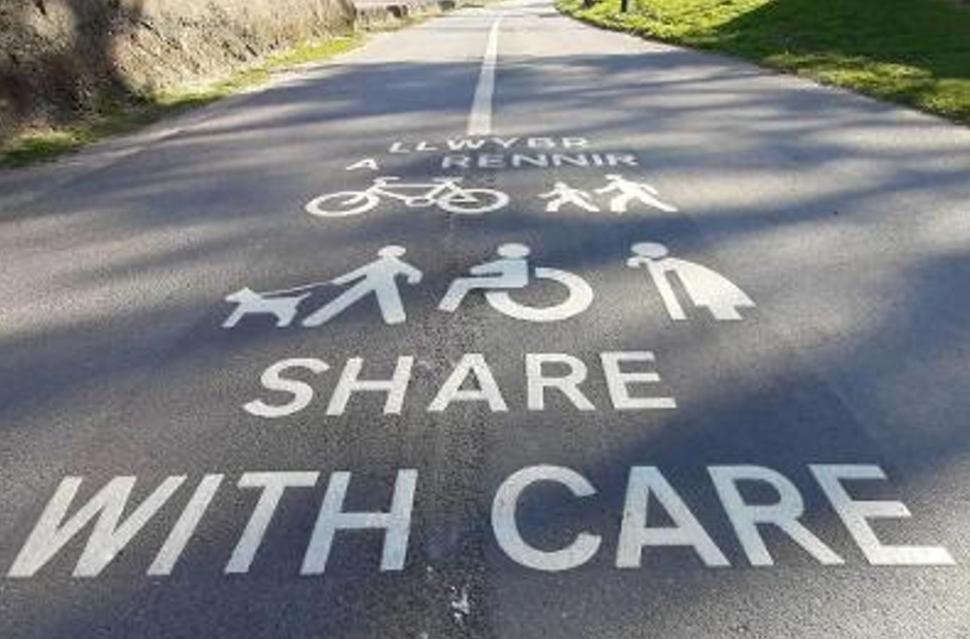 Share with Care shared path sign, Swansea 2 (credit: Swansea Council)
The report revealed that funding has decreased from £23.37 in 2023/24 to £20.70 per person in 2024/25. However, actual spend remained relatively stable, increasing to £19.57 compared to £19.05 in 2023/24.
One of the recommendations included in the report was the ring-fencing of at least £50 million annually and to continue Transport for Wales’ administration role.
“Recommendations such as ringfencing funding, doing a better job of promoting cycling and walking and building more inclusive infrastructure are all strongly supported by Cycling UK – indeed they are the same things we’ll be calling for in our 2026 Senedd election manifesto,” said Sarah McMonagle, Director of External Affairs at Cycling UK.
“If Wales is to fulfil its potential as an active travel nation, it needs to move from leadership in principle to delivery on the ground.”
“When it comes to sustainable transport, Wales has long been recognised as a global leader – not least because it was the first nation in the world to legislate for the development of walking and cycling routes.”
“While the direction of travel’s been positive, things have slowed down recently. The Active Travel Board reflects this very point in its latest report, highlighting the steps needed to reignite, and sustain, progress.”
The report includes progress on last year’s nine recommendations, rating them met, partially met or not met. None of the recommendations have been met.
They have made some partial progress including the launch of the National Travel Survey, the establishment of the Active Travel to School Hub and capacity-building initiatives.
The report also points to “disappointing Active Travel to School rates”, with only 48% of primary school children and 33% of secondary school children walking to school, and continuing gaps in infrastructure delivery and inclusive design.
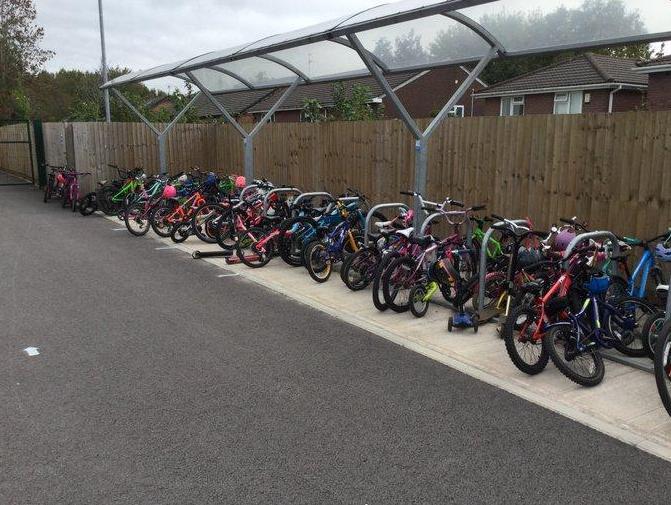 Bike to School Week (Howardian Primary School, Cardiff) (credit: road.cc)
The report highlights that Wales’ Active Travel Network now stands at 3,126km, with 7,512km of future network yet to be built across Wales.
The proposed network could be over 10,500km, according to Welsh Government data.
The National Cycle Network remains a cornerstone, with almost 60% of Wales’ population living within a mile of it. Recent improvements include new signal-controlled crossings, upgraded towpath crossings, bridge replacements, landslip repairs and extensive route redesign.
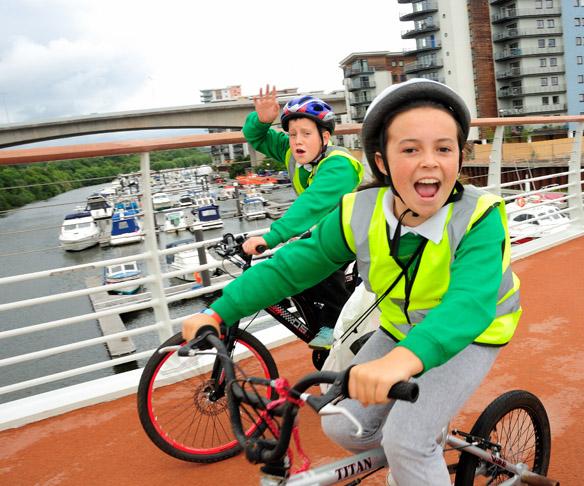 Pont-y-Werin bridge Cardiff (credit: J Bewley/Sustrans))
Kirsty James, the chair of the active travel board for Wales said “The challenges ahead are significant. We must ensure that every pound spent moves us closer to our goal of becoming a true active travel nation.”
“This means not just building infrastructure, but ensuring it is genuinely inclusive, properly connected, and supported by the behaviour change initiatives that will encourage more people to choose active travel for their everyday journeys.
“Wales is showing real leadership in creating transport systems that work for everyone, and this year’s annual report does demonstrate progress, including a 17% proportional increase in adult cycling.
“Active travel is not just about getting from A to B; it’s about creating communities where everyone can participate fully in society, regardless of their age, ability, or circumstances. When we remove barriers – whether physical, cultural, or perceptual – we unlock the transformative potential of active travel.”
The report has a focus on accessibility, finding that while good progress has been made across Wales, discriminatory barriers such as A-frames, narrow chicanes and kissing gates continue to prevent disabled people, older people who use mobility aids, and parents with prams from using active travel routes.
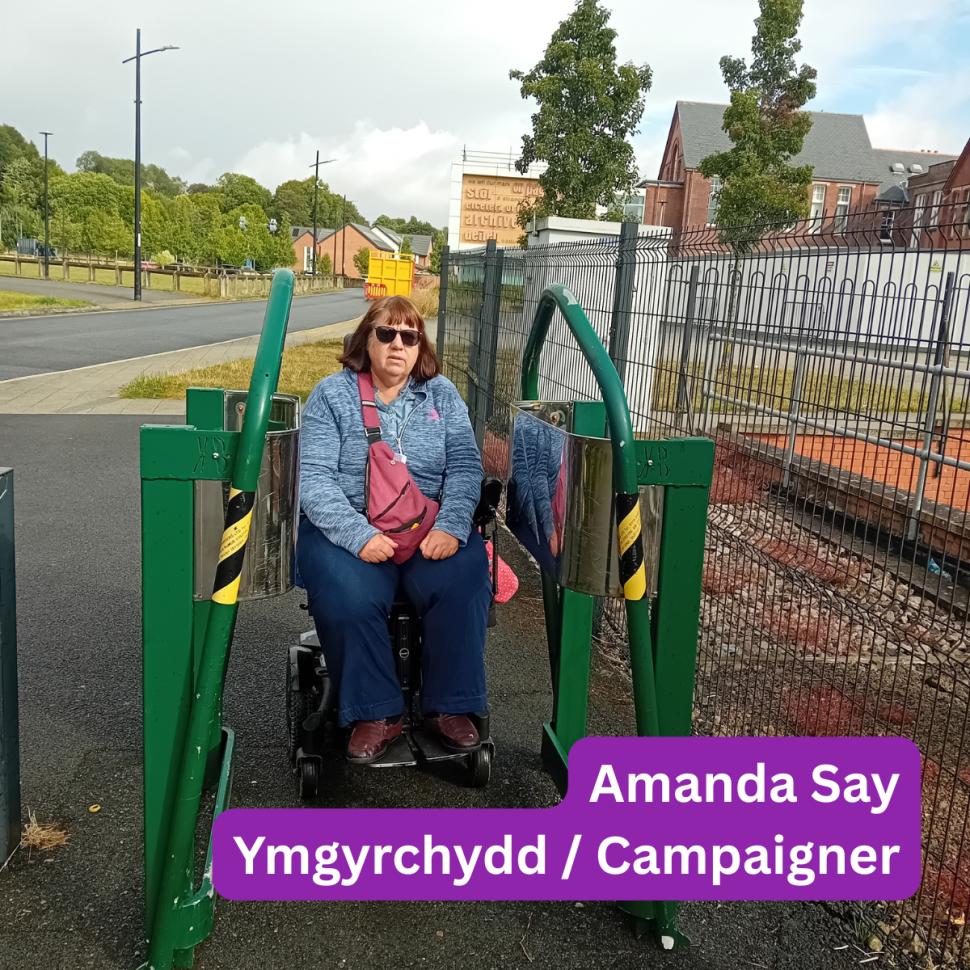 Amanda Say (credit: Active Travel Board Wales)
“What appears as a simple journey for many can become an insurmountable obstacle for others,” said Amanda Say, a transport accessibility campaigner and Board Subgroup member, said
“Some barriers make a complete journey impossible and force you to retrace your journey, creating anxiety about the range of my powerchair. The irony is that these barriers are meant to improve safety, but they often create the very accessibility problems we’re trying to solve.”