
(Credits: Far Out / Andrew Smith)
Tue 16 December 2025 16:17, UK
Imagine getting your perfect job, the one you dreamed of as a kid, only to find out that it, just like everything else, had a bitter aftertaste sometimes. That is what happened to Jimmy Page when he took his guitar skills to the studio as part of his first job in music.
Few guitarists boast the same level of skill or extensive experience as Jimmy Page. Regularly and rightly hailed among the greatest rock guitarists of all time, Page is probably best known for his time with Led Zeppelin, carving out the distinctive sounds of 1970s hard rock and inspiring countless future rock devotees. By the time Page came to form Led Zeppelin in 1968, he already had multiple years of experience under his belt as one of Britain’s most prolific and sought-after session musicians.
Session artists have been an essential part of the music industry since its beginnings. These ad-hoc musicians can be drafted in to work on a certain project by any artist who needs them. In many cases, they go uncredited for the work they provide to these projects and are rarely well-paid for their time either. Nevertheless, Jimmy Page spent years as a session musician, providing guitar tracks for a vast array of the 1960s’ most iconic and influential tracks. Page played on everything from Petula Clark’s ‘Downtown’ to The Rolling Stones’ ‘Heart of Stone’ at one point or another.
For Page, the appeal of being a session artist was the diversity of his work. At any given point, he could be asked to provide guitar for a hit pop song, a trailblazing rock anthem, or a profoundly complex jazz composition. This diversity allowed the guitarist to perfect a variety of different playing styles and genre conventions, honing his craft and culminating in his reputation as one of the nation’s most talented and adaptable musicians.
On the flip side of this, the diversity of his session work also meant that Page could be forced to play music that he really was not keen on. Given that session musicians – even those of Page’s ilk – were not well-paid, the guitarist could hardly refuse an opportunity for work, even if the music itself instilled a feeling of dread within him. “It was fun in the beginning of it,” he later recalled, “When it was like ‘Oh, do what you want.’ 80 percent, 90 percent of the time, I didn’t know what session I was going in on.”
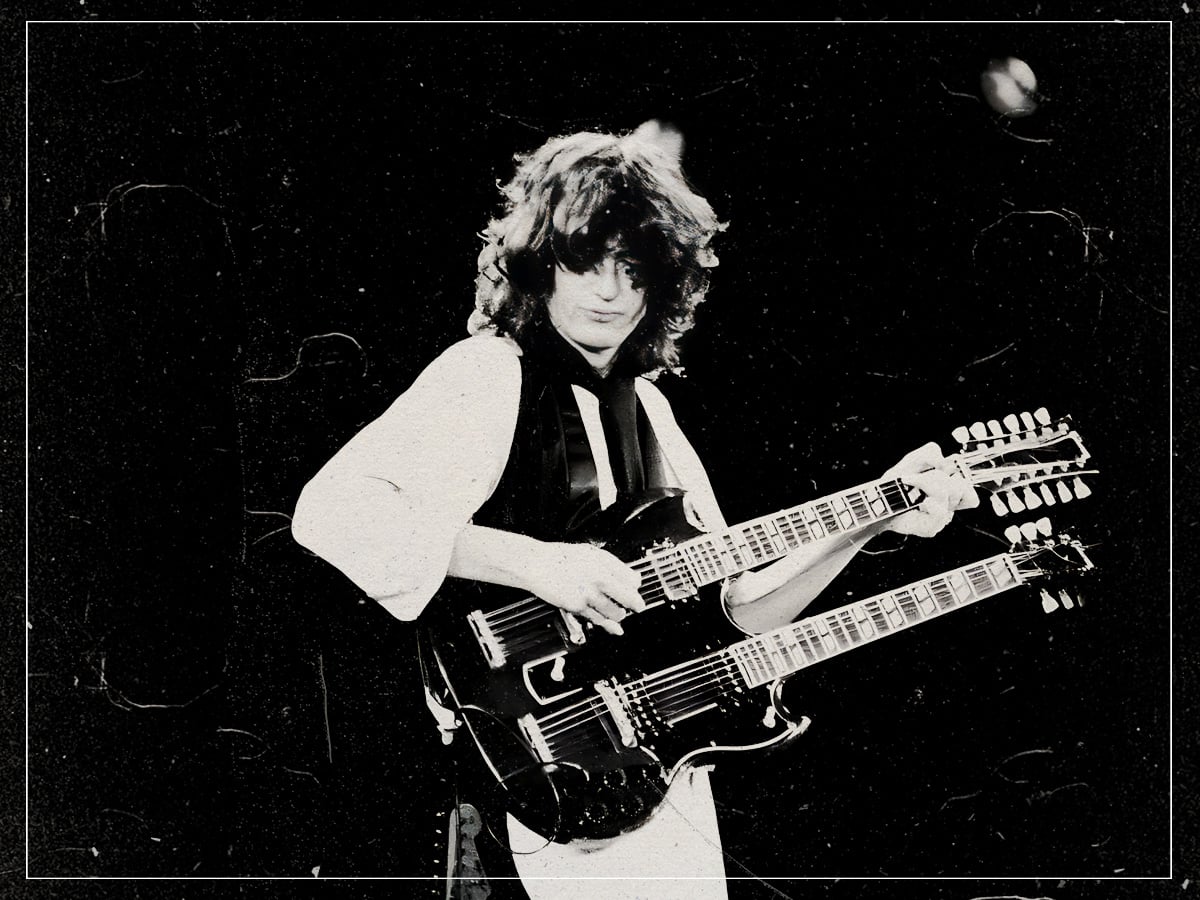
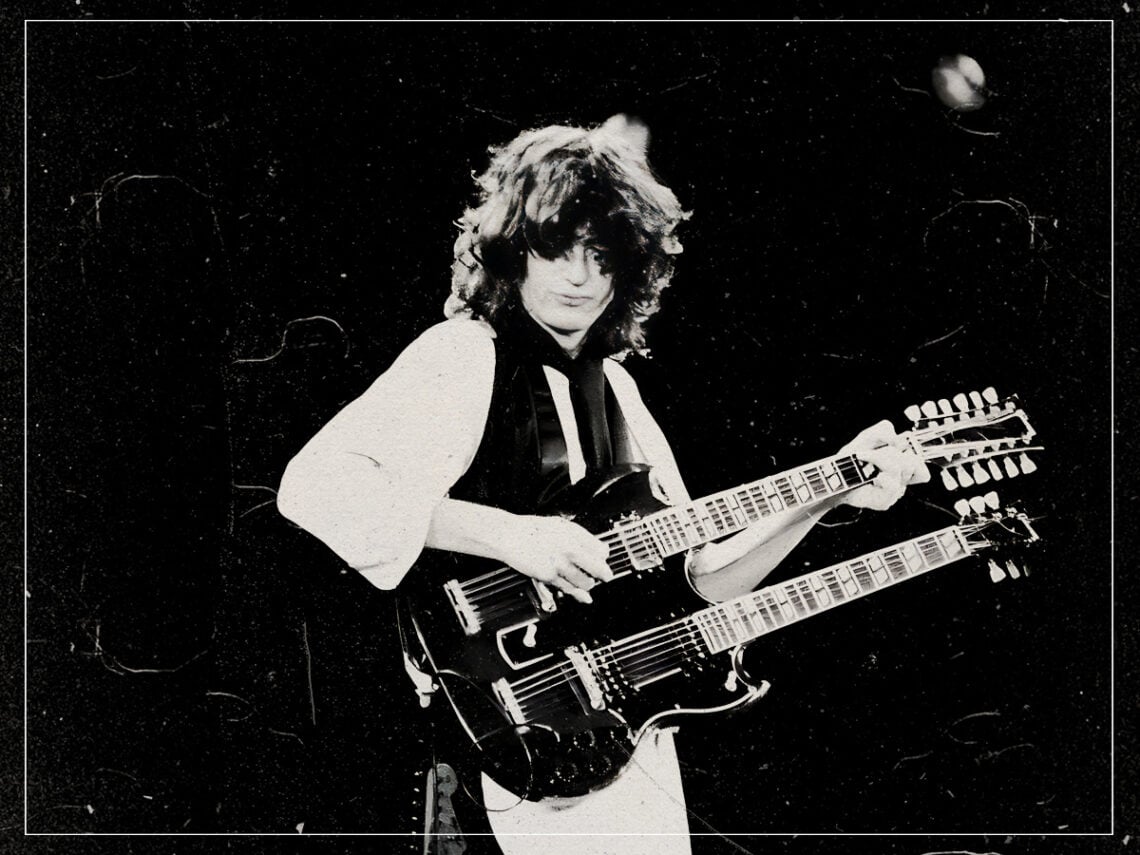
 Jimmy Page and his legendary double-neck Gibson. (Credits: Far Out / Dana Wullenwaber)
The unpredictability of this work soon led Page to become disenfranchised by life as a session artist, feeling as though his skills were being underutilised and yearning for something a little more satisfying as an artist. “One day, I did a muzak session, and it was horrific,” he shared. “It was just reading music all the way through; they don’t stop. It’s just like you hear it in these horrific lift things. You just keep turning the music and playing on.”
What is muzak?
Muzak is virtually unavoidable in everyday life. Elevators, shopping centres, and supermarkets are all plagued by this style of easy-listening music, distracting passers-by from the cold, harsh reality of silence. The likelihood is that all of us have encountered muzak at some point, but what exactly is it? muzak is not a specific genre or style. It is simply background music.
It is the kind of music which can drive shop assistants to killing sprees and leave elevator operators in constant turmoil. It makes sense, then, that the session would push Page way over the edge.
What happened to Page’s session career?
That muzak session spelt the end of Page’s session work. “That’s it. I’m finished. I’m out,” he said. Luckily, he had managed to forge a variety of musical friendships during that time, most notably with fellow guitar hero Jeff Beck. “That was at the time when I was hanging around with Jeff, going to Yardbirds gigs, and the bass player decided to leave the band,” he remembered. “I joined on bass just to help out for a couple of gigs. Then it was on to guitar.”
Page joined the ranks of The Yardbirds in 1966, eventually taking over Beck’s role as the group’s lead guitarist towards the end of that year. As one of Britain’s defining blues rock outfits, performing with The Yardbirds allowed the guitarist to bolster his reputation as a rock and roll guitarist rather than a mere session musician.
The guitarist only lasted two years with the band, as they dissolved in 1968. From the ashes of that group, however, Page set a plan in motion to recruit a new line-up, including singer Robert Plant, drummer John Bonham, and bassist John Paul Jones. After initially billing themselves as the New Yardbirds, this group eventually landed upon the name Led Zeppelin, releasing their groundbreaking debut album in 1969.
Related Topics
The Far Out Led Zeppelin Newsletter
All the latest stories about Led Zeppelin from the independent voice of culture.
Straight to your inbox.