
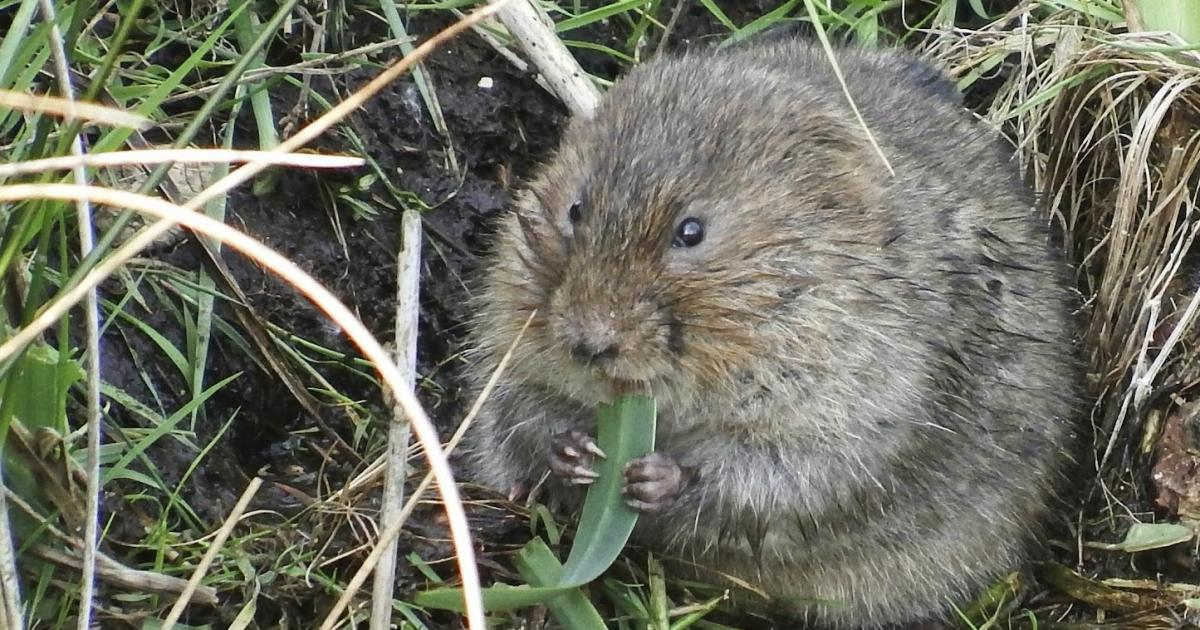
A video was captured of Britain’s fastest-declining mammal at two sites on the River Thame, one of them on the Chalgrove Brook in Stadhampton and another near Chearsley, across the border in Buckinghamshire.
The River Thame Conservation Trust, whose volunteers captured the exciting footage, said their presence sparks hope for the water vole population’s recovery in the catchment.
READ MORE: Duke of Marlborough is charged with intentional strangulation
The videos were gathered using motion-sensor wildlife cameras as part of the Trust’s long-running monitoring project in which volunteers retrieve and review thousands of clips, hoping to detect signs of key river species like water voles.
Volunteer teams deploy, monitor and record data from rafts along the River Thame (Image: River Thame Conservation Trust)
Hilary Phillips of the River Thame Conservation Trust, said: “It’s really a fantastic affirmation of all the hard work by volunteers and landowners that our combined efforts are making a difference.
“There are still some small populations of water vole hanging on, and as with other rare species, we only know they’re still here if we put the effort in to look.
“These findings remind us how important it is to protect and improve river and floodplain habitats, so we don’t lose any more of the precious wildlife that depends on them.”
Help support trusted local news
Sign up for a digital subscription now: https://www.oxfordmail.co.uk/subscribe/
As a digital subscriber you will get:
Unlimited access to the Oxford Mail website
Advert-light access
Reader rewards
Full access to our app
The first clip capturing vole wasn’t a nice one for volunteers to watch as it depicted a heron on the riverbank near Chearsley eating two of the small mammals.
The second clip, on the Chalgrove Brook, showed a water vole swimming away from a mink monitoring raft on the water, proving at least one of the species is alive and active in the catchment.
A still from the trail cam footage which captured a water vole swimming away from the raft on the Chalgrove Brook (Image: River Thame Conservation Trust)
READ MORE: Driving ban and fine for Henley Regatta illegal taxi driver
Paul Jeffrey, a volunteer at the Trust and the treasurer of Oxon Mammal Group, said: “Trawling through the hundreds of clips, one by one, revels a story of survival and new life.
“It brings real hope that water voles are still clinging on and may one day repopulate the whole river system with our continued help.”
River Thame Conservation Trust volunteers deploying a raft on the river (Image: River Thame Conservation Trust)
Water voles are a keystone species, as their species and burrowing create dynamic riverbank habitats which support all sorts of life, including amphibians, birds and invertebrates, while improving soil structure ad vegetation density.
The species was once a common site in Britain’s rivers, streams and wetlands, but their numbers have crashed by more than 90 per cent since the 1990s.
READ MORE: Hundreds of new homes to be built in village near Oxford
A water vole has been spotted on the River Thame for the first time in decades (Image: Andy Coates)
The fastest declining mammal in the UK, they’ve vanished from 94 per cent of previously populated sites.
In the River Thame catchment, the last confirmed sightings of water voles were in the early 2000s when numbers were already in decline, largely predated by the invasive American mink population.
Successful control of mink populations by the Trust in collaboration with the Berkshire, Buckinghamshire and Oxfordshire Wildlife Trust is thought to have enabled the beginning of what is hoped to be a bounce-back for water voles.