

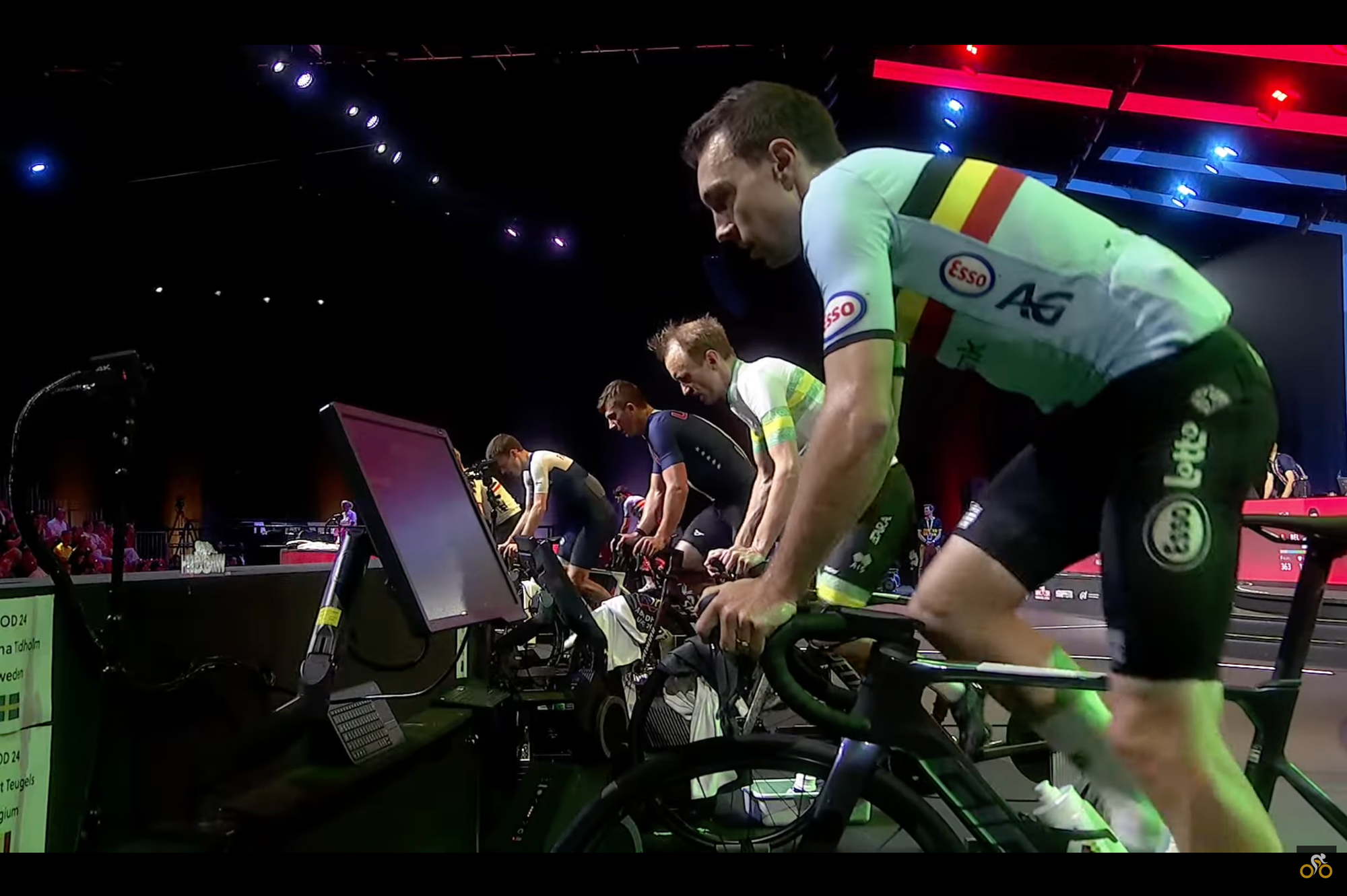
Spoiler: It’s on the right track, but still short of the finish.

As we saw on several occasions this past season, weight remains a ubiquitous and polarizing quandary in the world of cycling. Imagine if you could rock up to the startline and race at a weight lower than you are. Would it be an even more controversial topic then?
That’s what happened for years in elite-level cycling esports competitions, due to the manipulative performance-enhancing practice of “weight gapping.” It was even present in the sport’s only UCI-sanctioned competition, the Cycling Esports World Championship.
Defined in this Escape report, “weight-gapping” refers to weighing in below a rider’s actual weight at the start of a race after engaging in weight-loss measures. The virtual platform calculates power based on the lower figure, producing a higher watts-per-kilogram (W/kg) value that the velocity algorithm converts into extra speed.
The 2024 edition of Cycling Esports Worlds allowed a 10-hour weigh-in window, which invited unethical, unfair, and unhealthy performance manipulation. Before the live, in-person final in Abu Dhabi on MyWhoosh, anecdotal reports of racers gapping 7 to 10 kg (15 to 22 pounds) emerged alongside images of hotel sauna “sweat out” sessions.
 Tragedy pushed policy reforms
Now, imagine that weight-gapping could kill you. That may sound dramatic, until you consider that three perfectly healthy collegiate wrestlers in the US died in the span of a month in 1997, doing almost the same thing: extreme rapid weight loss through dehydration to get an edge.
This post is for paying subscribers only
Subscribe now
Already have an account? Sign in
Did we do a good job with this story?
👍Yep
👎Nope