
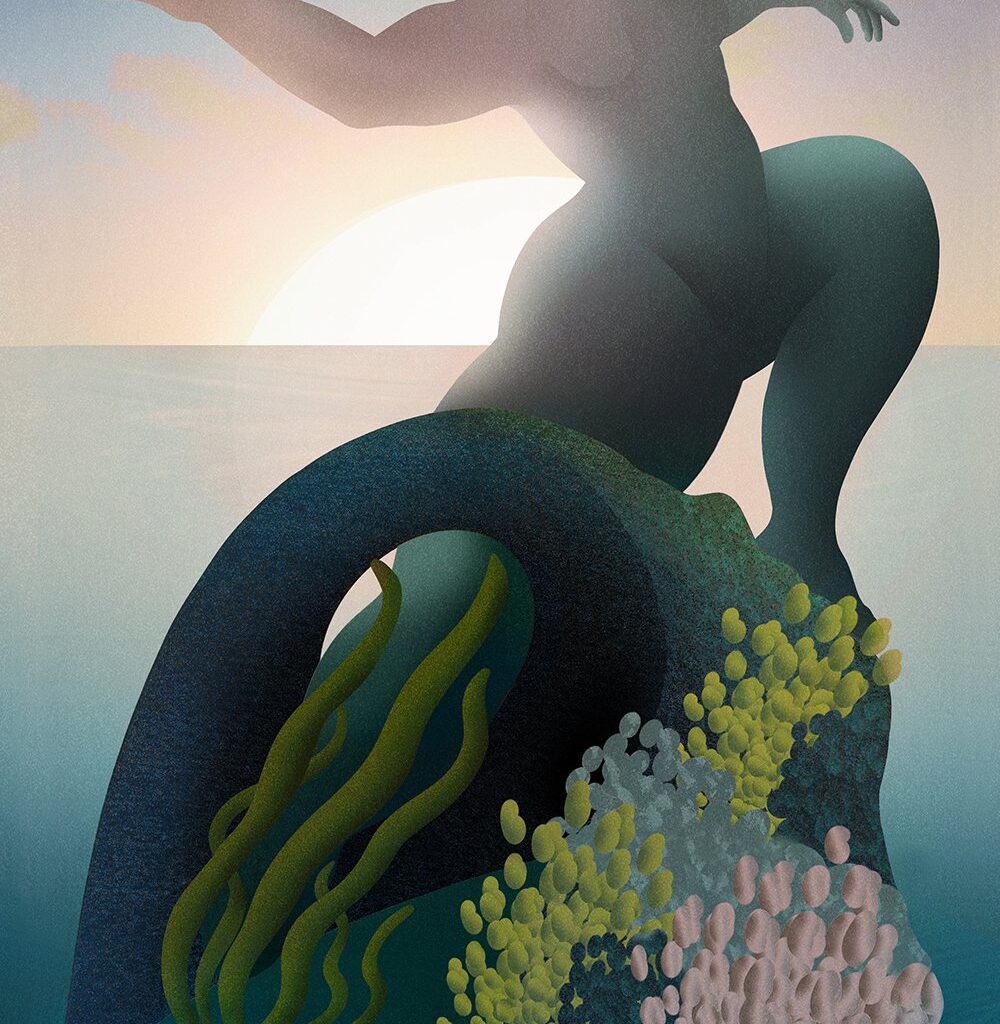
Hayley’s LA Times commission for a story that revisited the #MeToo movement was a particularly standout piece for them, Hayley tells us, “when I reflect on the piece, I remember how charged I was with raw emotion existing in proximity to my own life.” Hayley is thankful to have expressed these feelings on this stage, on such a topic as sexual abuse, which thrives on silence.
Feelings charge Hayley forward. For the Wellcome Collection, her illustrations accompanied a piece on the writer’s adult autism diagnosis. A topic not too often spoken of in context of the adult experience, chronicling the writer’s journey through illustration allowed Hayley to explore their own journey of diagnosis. From this personal series emerged a core tenet of Hayley’s work – journeying.
In terms of Hayley’s methodology, it starts with making sense of a given article or essay – their dyslexia means they reread and highlight meaningful areas. These words thread together, picking up emotions along the way which Hayley pours into the body. When starting to draw, Hayley positions their or a friend’s body as reference imagery. It doesn’t just stop at the body, however: “Alongside the bodies, I emphasise the story I’m telling through colour, hand-rendered textures, and metaphorical and symbolic environments.” Not one to be caught up in the literal, Hayley repositions her illustrations and builds “windows into new worlds, inviting the viewer or reader in to form their own interpretation,” she says. Illustration is an extension of worlds for Hayley, of new ideas and new experiences.