
Inflation zoomed back into focus Thursday as a batch of delayed inflation data finally landed — offering the first official look at price pressures since the record-long government shutdown scrambled the economic data calendar.
The CPI report showed headline inflation running at 2.7% year over year in November, while core inflation — which strips out food and energy — came in at 2.6%. Because the Bureau of Labor Statistics was unable to collect October price data during the 43-day federal government shutdown, the release does not include the usual month-over-month reads, making for more of a blunt snapshot than a clean map of trends.
Per Reuters, economists had widely expected inflation to come in closer to 3.1% headline and 3% core, figures well above the Fed’s long-stated comfort zone of 2% and one that would suggest prices remain stubbornly high and rising. Whether inflation holds a “two handle” or drifts back into the threes has taken on outsized importance for markets heading into 2026, and at least on that front, November’s data came in somewhat better than feared.
Even as the lack of month-to-month detail makes it hard to determine exactly what’s driving inflation beneath the surface, the broader story is familiar to analysts — and consumers. The prices of some line items, particularly for furniture and “household operations” — which covers everything from garden tools to dishes — are rising as companies begin to pass through higher import costs brought on by tariffs. Just as unsurprisingly, rents and housing remain stubbornly expensive, up 3% over last year. The price of meat, poultry, and eggs is up almost 5% in the last 12 months.
The report lands at an unusually delicate moment for policymakers and politicians. The Federal Reserve cut interest rates three times through the last six months of 2025, but has signaled a “wait and see” approach in the months ahead, citing difficulties assessing both inflation and the labor market. Fed Chair Jerome Powell has repeatedly pointed to tariffs as a contributor to inflation data, while emphasizing that officials need clearer evidence before adjusting policy, and concluding whether prices are likelier to see a one-time rise or a more sustained rise because of the tariffs.
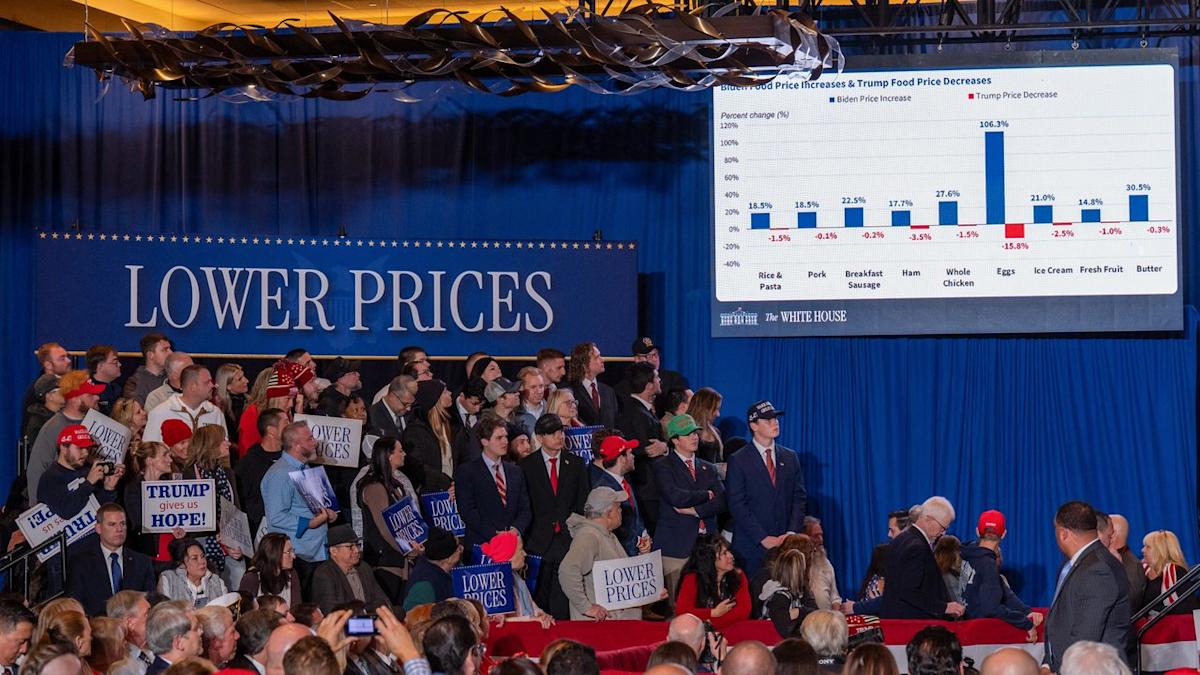
The release also comes as the White House looks to calm voter anxiety about inflation.
In a speech Wednesday night, President Donald Trump attempted to emphasize his policy achievements and blame lingering price pressures on the Biden administration, while promising that lower costs would arrive in 2026. But Trump’s emphasis also serves to underline just how worried Americans are about the economy, with recent polls suggesting a recession could be on the way. Now the new inflation data makes any positive spin more of a reach.