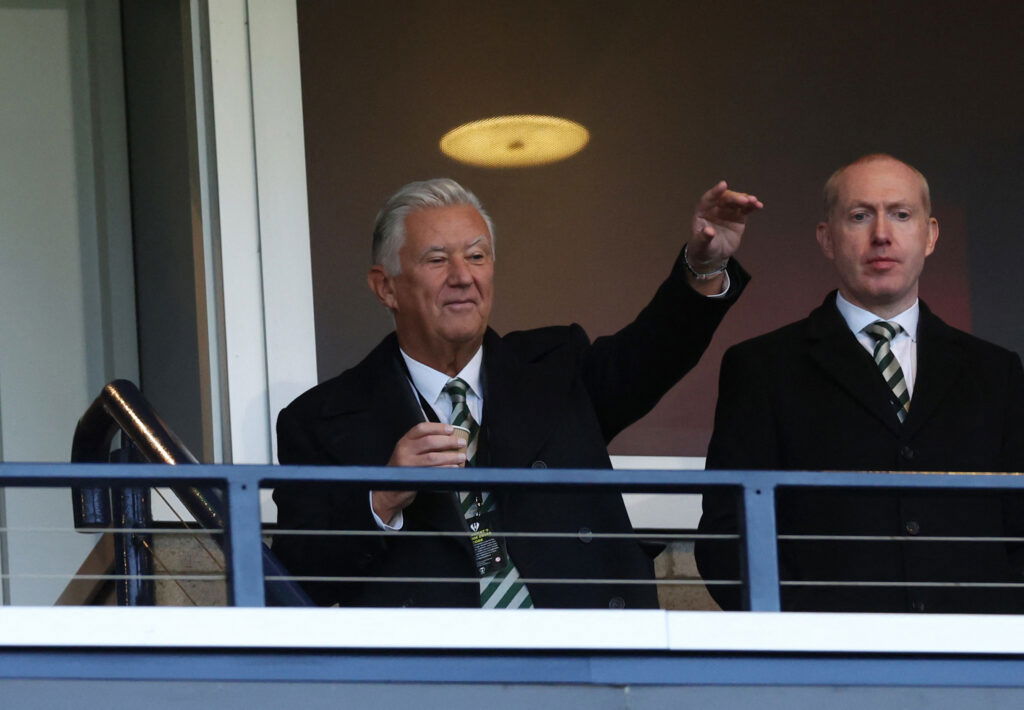
Jim White has suggested that Peter Lawwell’s long spell at Celtic may not bring his time in football to a close, even though the former chief executive has stepped down as non-executive chairman.
Lawwell’s exit came during a difficult period for Celtic, with frustration around results and leadership feeding a wider sense of unease.
Although his resignation was presented as a personal decision, it followed sustained pressure from sections of the support who felt change was needed at board level. For many fans, his departure marked the end of an era they believed had run its course.
In that context, White’s comments stand out because they move the focus away from Celtic and towards what might come next for Lawwell himself.
Rather than stepping back from football altogether, the suggestion is that he still believes his experience has value and could be used elsewhere. That idea fits with how Lawwell has been viewed beyond Celtic, where his reputation has often extended outside Scotland.
The timing of the report also matters. Celtic are dealing with uncertainty on the pitch and close attention off it, so any discussion of Lawwell’s future quickly becomes part of a wider debate about his legacy.
How supporters judge that legacy often depends on which parts of his time at the club they emphasise, but White’s remarks make clear that Lawwell’s story in football may not be over yet.
He said: (talkSPORT), “But after Celtic, I understand that Peter Lawwell is keen to seek other opportunities in football.”
The idea that Lawwell could take on another senior role elsewhere will not surprise those who know his background.
He spent close to twenty years as Celtic’s chief executive, guiding the club from a fragile financial position to long-term stability. That work earned respect in football circles beyond Parkhead, even as his relationship with supporters became more strained toward the end of his time.
Lawwell had been linked with roles away from Celtic before, including interest from Arsenal many years ago, when his approach to finances was widely praised.
Although he stayed in Glasgow, those links showed the reputation he had built within the game. White’s comments follow that same thread, pointing to a belief that Lawwell’s experience is still valued.
Among Celtic supporters, the idea of Lawwell moving on elsewhere is likely to bring mixed reactions.
Many fans wanted change because they felt the club had lost ambition, especially in recruitment and in Europe. From that angle, his resignation was about responsibility rather than what he might do next. Any attempt to redefine his standing outside Celtic will depend on how a future role is viewed.
There is also a wider point about how senior figures leave clubs like Celtic. Unlike managers, whose records are judged mainly on results, executives work in the background.
Their impact is felt over time, their choices debated long after they are made, and their exits rarely provide a clean ending. White’s comments reflect that by showing how boardroom careers often continue beyond one club.
For now, Celtic’s attention is on steadying the team and rebuilding confidence during a difficult period.
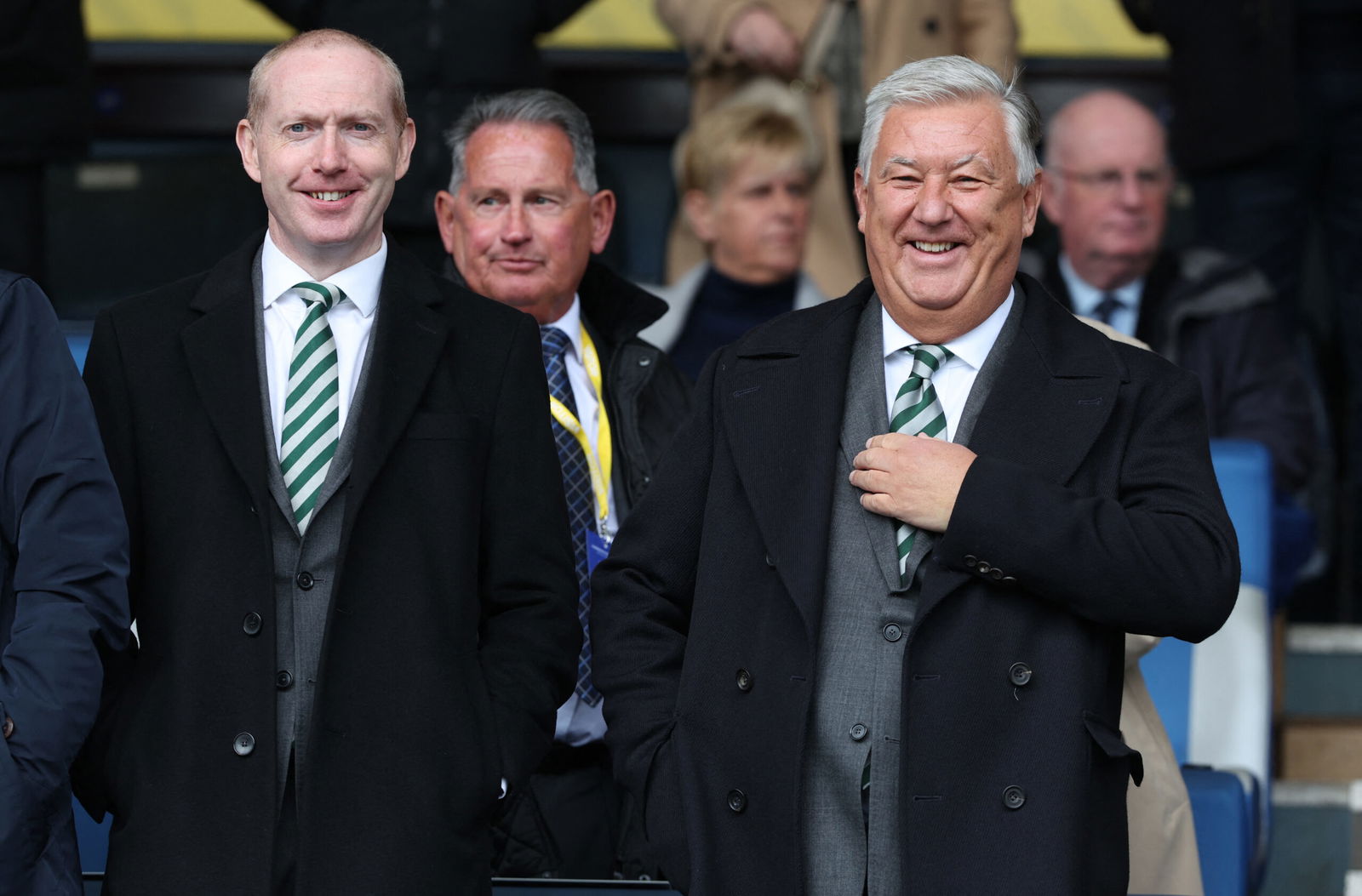 Soccer Football – Scottish Premiership – Kilmarnock v Celtic – Rugby Park, Kilmarnock, Scotland, Britain – April 16, 2023 Celtic non-executive Chairman Peter Lawwell in the stands before the match REUTERS/Russell Cheyne
In the end, White’s report adds another detail to a complicated picture. Lawwell has left Celtic under pressure, but he may not be finished in football.
Whether he takes on another role, and how that is received, will shape how his long spell at Parkhead is judged in the future.