
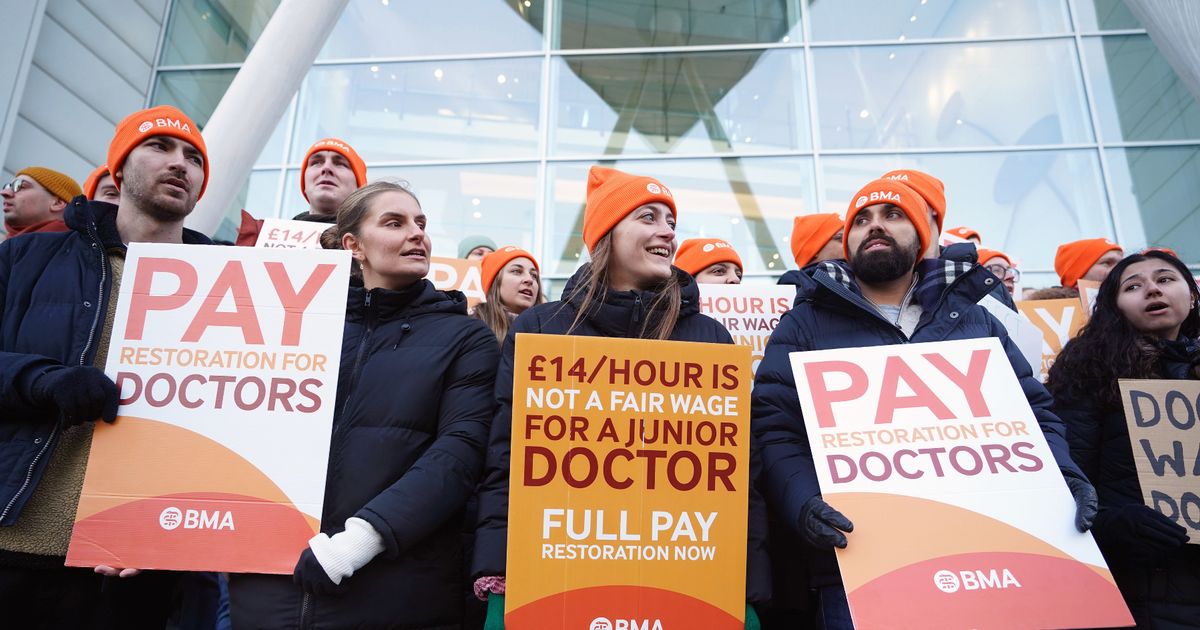
What to know Greater Manchester hospitals as they battle flu on the eve of doctors strikes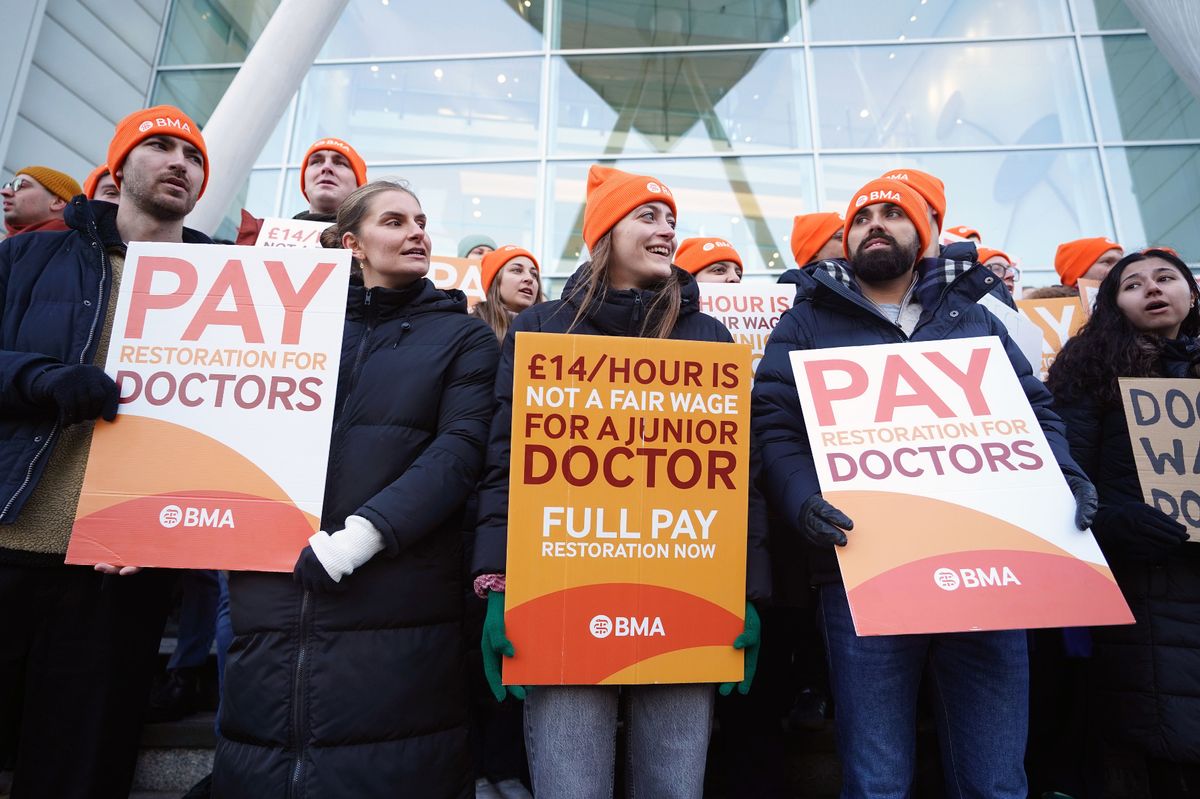 Junior doctors are set to stage a five-day strike(Image: James Manning/PA Wire)
Greater Manchester’s hospitals are preparing as resident doctors are set to walk out tomorrow (Wednesday, December 17) for a five-day strike.
The strike is due to start at 7am, with one of the main BMA pickets outside the Manchester Royal Infirmary, and many more Greater Manchester hospitals anticipating to lose staff to the industrial action. The walkout comes as the NHS battles skyrocketing flu cases, and thousands being admitted to hospitals nationally with the illness.
Greater Manchester is no exception to rising flu, as regional health bosses urge residents to get vaccinated as cases climb. But senior NHS sources in Manchester have told the Manchester Evening News that, as has been seen during previous strikes, A&E and ward performance may improve as consultants take over in urgent and emergency care.
Dr Michael Gregory, Regional Medical Director for NHS England in the North West, has urged the public to use services wisely in the coming days, as the NHS faces ‘record-breaking demand for services’. “The NHS is currently facing significant winter pressures, and this period of industrial action will create additional challenges for us,” he said.
“During this time, in the run up to the festive period, it’s vital that the public continue to come forward for care and know how they can access our services when needed. It’s important that people use NHS 111 online (111.nhs.uk) as their first port of call for all non-urgent health needs, as well as use their local GP practice and community pharmacies as usual.
“Urgent and emergency care services remain open during the industrial action period and people should call 999 or attend the accident and emergency department in the event of a life or limb threatening emergency.”
A&Es expected to be covered, say senior figures
However, senior medics in Greater Manchester have told the M.E.N. both this week and in previous years that staffing the hospital with consultants and specialist doctors can actually help in A&E when the NHS is under pressure. Resident doctors in emergency departments do work under A&E consultants, but those residents doctors will be filled in for by highly-experienced consultants, including those from other and related specialisms, during the strike.
Sir Richard Leese is the chair of NHS Greater Manchester, which plans and pays for all the health care in the region. He told the M.E.N. that having the most senior doctors working down means they have the authority to discharge quicker, getting people who are well enough to go home out of hospital sooner and freeing up beds.
He added that, as it has done in previous years, emergency department performance could improve as senior doctors take over during the approaching strike action.
Another high-level source explained: “It does mean you have all the senior decision makers in the emergency department, the risk threshold changes when you have more experienced people – the decisions get made quicker and they’re generally better decisions.
“People pass through the system and get home more quickly.”
What happens to planned appointments and operations?
However, consultants and specialists being pulled from their work to cover emergency departments and wards means disruption elsewhere in the NHS system. As with previous strikes, there is set to be significant disruption to patient appointments and other planned treatment that consultants would usually oversee.
The fewer doctors working will prioritise lifesaving care, and hospitals will likely have to cancel routine appointments and possibly some elective surgeries. Another health leader in Manchester told the M.E.N. that while A&E may benefit, strikes will hit NHS finances faced with the cost of cancellations and paying consultants’ higher wages as they cover resident doctors’ shifts.
Still, the advice from regional NHS bosses is to attend appointments unless told otherwise. Dr Michael Gregory continued that the focus ‘will be on ensuring as many services as possible continue to operate safely’: “I would urge people to please attend your appointment as planned. The NHS will contact you if your appointment needs to be rescheduled due to strike action.
“I’d like to thank the public for their continued support and our NHS staff who are going above and beyond to maintain safe patient services during this challenging period.”
What’s happening tomorrow?
The strike will go ahead despite a new offer from the government as the British Medical Association (BMA) trade union said 83 per cent of its members had voted to continue with the walkout in an online poll over the weekend, with a turnout of 65 per cent.
Resident doctors were previously known as junior doctors before a government name change to better reflect their experience. They make up around half of the medical workforce in the NHS, more than 80,000 in England.
Full training can take years, meaning some resident doctors have more than a decade of practical experience and are responsible for many aspects of care. This will be the 14th strike in the long-running dispute which began in March 2023.
Prime Minister Sir Keir Starmer said he was “gutted” by the result, describing it as “irresponsible” given the rising pressure from flu.
The government’s latest offer did not include any promises on pay – Health Secretary Wes Streeting has maintained he will not negotiate on that after resident doctors pay has been increased by nearly 30% in the past three years.
The BMA argues that, despite the pay rises, resident doctors’ pay is still a fifth lower than it was in 2008, once inflation on their student loans, which are larger than many other university students, are taken into account.
Streeting said the pay demands were “fantasy”. And he added: “The BMA has chosen Christmas strikes to inflict damage on the NHS at the moment of maximum danger. These strikes are self-indulgent, irresponsible and dangerous.”
He said he hoped resident doctors would still go to work, saying there was a different magnitude of risk striking at this moment.
Streeting said a ‘particularly aggressive’ strain of flu – dubbed ‘super flu’ – is creating ‘probably the worst pressure the NHS has faced since Covid’. Known as A(H3N2) , the new strain has rapidly become the dominant influenza strain across the country. The strain is more virulent, causing more severe illness and there is likely to be lower immunity in the community following suspected mutations.
The flu season also came early this year, as data shows the 2025/26 season is already more intense than in previous years.
The BBC reports BMA resident doctor leader Dr Jack Fletcher saying that the “resounding response” should leave the health secretary in no doubt about how badly he has just fumbled his opportunity to end industrial action.
“Tens of thousands of front-line doctors have come together to say ‘no’ to what is clearly too little, too late,” he added.
He said any solution had to address pay. But said the BMA was “committed to ensuring patient safety” and would be in close contact with NHS England throughout the strike to address concerns as they arise.