
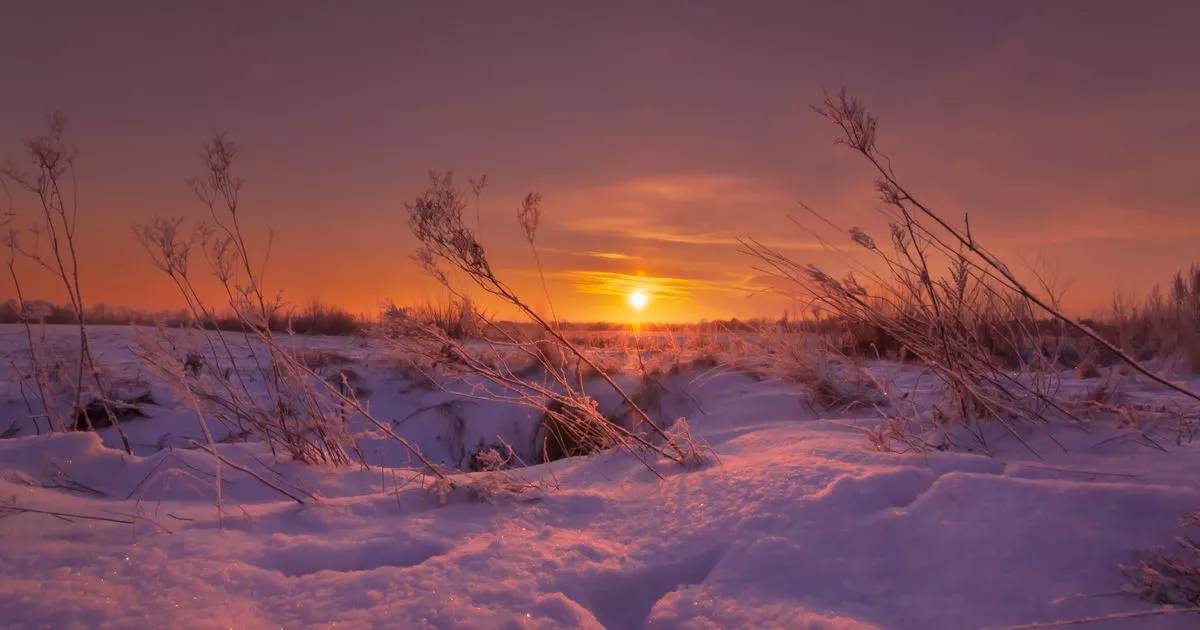
The winter solstice is the shortest day of the year – with the fewest hours of daylight From Sunday (December 21), the days will start to get longer again(Image: Getty Images)
The winter solstice is the shortest day and longest night of the year, marking the start of astronomical winter – and, more importantly for most Brits, when the sun starts to set later each evening.
The exact date of the winter solstice varies annually, but is always between December 20 and 23. This year, the solstice falls on Sunday (December 21). The moment of the solstice in 2025 will occur at 3.03pm GMT, before the sun sets at around 3.54pm in London.
After the shortest day, the days start getting longer until the spring and autumnal equinoxes, when the day and night hours are around the same length, each lasting around 12 hours. The number of daylight hours then peaks at summer solstice, which falls on June 21, 2026.
But when will we start to notice the later sunsets in the UK? According to the tracking website Time and Date, the next date the sun will set at 5pm in London is February 7, 2026. From then onwards until the summer solstice, the sun will set around two minutes later each day.
The sun will next set at 6pm on March 13, 2026. The clocks change then forward by one hour on March 29, 2026, when the sun will then set at 7.28pm.
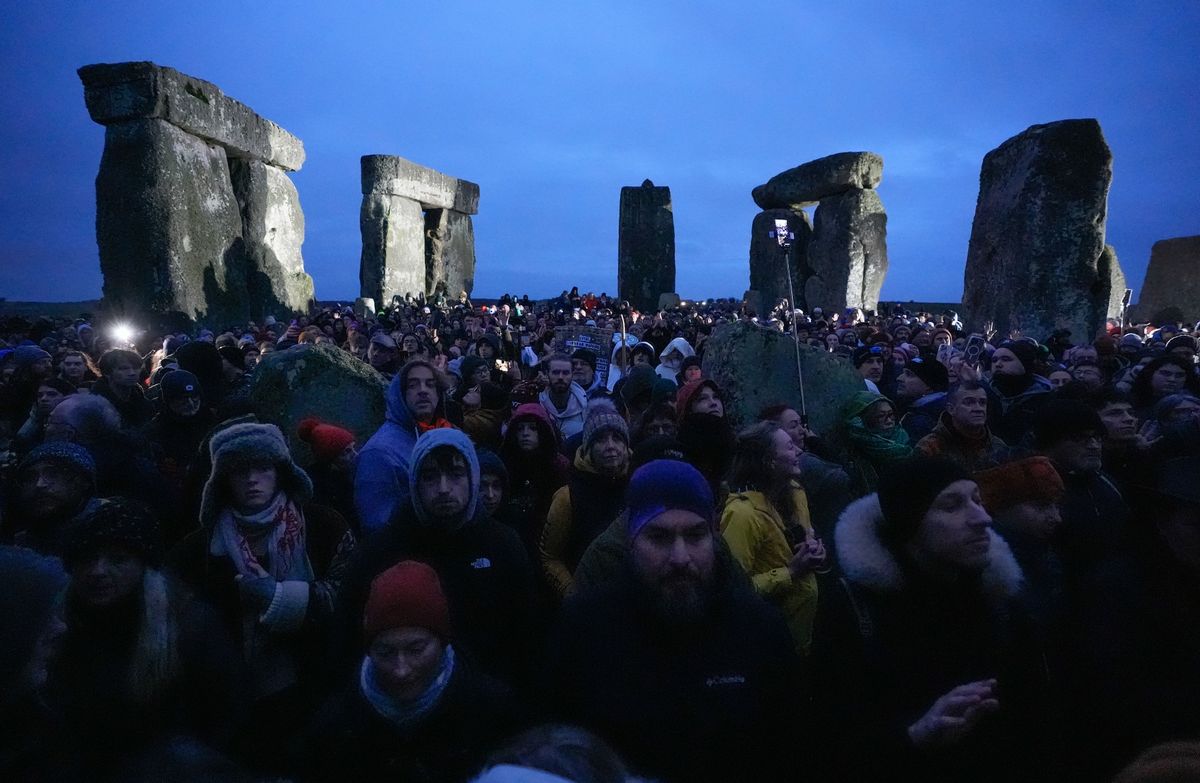 Thousands gather for winter solstice celebrations during sunrise at Stonehenge (Image: PA)
The sun will set at 8pm on April 17 and set at 9pm on May 26. The 2026 summer solstice – the longest day of the year – will be on June 21, when the sun will set at 9.21pm.
Why is the winter solstice the shortest day?
Earth is tilted on its axis, meaning different parts of the planet lean towards or away from the sun as we orbit. In the northern hemisphere’s summer, the North Pole tilts towards the sun, making the sun appear higher in the sky and keeping it above the horizon for longer. In the winter, the tilt points away, meaning the sun stays lower and daylight is shorter.
The winter solstice marks the moment that this tilt away reaches its maximum. The sun’s apparent path stops shifting southward and stands still above the Tropic of Capricorn – an imaginary line of latitude about 23.5 degrees south of the Equator – before beginning its journey north again.
In the northern hemisphere, this means the sun is at its lowest point in the sky and we experience the shortest day and longest night of the year.
Winter Solstice celebrations in the UK center on ancient sites like Stonehenge, as thousands gather for dawn rituals to mark the return of light.