
In the days after Princess Diana’s death, Paul Burrell, her butler, returned to the only place he could imagine being — her home, Apartments 8 and 9 at Kensington Palace. Grieving, and in disbelief at the tragic events, he found himself wandering through her apartments. It was one of the most distressing weeks of his life.
He had been tasked with packing up her home and says Diana’s presence was everywhere. “I could hear her at the piano. I could hear her giggle. Her perfume lingered through the rooms,” he says. “My wife, Maria, was concerned about me and on occasion came up to the palace to find me asleep in the bottom of the princess’s dressing room wardrobe.
“Anyone looking in from the outside world would have thought I’d lost it. They’d have said, ‘It’s tipped him over the edge.’ I was a lost soul at that time. Nobody could get to me. I was in a trance.
“But you have to understand that this was our world; it was just me and Diana. No one came into that domain without our knowledge. Once she was gone I was left holding the key, thinking, ‘How do I keep all this safe? And who’s going to protect me now?’ We were a formidable force, the two of us. But with her gone I had no power.”

Kensington Palace — after Diana’s death, Burrell was tasked with packing up her belongings in her apartments in the palace
ANDREW PARSONS/PA
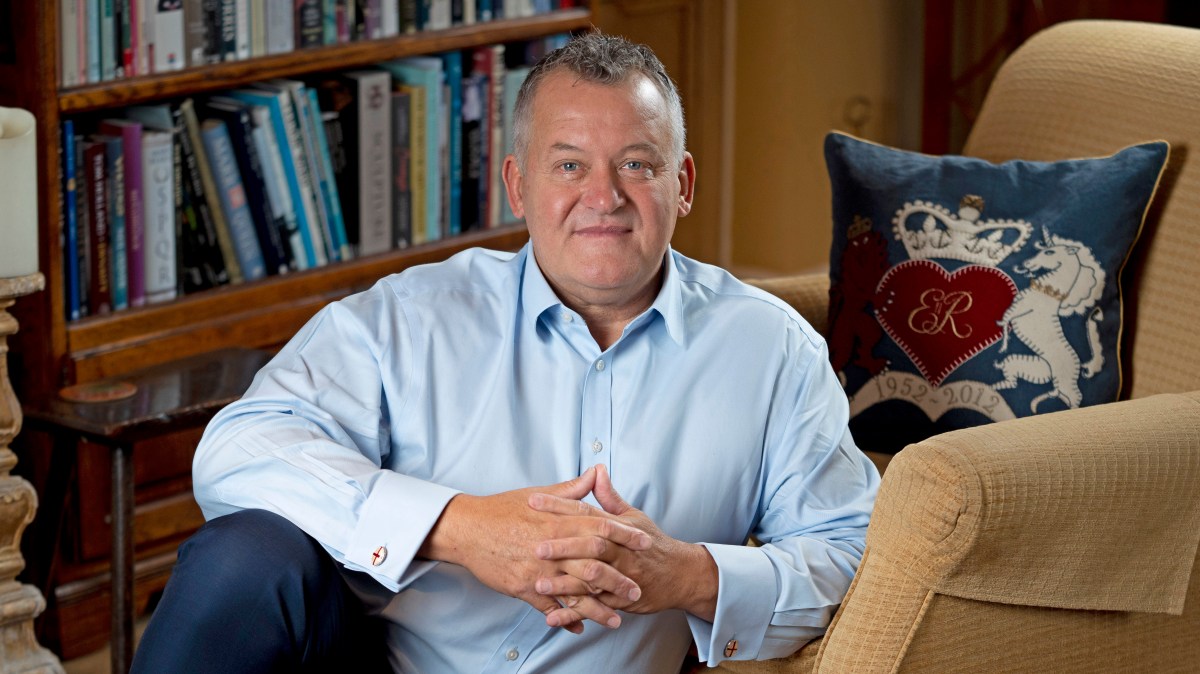
Burrell, 67, has long divided opinion. He is either Diana’s rock, the keeper of her flame and “the only man she ever trusted”, or the duplicitous royal servant who betrayed her confidences to launch his media career. Burrell is well aware that his reputation goes before him.
• Do we really want to lift the lid on the royals?
Burrell was always bigger than the job, though. Queen Elizabeth spotted something when she plucked the 19-year-old from the lowest rungs of royal service to become her personal footman. Burrell, by all accounts, never dropped the ball; he could always be relied upon to arrive with the gin and Dubonnet bang on the hour. Perhaps Elizabeth noticed his charisma too, in spite of the formalities surrounding royal service.
On the day we speak he is poised to publicise his latest book, a follow-up to his controversial 2004 debut memoir, A Royal Duty. Away from the glare of the spotlight, he’s more likeable, less hammy and very funny.
But the brief today isn’t the volatile marriage of Charles and Diana, or his belief that Harry wouldn’t have married Meghan if Diana had been alive. It’s a subject altogether closer to home. Burrell, who served tea to the royals at their finest residences, has agreed to talk about his own little piece of paradise. He lives in a 19th-century mock-Tudor house in rural Cheshire that he shares with his husband, Graham Cooper, affectionately known as “Coop”, a retired corporate lawyer whose eye he caught on a train.
Their house, Treetops, is named after the Kenyan lodge where Princess Elizabeth had been holidaying with Prince Philip in 1952 when the telegram came through informing her that she was Queen. The royal flavour doesn’t end there. There’s a distinctly Scottish baronial feel about their cosy home. The dining room is deep crimson and there are wall-mounted antlers and generous amounts of tartan on show. It comes as no surprise to discover that Balmoral was Burrell’s favourite royal residence.
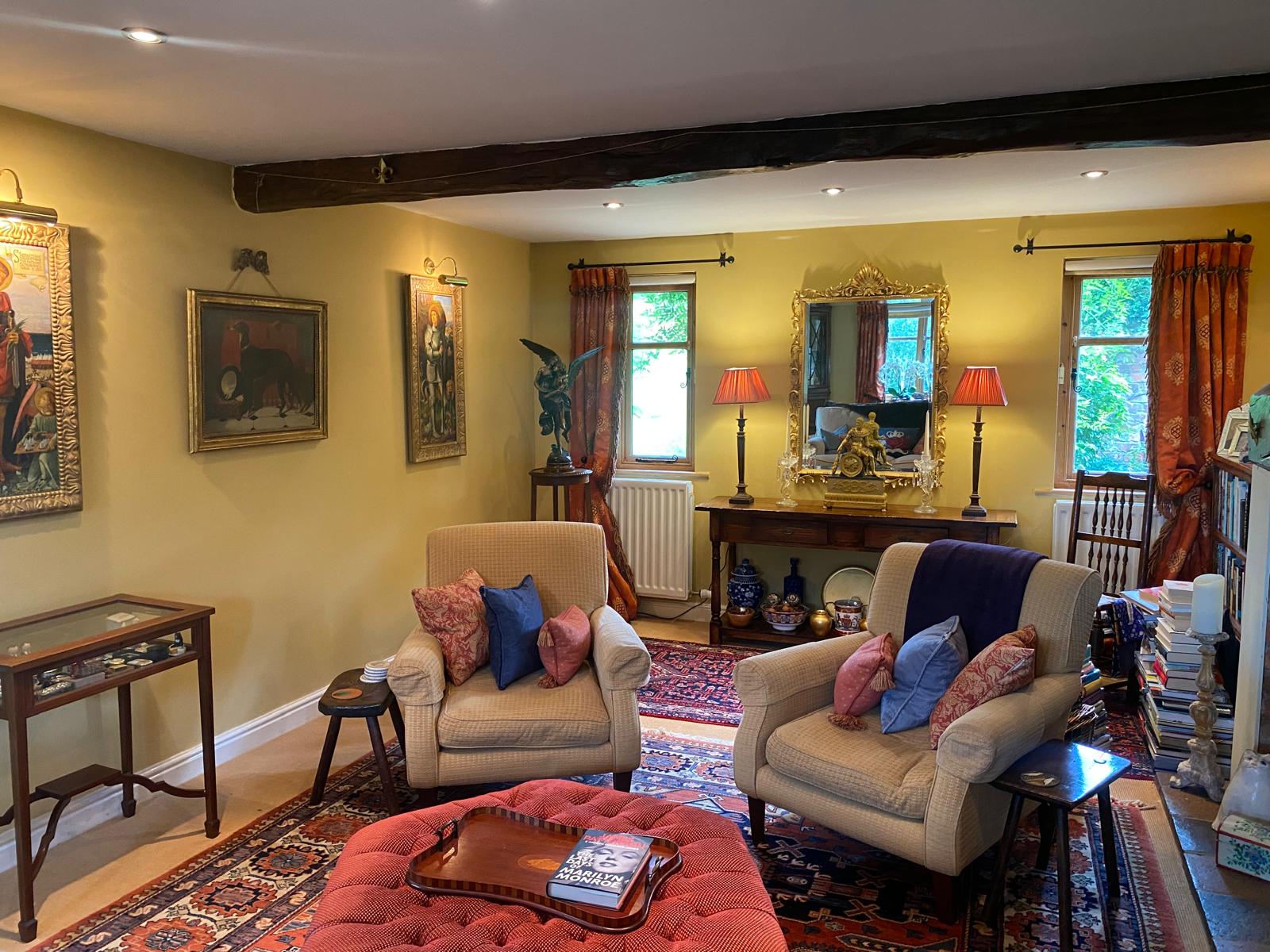
“There’s a distinctly Scottish baronial feel about Burrell’s cosy home”
PAUL BURRELL
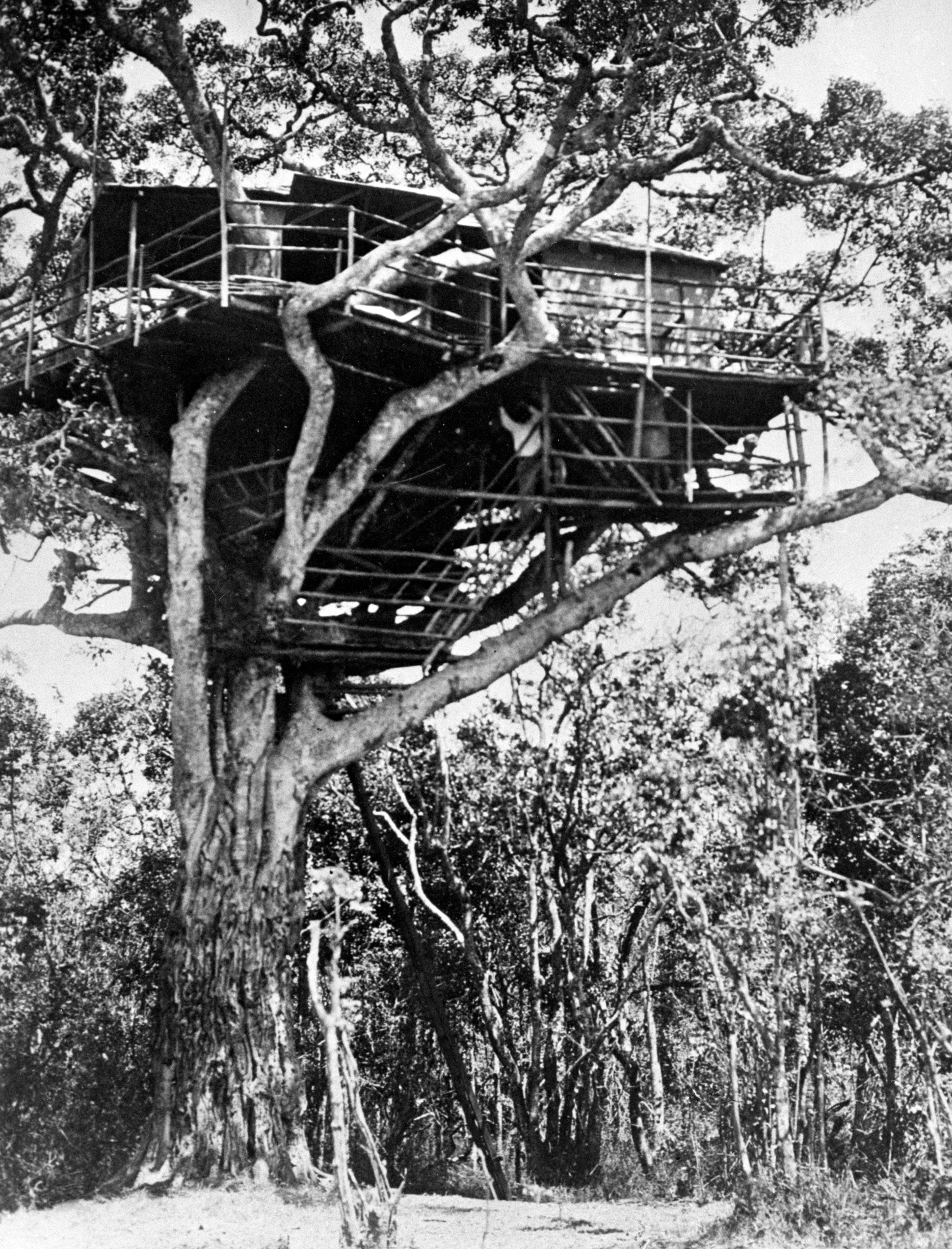
Burrell’s home is named after Treetops lodge in Kenya; Princess Elizabeth was staying there in 1952 when she received the telegram informing her she was Queen after the death of her father, King George VI
PA IMAGES/PA ARCHIVE
“Balmoral was more of a home than the others,” he says. “It’s threadbare carpets. It’s shabby chic. There are tassels missing here and there. And Her Majesty could relax there more than anywhere else.” He points, in his sitting room, to a reproduction of Edwin Landseer’s portrait of Eos, Prince Albert’s favourite greyhound. “Coop bought me this for Christmas one year. I sat underneath the original every evening at Balmoral, waiting for the Queen to ring her bell.”
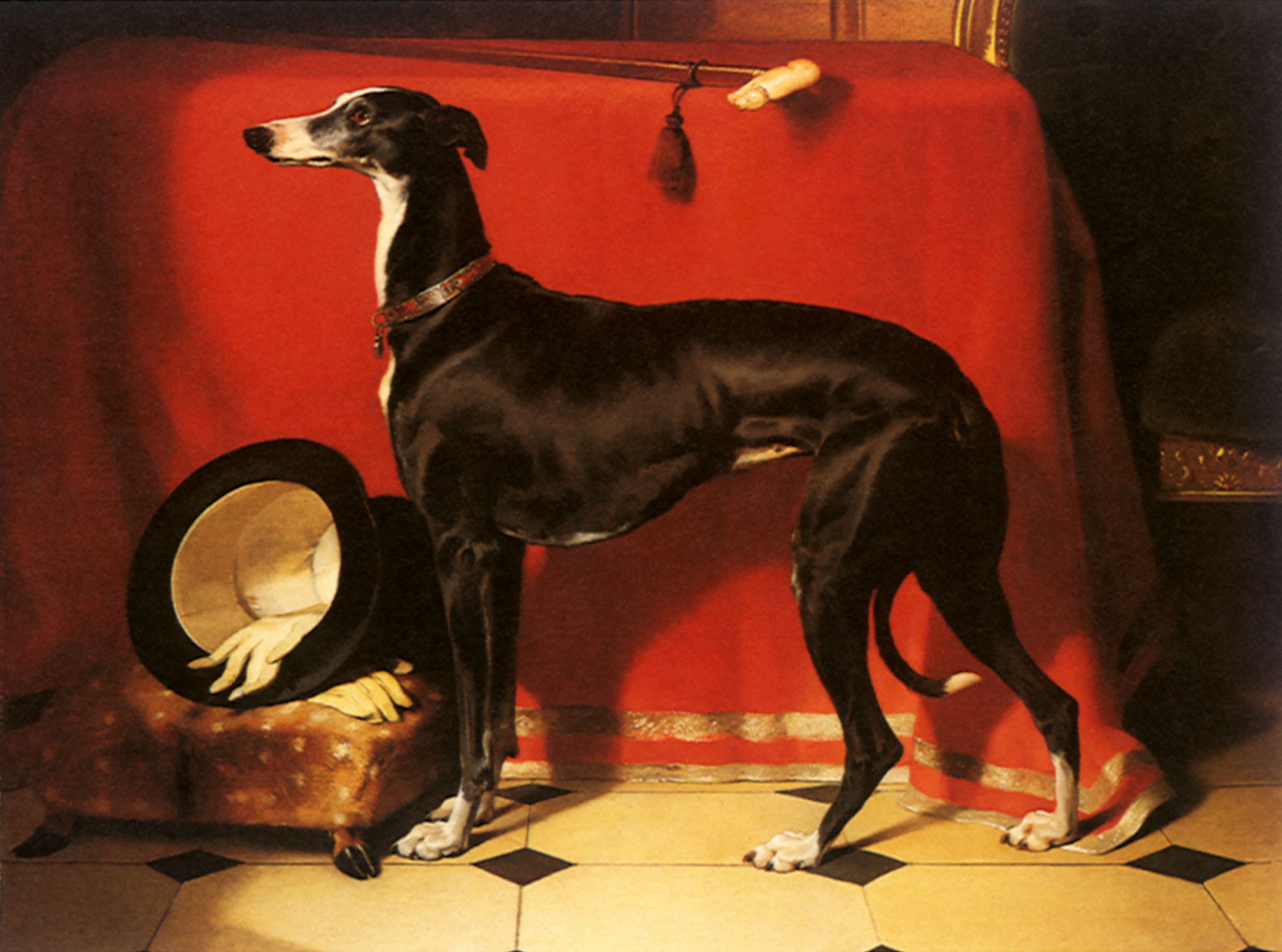
A reproduction of Edwin Landseer’s portrait of Eos, Prince Albert’s favourite greyhound, hangs in Burrell’s sitting room
GETTY IMAGES
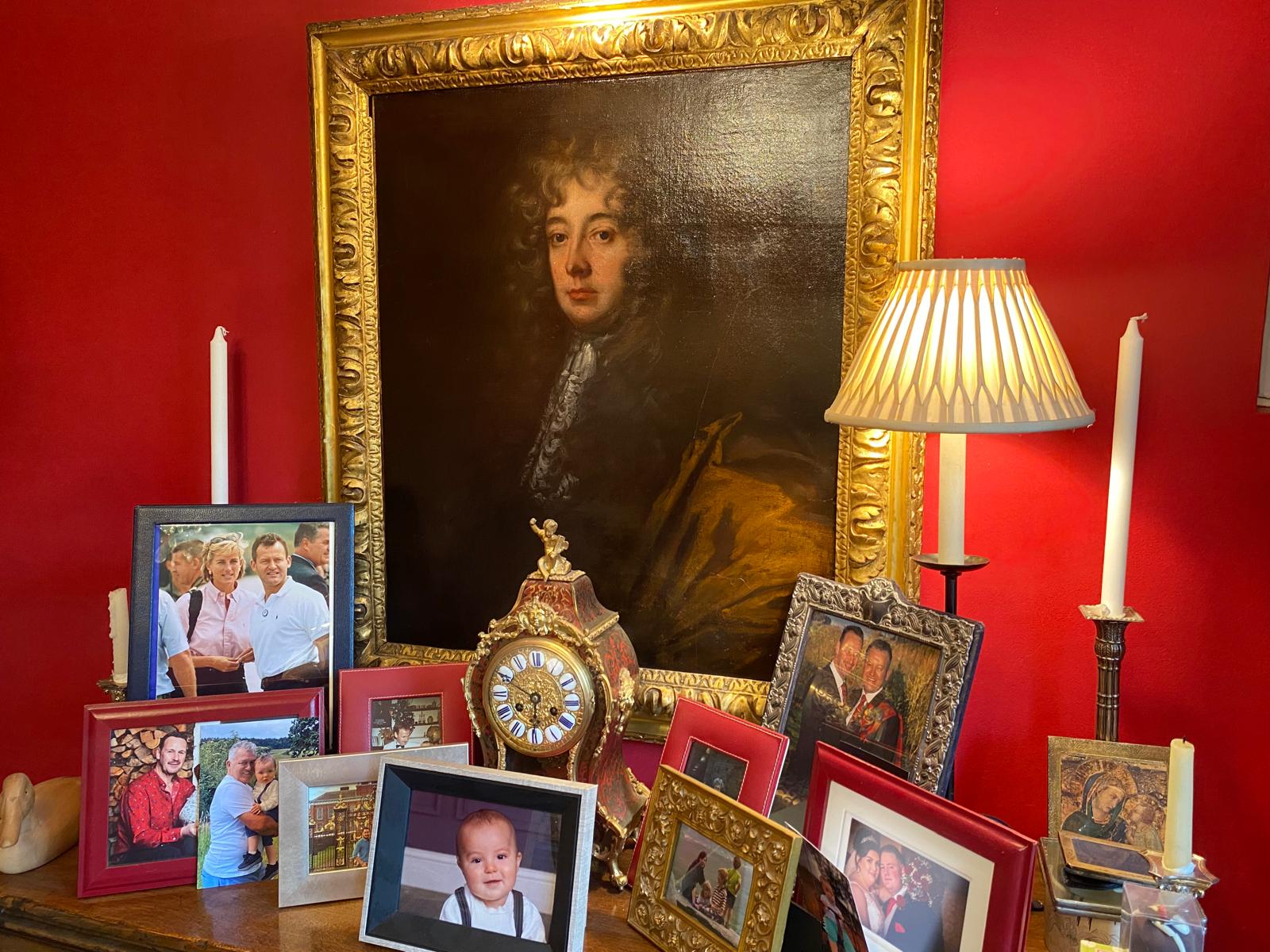
Personal and family photos, including one of Burrell with Princess Diana in 1997, in his sitting room
PAUL BURRELL
• What’s the Monarchy For? review — David Dimbleby is off the leash
It must have been a pinch-me moment when, at 18, Burrell swapped his two-up two-down in the coalmining village of Grassmoor, in Derbyshire, for a life in royal service. He won the Queen’s favour when her corgis took a liking to him. The wily Burrell had stowed away a few breakfast sausages in his tailcoat pocket, so when her ten dogs hypnotically followed their Pied Piper into the palace gardens for their morning constitutional, she must have thought, this is the (foot) man for me.
In his new book he shares fascinating domestic details about the late Queen. Would she have approved? Some believe he has gone too far. Take, for example, his revelation that the Queen and Prince Philip really did share a bed together. Unfortunately, for the cantankerous prince, he was also forced to share his bed with “those bloody dogs”, to which the Queen would respond, “But darling, they are so collectable.”
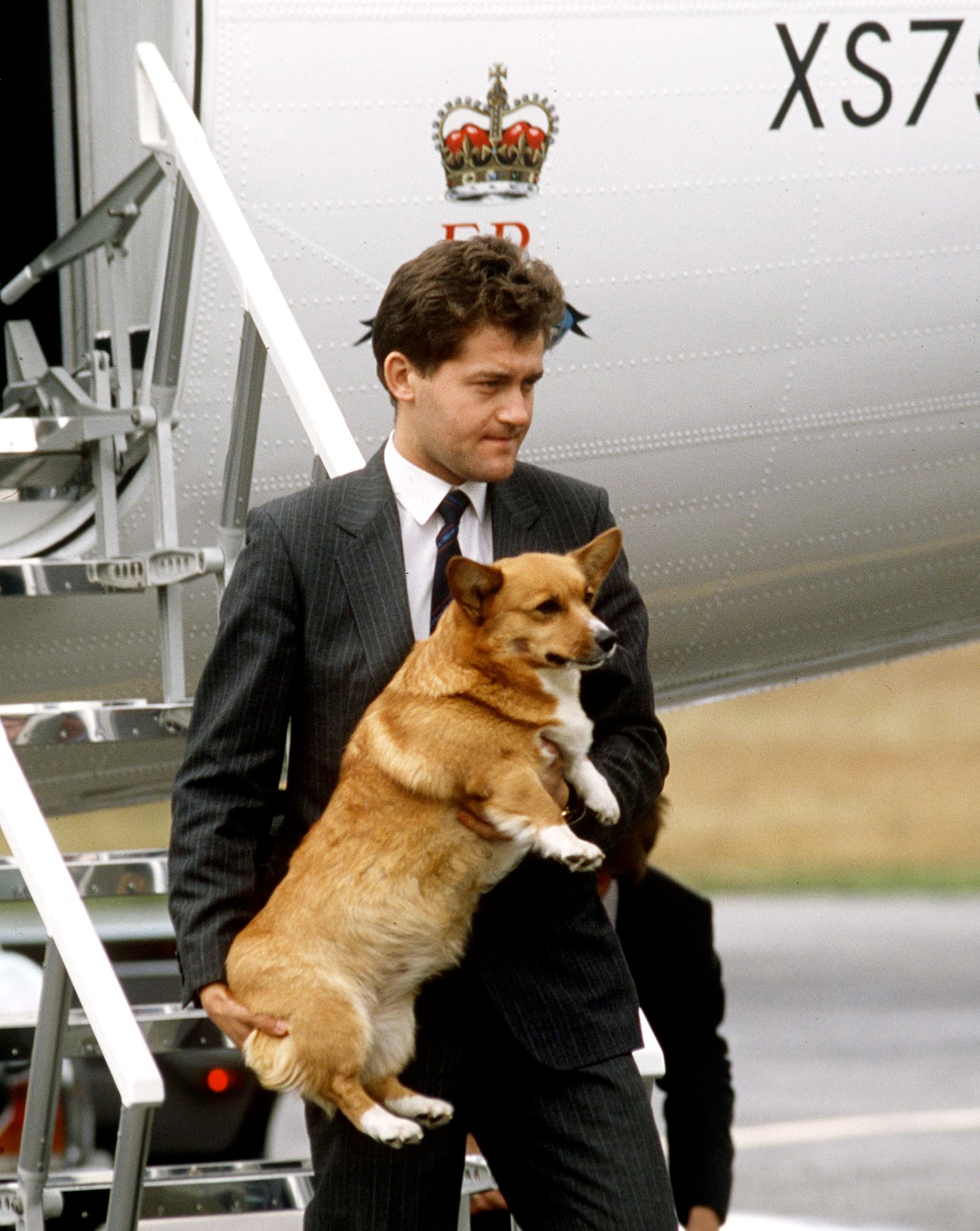
Burrell won over the Queen’s corgis with breakfast sausages stashed in his pocket
TIM GRAHAM/GETTY IMAGES
The Queen’s day began at 8.15am when her maid brought in breakfast. Her toast was carefully measured (three inches by two inches with the crusts removed) and she would smear it with butter and a spoonful of Frank Cooper’s coarse-cut vintage Oxford marmalade. She read the papers listening to Terry Wogan on her Roberts radio. Then, at 10am, she rang the Queen Mother at Clarence House; she often declared, “I’m not really Queen, my mother’s still Queen.”
After her day’s work was done, she enjoyed watching Dad’s Army or Morecambe and Wise. The weather forecast was a must. Despite the odd extravagance (her milk, emblazoned with the Queen’s cypher, was driven up the motorway from the Royal Dairy at Windsor), her lifestyle was quite frugal, Burrell asserts.
“At Balmoral her dresser would often find snow on the green tartan carpet in her bedroom because the windows were left open all night. Looking at her old-fashioned three-bar electric fire, the Queen would say, ‘Put a bar on for the corgis, Peggy.’ [Peggy was her nickname for her sister Margaret] And at Christmas, after the crackers had been discarded, the Queen would go round collecting whistles, powder compacts and magnifying glasses, as well as the jokes and paper hats. She had a drawerful.”
Despite his avowed devotion to Diana, Burrell was reluctant to leave the Queen’s service in 1987 to join the Prince and Princess of Wales at Highgrove House in Gloucestershire. “I thought I had the best job in the world and I was devoted to the Queen,” he says.
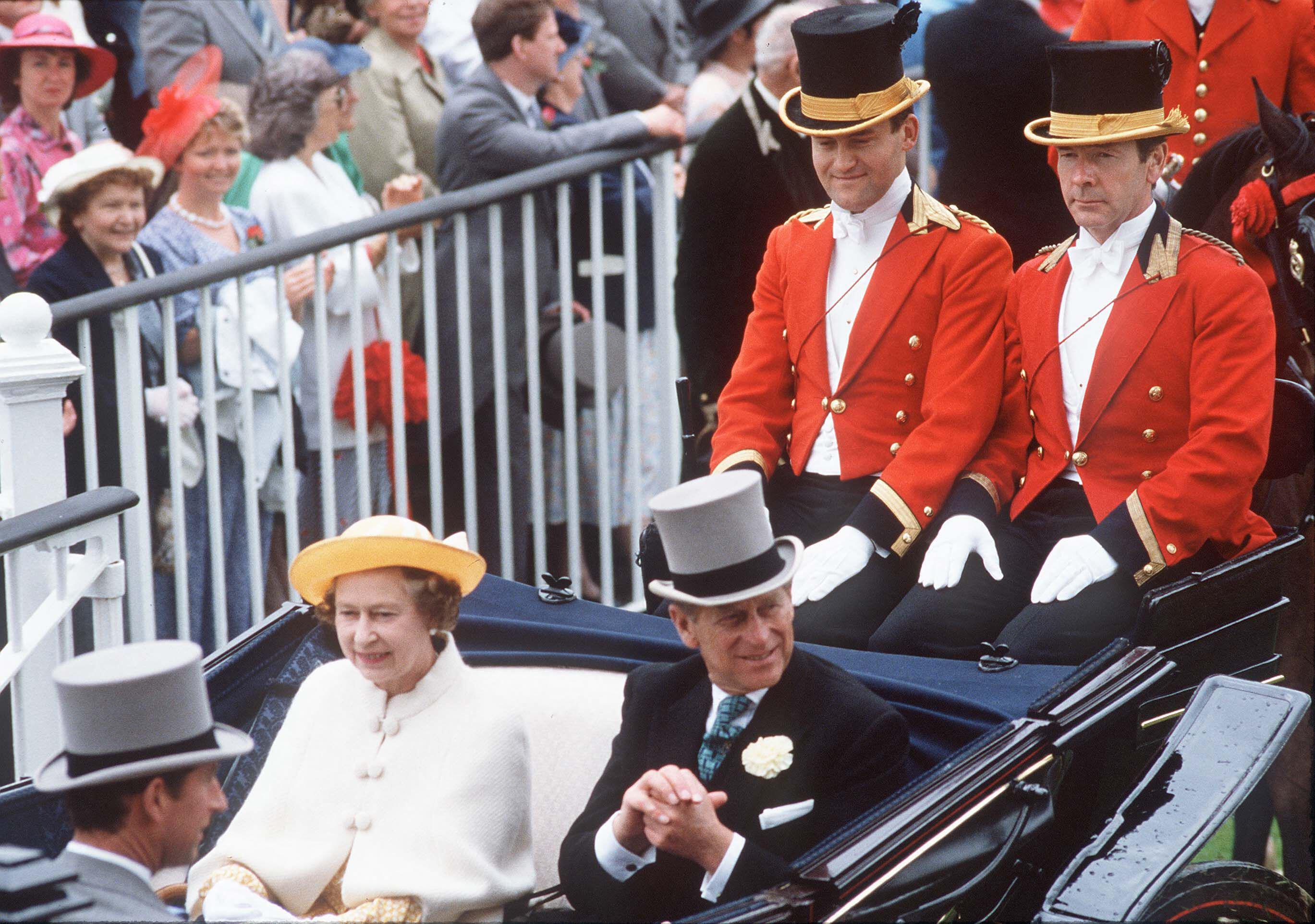
Queen Elizabeth and the Duke of Edinburgh at Ascot in 1987, with Burrell riding behind, left
ANWAR HUSSEIN/ALLACTIONDIGITAL.COM/ALAMY
He and his wife at the time swapped their grace-and-favour accommodation in the Royal Mews for a “beautiful Cotswold cottage” just beyond the kitchen garden at Highgrove. “It was idyllic. Our boys had free rein of the estate. And William and Harry were often in our garden because they gravitated to our boys. Diana said, ‘We’ll be one big, happy family.’ Well, that wasn’t to be.”
He claims Charles chose Highgrove while he was still a bachelor because he wanted to be within striking distance of Bolehyde Manor in Wiltshire, where the Parker Bowles family lived. Nonetheless, he gave Diana carte blanche to furnish and decorate as she wished.
• How much does the royal family really cost the British public?
“With the help of her designer friend Dudley Poplak she decorated in a chintzy, Laura Ashley style that was all the rage in the 1980s,” Burrell says. “It wasn’t until the divorce came though that Charles started to change things. Everything became darker. Diana said to me, ‘It’s like he’s going back to the womb.’ Charles’s style is mahogany Chippendale furniture. It harked back to the Queen Mother. Diana was light and breezy; everything was limed oak.”
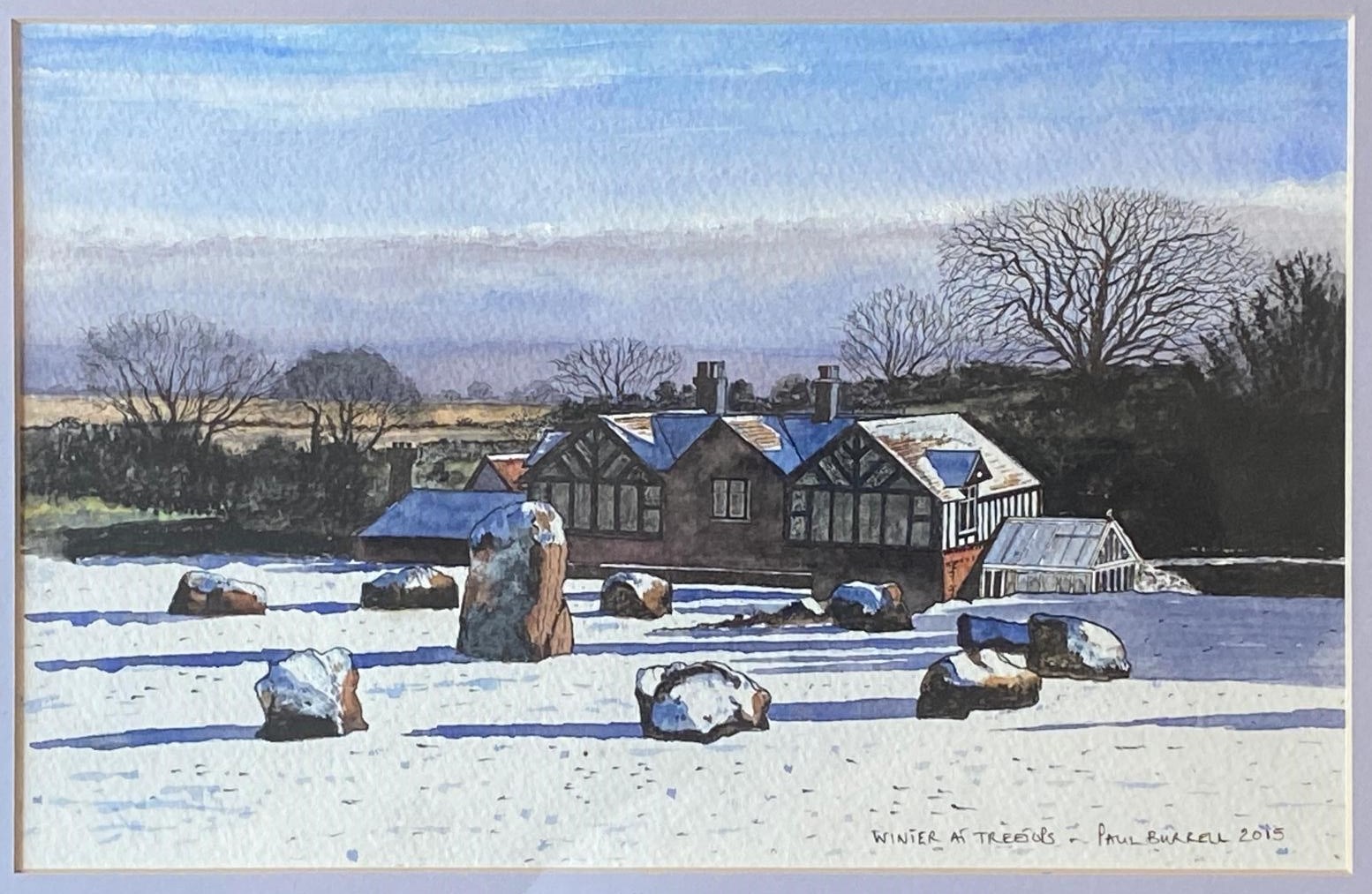
Winter at Treetops, a watercolour painting by Burrell of his home
PAUL BURRELL
The couple’s aesthetic divide mirrored the widening gulf in their marriage. By the time Burrell arrived on the scene, Charles and Diana were mostly living separate lives. Diana spent her week in Kensington Palace because she took care of the boys in London and did the school runs. They only descended on Highgrove at weekends, to spend time with “Papa”. But as the marriage fell apart Burrell learnt to serve two royal mistresses, because when Diana was in London, Camilla Parker Bowles filled the space in between.
Burrell saw more of Charles than Diana during this period and says he was a demanding boss. “He wouldn’t think twice about wanting tea or dinner anywhere on the estate. He’d say, ‘I’d love to have tea down in the garden this afternoon.’ So you’d end up carting everything you’d need for tea down to the kitchen garden — and then it would rain. So he’d say, ‘I need to go back inside.’ And then you’d rush to set up in the dining room. It was relentless. You always had to be one step ahead.”
Burrell’s particular bugbear was scrambling on to the Highgrove roof to put up the royal standard whenever Charles was in residence. “I had to climb up the wooden ladder, through the trapdoor, and onto the leaded roof in storm, snow and torrential rain. Can you imagine? And then having to come down and serve tea.”
Eventually, Burrell claims, he could take no more. “In the last year of my employment the prince fell from his horse while playing polo. He broke his arm, injured his back and scarred his face, which is still evident. After his operations he convalesced at Highgrove and I remained on duty every single day for three months. Both his valets, Michael Fawcett and Ken Stronach, were exhausted by the end of it. Poor Michael even had to hold the bottle into which Charles urinated. But there was only one
butler.

Highgrove House, Gloucestershire — the King’s private country residence
CHRIS JACKSON/GETTY IMAGES
“Eventually I collapsed while getting ready for duty. My consultant ordered that I stay in hospital for two weeks.”
Burrell claims he witnessed many fights between the warring Waleses behind closed doors. “Plates were smashed, tempers raised and even tables overturned,” he says.
When the announcement came, in 1992, that the couple were going to separate, Burrell knew his time was up. “We were all told that Highgrove was going to be mothballed, which wasn’t the case. Charles said to Diana, ‘Take whatever you want.’ She said, ‘I’m taking Paul. I need him for continuity. He knows everything.’ ”
Diana marked her break with her husband by stripping out all vestiges of their life together at Kensington Palace. “She said, ‘It’s time to decorate this place the way I want it.’ She started by stripping out the silk embossed curtains with the Prince of Wales feathers that hung in the sitting room. The carpet, which bore the same insignia, was also removed.
“Her London style had been garish — bright greens and oranges, all mixed together. But she switched to powder blue and light pink. It was comforting and girly.” She kept other reminders that her life as a princess wasn’t quite the fairytale she had expected. “She kept a collection of stone frogs because she said she had kissed a lot of frogs but had always ended up with toads.”
• Sophie Winkleman: ‘The royal family’s lives are total hell’
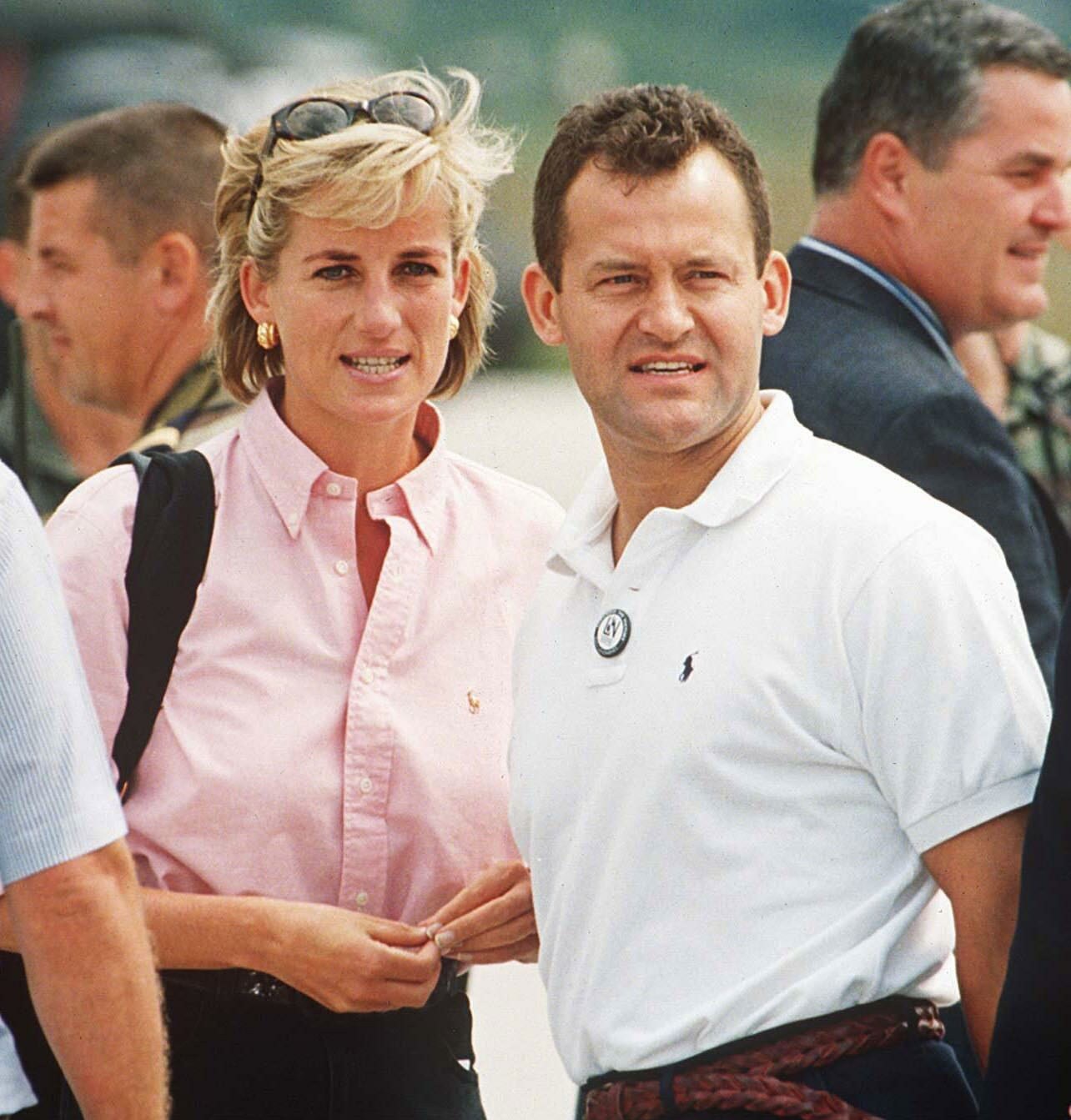
Princess Diana with Burrell in Bosnia, 1997
TIM ROOKE/SHUTTERSTOCK
Life with Diana required a lot of readjustment. “The Queen’s life ran like clockwork,” Burrell says. “It was always Groundhog Day at Buckingham Palace. Nothing ran smoothly with Diana. We might skip lunch. We might go shopping. Life was more exciting, but I knew where I was with the Queen. There was an invisible barrier around her which no one could penetrate.
“Diana, in contrast, treated me like an equal — in private at least. Every morning I would bow and say, ‘Good morning, Your Royal Highness.’ But she would giggle and say, ‘Please stop doing that.’ Years later, when I met with William, he said to me, ‘Mummy drew you too close to her, Paul, because she had no one else. But it wasn’t fair to do that. Catherine and I have each other. We won’t do that with our household.’ ”
Burrell became Diana’s confidant and friend. “My wife used to say, ‘There are three people in my marriage too, because Diana is always there. She’s your baby.’ I agreed. She was my baby. She needed me. Maria had two children. The princess had no one.
“Her children were away at boarding school. She had no husband. Occasionally she had a male companion, but they came and went. I was responsible for that too. I was the one who brought people back to Kensington Palace in the back seat of my car, underneath a blanket. She used to say, ‘All I want, Paul, is a man to put their arms around me and say, I love you. That’s not too much to ask, is it?’”
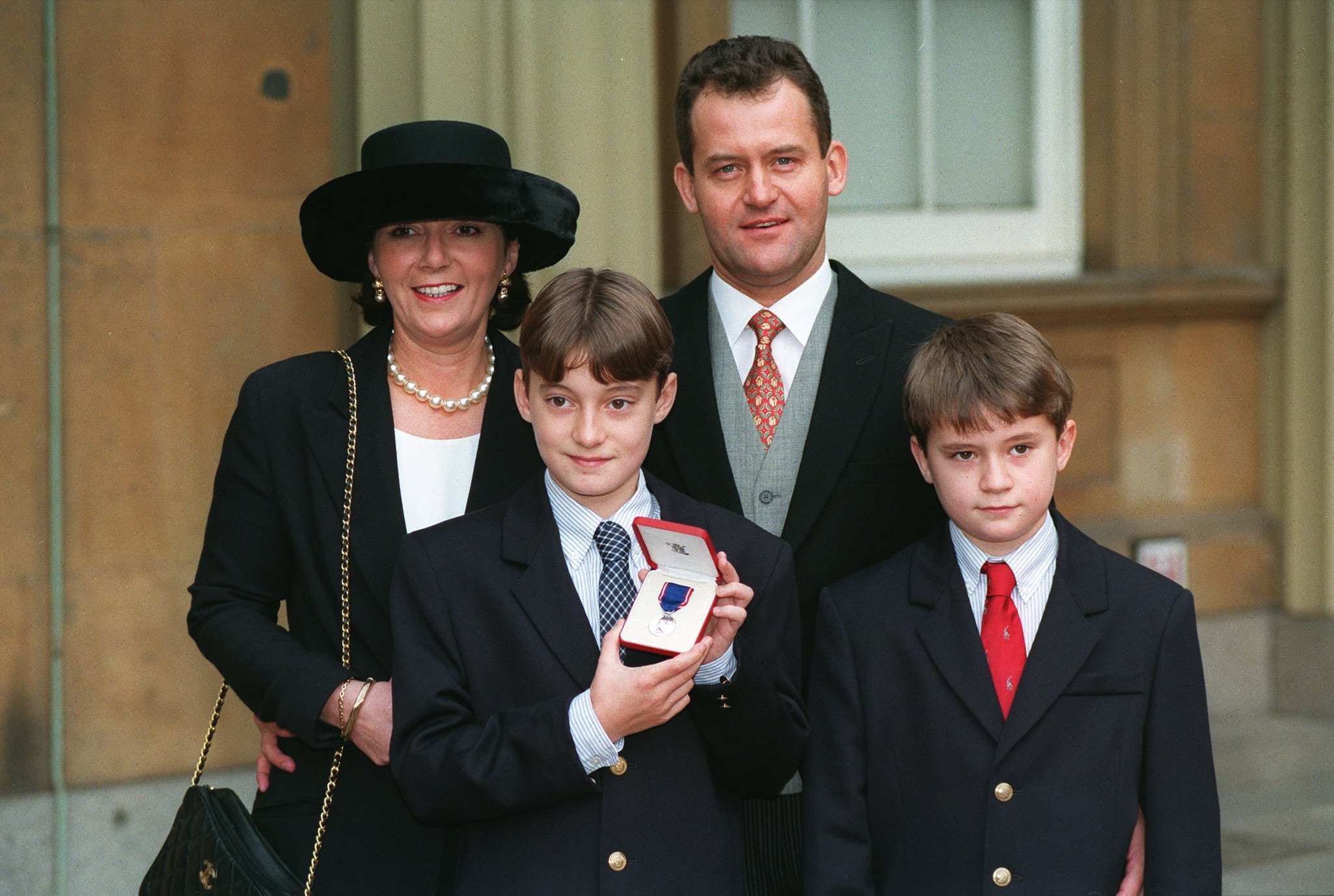
Burrell and his family (wife, Maria, and sons, Alexander and Nicholas) after receiving a Royal Victorian Medal from Queen Elizabeth in 1997
ARTHUR EDWARDS/NEWS GROUP NEWSPAPERS
And then, of course, Diana’s death changed everything. Cataloguing her estate was a cathartic experience. Then he had a message from St James’s Palace. The Prince of Wales wanted the key to her apartment. Burrell angrily replied, “You’ll have to prise it from my dead fingers.” He admits it wasn’t very loyal. “It was a little too dramatic, but that’s who I am. I was fiercely protective of Diana’s world and didn’t want anybody to come into it.”
“I was teetering on the edge of an abyss; everything in my world had gone. Not just Diana, not just a person I loved very much, but my home, the children’s schools, my livelihood, my pension — everything. Nobody thought to say, ‘How’s Paul?’ Well, actually, one person did. The Queen. When I was in Paris [to dress Diana’s body after her death], Charles rang me and said, ‘The Queen wants you to know that we are all thinking about you, and she’s concerned about you.’”
Within six months Diana’s apartment was stripped bare. “Even the light fixtures were taken down. The establishment was trying to erase her from history. I stood by, appalled and powerless to do anything.”
His life would have been very different had Diana lived. Before her death she had been talking about a move to the States: “She had the plans and deeds of Julie Andrews’s home in Malibu. It was on the market and she spread the floorplan over the carpet, pointing out where each of us would live. She’d never had a vacation home, a bolthole to take the boys.”

Burrell with his husband, Graham “Coop” Cooper, in 2018
CARLA SPEIGHT/GETTY IMAGES
As it happens, Burrell did move to America in 2008 but hated it. “The culture was totally different. It was such a vacuous lifestyle. I’m British through and through. I love the seasons and the countryside. So that was the end of my marriage because I had to come home, and that’s when I found Coop.”
He has many regrets. “I neglected my family world in favour of my royal world. My devotion to Diana was unprecedented and consuming. I will try to make amends for the rest of my life.”
The Royal Insider: My Life with the Queen, the King and Princess Diana by Paul Burrell is out now (Sphere £25). To order a copy go to timesbookshop.co.uk or call 020 3176 2935. Free UK standard P&P on orders over £25. Special discount available for Times+ members