
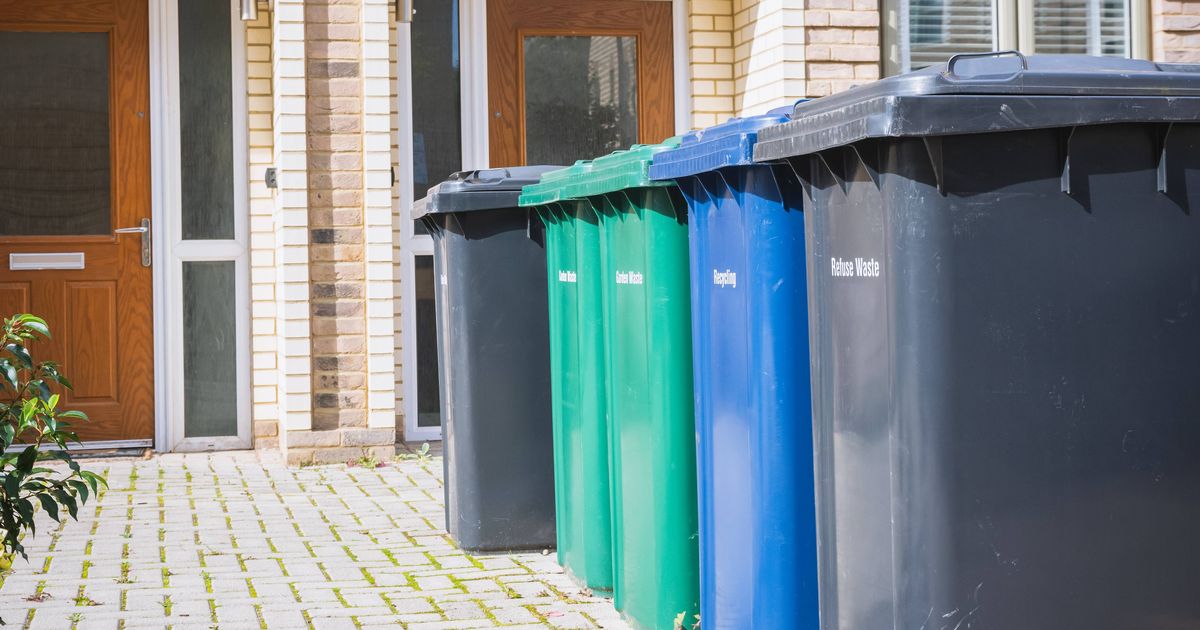
Every home in England must abide by the new bin rules All England households will have new bin rules to follow(Image: VictorHuang via Getty Images)
New bin rules will come into force for households in England next year, with a minimum of four bins becoming mandatory for domestic waste and recycling purposes. Authorities have confirmed residents must change how they get rid of waste, with local councils ordered to alter their collection systems by the end of March.
The Simpler Recycling initiative dictates that the new standard provision for the majority of homes and businesses will comprise four separate containers. Officials say this will get rid of the ‘postcode lottery’ surrounding bin collections across England, where councils gather varying materials for recycling, resulting in confusion among households.
The proposals specify that the four categories of waste container are designated for non-recyclable waste, food waste, paper and card, and all other dry recyclables such as glass and metal. Every household, including flats, must have these collected by March 31, 2026.
Plastic film packaging (such as crisp packets) and plastic bags will be included with plastic recycling from March 31, 2027. Earlier this year, Parliamentary Under-Secretary of State for Nature Mary Creagh addressed a parliamentary written question, said: “We have set out that every local authority will be required to collect food waste for recycling by March 31, 2026.
“Commencement regulations named a total of 31 local authorities that were provided with a bespoke transitional arrangement, delaying food waste collection requirements.”
“It was deemed that these local authorities needed longer to implement separate food waste collections for households due to barriers presented by long-term residual waste disposal contracts that run beyond 31 March 2026.
“We engaged extensively with affected local authorities. Where the evidence demonstrated that existing long-term waste disposal contracts presented an unavoidable barrier to the introduction of food waste collections by 31 March 2026, transitional arrangements were provided by Defra.
“We will continue to work with local authorities to identify whether they can bring forward food waste collections and the associated benefits before the end of their bespoke transitional arrangement.”
Earlier this year, the Department for Environment, Food and Rural Affairs detailed items that councils are not obligated to collect under the new scheme.
Food waste
Councils are not required to collect any plastic packaging or non-packaging items labelled as ‘compostable’ or ‘biodegradable’, including coffee pods. Food waste caddy liners used to hold food waste can be collected.
Glass
Councils are not required to collect any glass not utilised as packaging. This includes:
drinking glassesglass cookware (such as Pyrex)vaseslight bulbs and tubesmicrowave platesceramics, such as crockery or earthenwaremirrorscandlesflat glasswindow glassGarden waste
Councils are not required to collect:
bulky waste (including garden furniture and fencing)plant potssandtea bags or coffee groundsanimal beddingbranches and trees over a certain size may have to be cut into smaller pieces to follow local guidancesawdustplasticgarden tools or other gardening equipmentstone, gravel or bricksPaper and card
Councils are not required to collect:
tissue or toilet paperfood and drinks cartons made of a fibre-based composite (these should be collected in the plastic stream)cotton wool or makeup padsabsorbent hygiene products (AHPs) including nappies, period products and incontinence productswet wipes
For further details on the items councils do not collect click here