
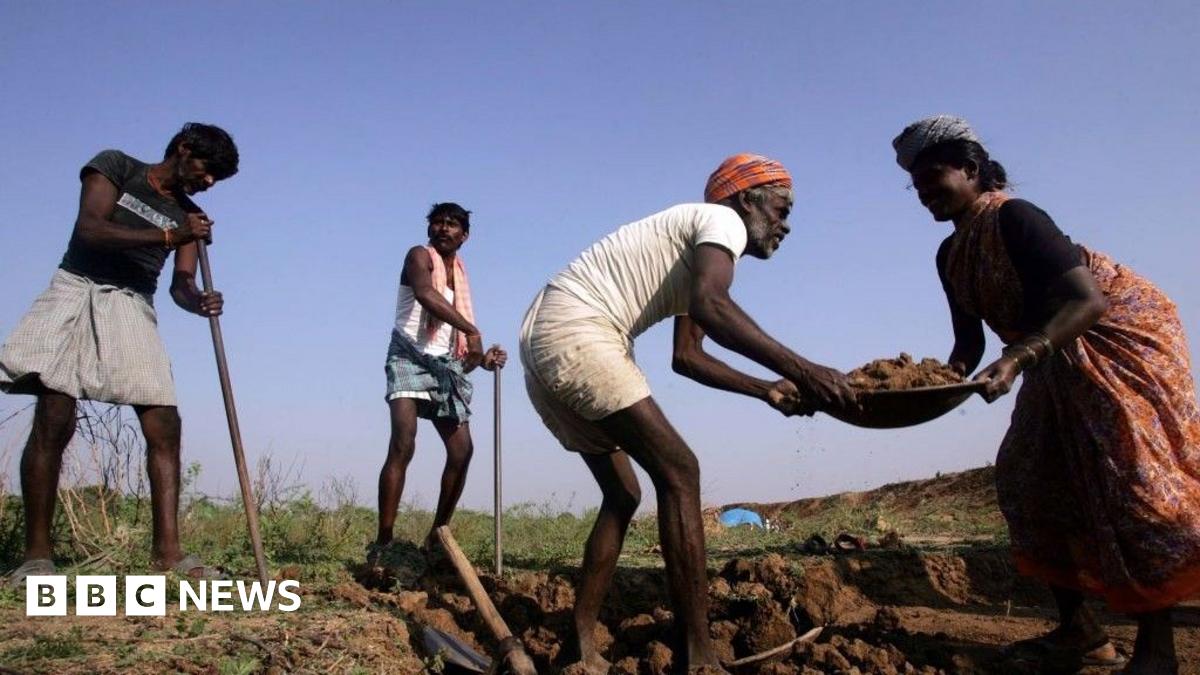
To be sure, the scheme has faced persistent challenges, including underfunding and delays in wage payments. West Bengal’s programme, for example, has faced deep cuts and funding freezes since 2022, with the federal government halting funds over alleged non-compliance.
Yet despite these challenges, the scheme appears to have delivered measurable impact.
An influential study, external by economists Karthik Muralidharan, Paul Niehaus, and Sandip Sukhtankar found that the broader, economy-wide impacts of the scheme boosted beneficiary households’ earnings by 14% and cut poverty by 26%. Workers demanded higher wages, land returns fell, and job gains were larger in villages, the study found.
But many say the scheme’s durability also underscores a deeper structural problem: India’s chronic inability to generate enough non-farm jobs to absorb surplus rural labour.
Agriculture has consistently lagged behind the broader economy, growing just 3% annually since 2001–02, compared with 7% for the rest of the economy.
Critics such as Nitin Pai of the Takshashila Institution, a think-tank, argue that the scheme cushions distress but does little to raise long-term rural productivity, and may even blunt incentives for agricultural reform.
“With [the scheme] we’re merely treating a serious underlying malaise with steroids,” said Mr Pai in a post on X.
The government’s Economic Survey 2023–24 questions whether demand under the scheme truly mirrors rural hardship.
If that was the case, data should show higher fund use and employment in poorer states with higher unemployment, the survey says.
Yet, it notes, Tamil Nadu, with under 1% of the country’s poor, received nearly 15% of the scheme’s funds, while Kerala, with just 0.1% of the poor, accounted for almost 4% of federal allocations.
The survey adds that the actual work generated depends largely on a state’s administrative capacity: states with trained staff can process requests on time, directly influencing how much employment is provided.