
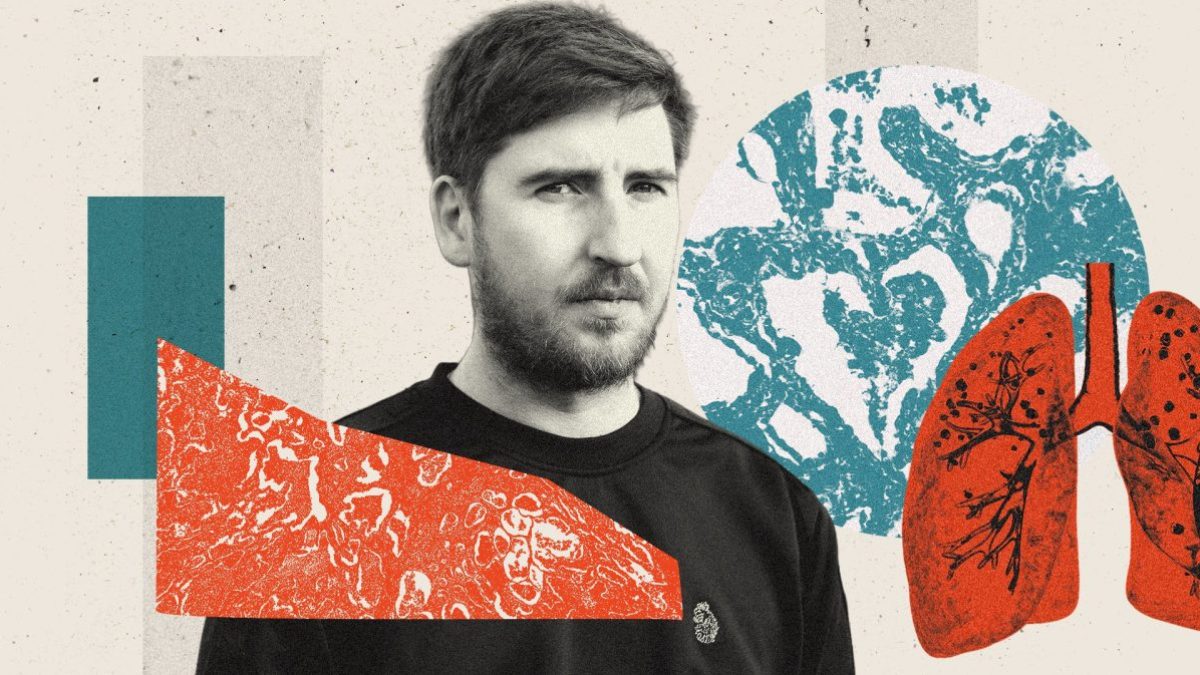
Without his knowledge, Luke Bunker spent his working days caked in toxic dust from cutting quartz countertops for kitchen revamps
Caked in dust, his head, face and overalls matted with a toxic, grey film, the photos of Luke Bunker at work tell their own grim story.
In November last year, he was diagnosed with silicosis, emphysema and COPD after working with a small firm cutting quartz kitchen worktops for nearly 10 years in “a fog of dust”.
A year shy of his 30th birthday, the former stonemason, from Royston, Hertfordshire, now finds it painful to breathe and struggles to walk long distances.
“I was starting to get chest pains, and then I started to get a lot worse,” he told The i Paper.
“I was glad they had finally got a diagnosis. But then it was quickly, ‘this is probably really going to affect me in the future’.
“Now we know what it is, but [the problem is] the whole not knowing what goes on from here.”
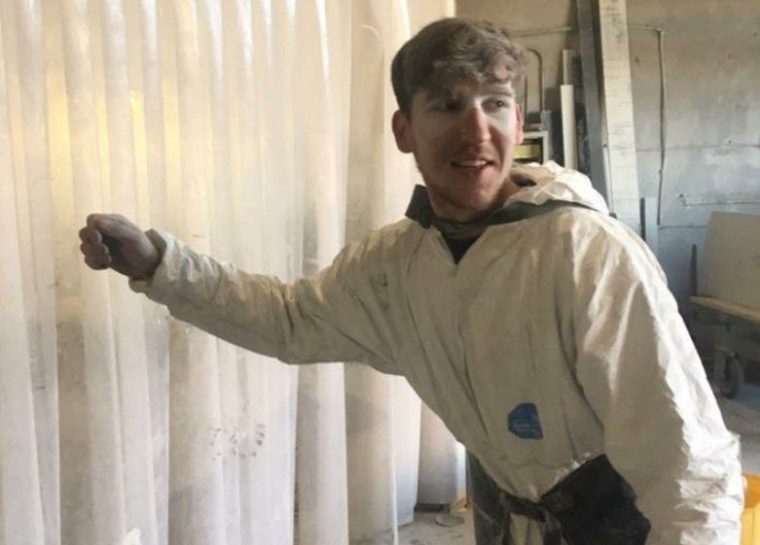 Luke Bunker, a stonemason from Royston, Hertfordshire, was diagnosed with silicosis and emphysema after working for 10 years at a firm cutting quartz worktops (Photos: Irwin Mitchell)
Bunker is one of scores of young workers in the UK diagnosed with the incurable lung disease silicosis after cutting quartz-engineered stone slabs.
Homeowners sprucing up their kitchens have fuelled a global surge in the man-made, artificial worktops, which are cheaper than materials like natural stone such as granite or marble.
When cut without adequate safety measures all stone produces a fine dust known as respirable crystalline silica (RCS) that can harm health.
But quartz contains a much higher content of silica – up to 95 per cent compared to marble at between 2 and 5 per cent and granite at 15 to 30 per cent – which has left workers like Bunker exposed to a lethal risk.
Doctors say he is at greater risk of lung cancer
“It made me think it was a waste of my years, a waste of working,” he said of his diagnosis.
“You get up early each morning, you work hard, to end up getting told you’re ill because of it. And then you can’t go back to it – and if you did it would probably make you worse.”
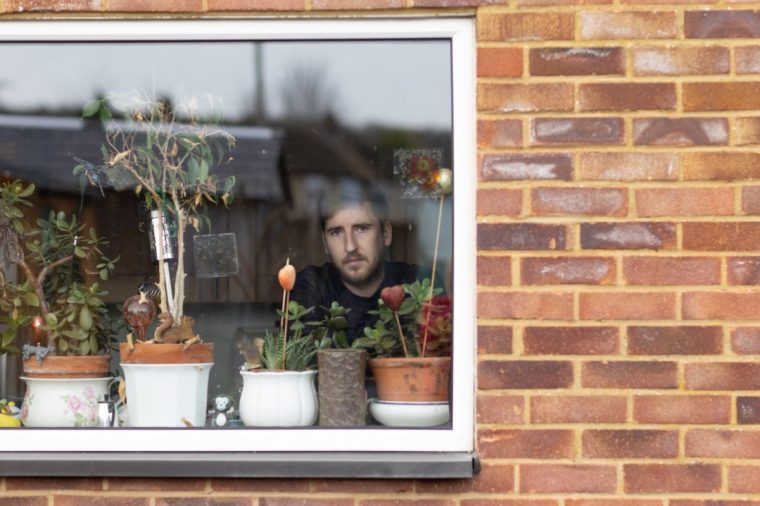 Bunker lives at home with his Nan in Royston and has had to stop working due to his condition and health (Photo: Teri Pengilley/The i Paper)
In the past two years, there has been a surge in silicosis cases in young stonemasons in the UK, with at least 45 diagnosed so far. The i Paper has launched its Killer Kitchens campaign to force the Government to clamp down on deadly silica dust putting workers’ lives at risk.
Have you been affected by this issue? Please contact Joe.Duggan@theipaper.com
While porcelain and granite were also cut in Bunker’s workshop, he estimates around 90 per cent of the kitchen countertops were quartz.
Demand for kitchen renovations booming
Demand for the fancy-looking kitchen surfaces was so high that his employer had to expand into another workshop to handle double the workload.
Around five stonemasons were sealed in a plastic curtain “dust shed” cutting slabs by hand with angle grinders to carve out holes for hobs and sinks and a CNC machine for larger jobs.
But a dust extraction tool using water that was meant to protect the tradespeople was always breaking down, he said.
“There was a lot of dust when it came to cutting hobs and tap holes and sinks out,” Bunker said.
“It was so dusty you wouldn’t want to be in there. It would cake anything where you were. You wouldn’t be able to put something down, and it wouldn’t be dusty.”
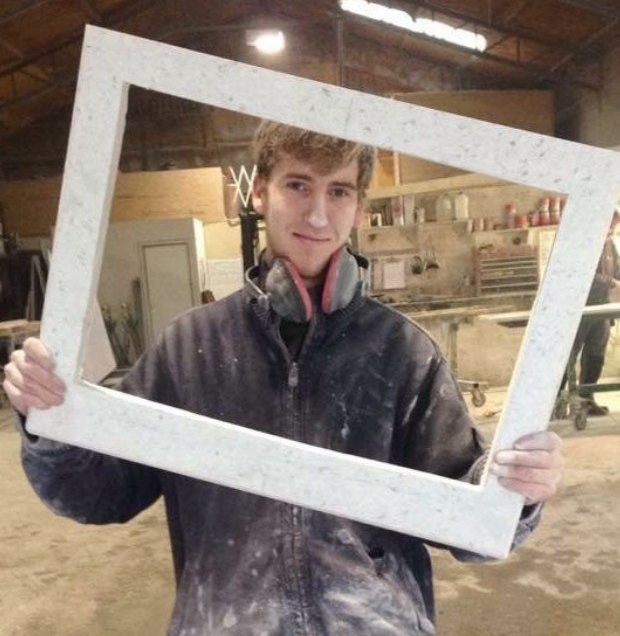 Bunker said dust extraction tools meant to keep the workers safe were not working properly, while masks didn’t fit well on his face (Photos: Irwin Mitchell)
Photos of Bunker in the workshop show dust on the floor and plastic curtains, as well as his face. One shows the mark left by his mask as the rest of his face is covered with dust that he now knows was shredding his lungs.
The masks he was given were either too big or too small, he said. Some slabs gave off a “horrible smell” when cut.
The stonemasons repeatedly raised concerns about the extraction tool not working properly, while any safety guidance they were given at work was not adequate, he believes.
Concerns ignored, protection inadequate
About two years ago, while cycling to work, he noticed having problems breathing and worsening chest pains.
“We phoned the doctors, and they got me to go in,” he said.
“They said not to stay back in the work environment I was in because of all the dust. They thought that it could have been something called sarcoidosis.
“Then we found out from another doctor that I went to see that it was the silicosis, emphysema and COPD.”
Most people are diagnosed with each of the progressive lung diseases between the ages of 40 and 60, after years of workplace exposure. Bunker was not yet 30 when he was told he had all three, and forced to give up his craft at an early stage in his career.
 Bunker says he first noticed having chest pains and problems breathing about two years ago (Photo: Teri Pengilley/The i Paper)
Now under the care of the Royal Brompton Hospital in London, where most quartz stonemasons with silicosis are being treated, he faces an uncertain future.
Doctors have told him he’s at greater risk of lung cancer. Since stopping work due to his poor health almost two years ago, he’s had a blood clot.
He’s been seeing a therapist to cope with the mental strain of his diagnosis. His lawyers, Irwin Mitchell, have launched legal action against the firm where he worked.
Health and safety measures ‘are Victorian’
Now forced to live on benefits, he struggles with aspects of everyday life due to his respiratory impairment.
He called for improved health and safety conditions to protect other stonemasons, and would prefer to see a ban on quartz, as in Australia.
“I think there needs to be a lot more scrutiny on it,” Bunker said.
“More regular checks instead of turning up once in a blue moon. I think they need to regularly check and keep on coming back to the same companies.
“I think the biggest fear [among bosses] is, ‘oh, they’re there to close us down’. It’s not that they’re there to close you down. It’s to make sure everyone’s safe working.”
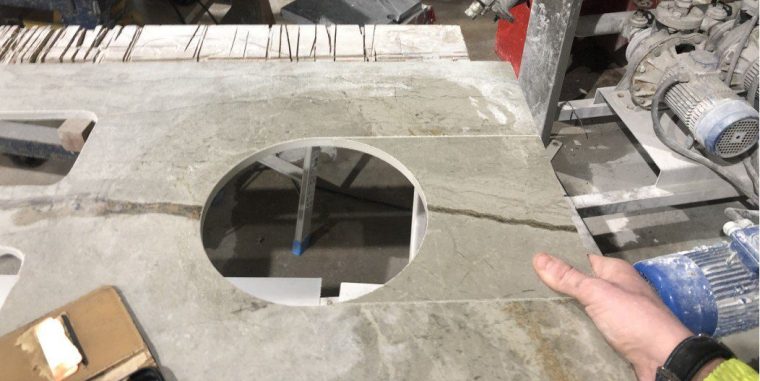 Demand for quartz kitchen worktop was so high the firm had to open a second workshop to cope with the orders (Photos: Irwin Mitchell)
Alex Shorey, an occupational disease lawyer at Irwin Mitchell, represents Bunker and a growing number of workers diagnosed with silicosis.
The huge doses of silica quartz stonemasons were being exposed to meant they were falling ill far sooner and much younger than workers in industries traditionally impacted by silicosis, he said.
“Health and safety measures put in place by some employers remain woefully inadequate,” Shorey said.
Your next read

“Some measures our clients have told us about are practically Victorian and not what anyone would expect in 2025.”
Bunker has this advice for other young workers in the industry.
“If you don’t feel comfortable in a situation, don’t feel like you have to do it, just because you get paid for it, if it’s dangerous,” he said.
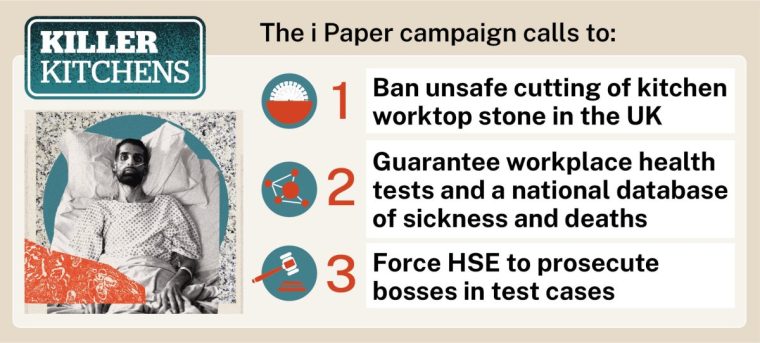 The i Paper has launched its Killer Kitchens campaign to force the Government to clamp down on deadly silica dust putting workers’ lives at risk