
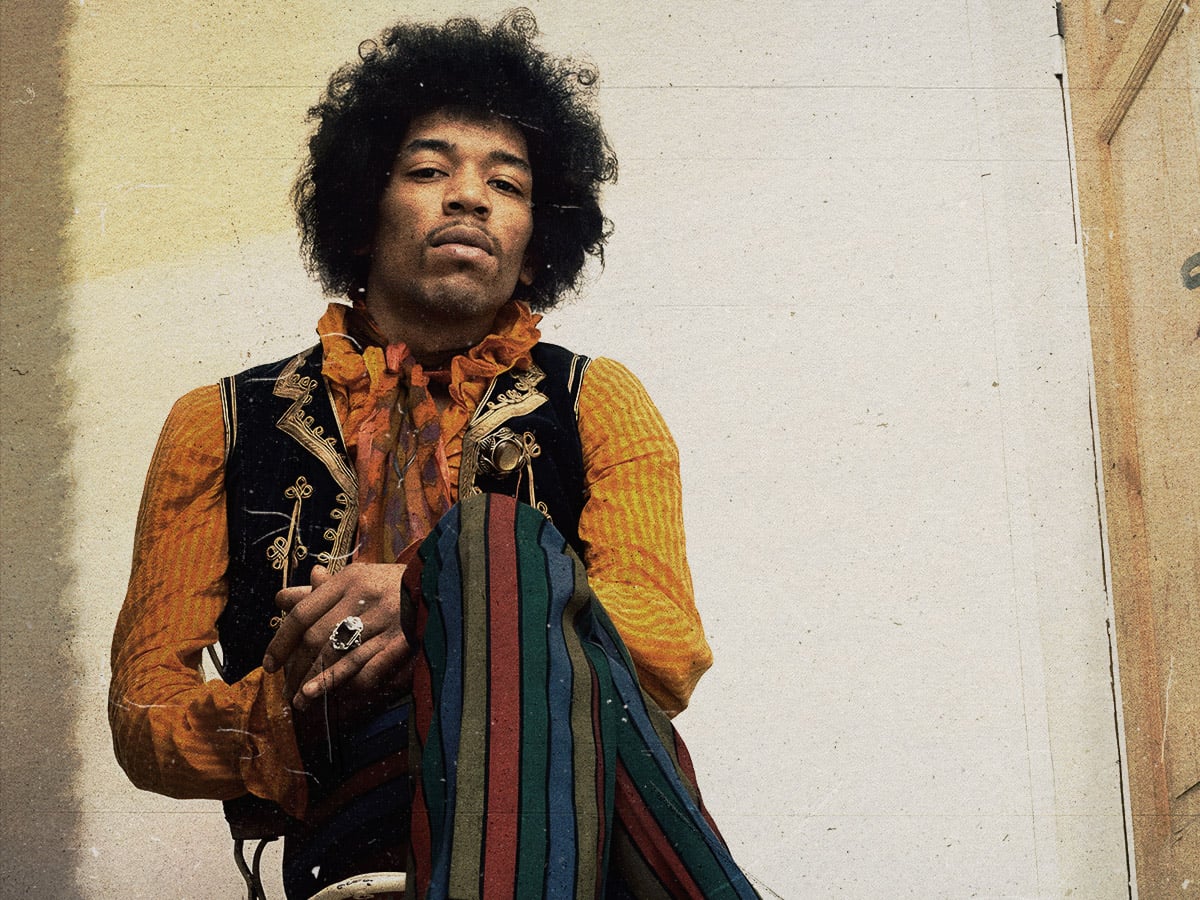
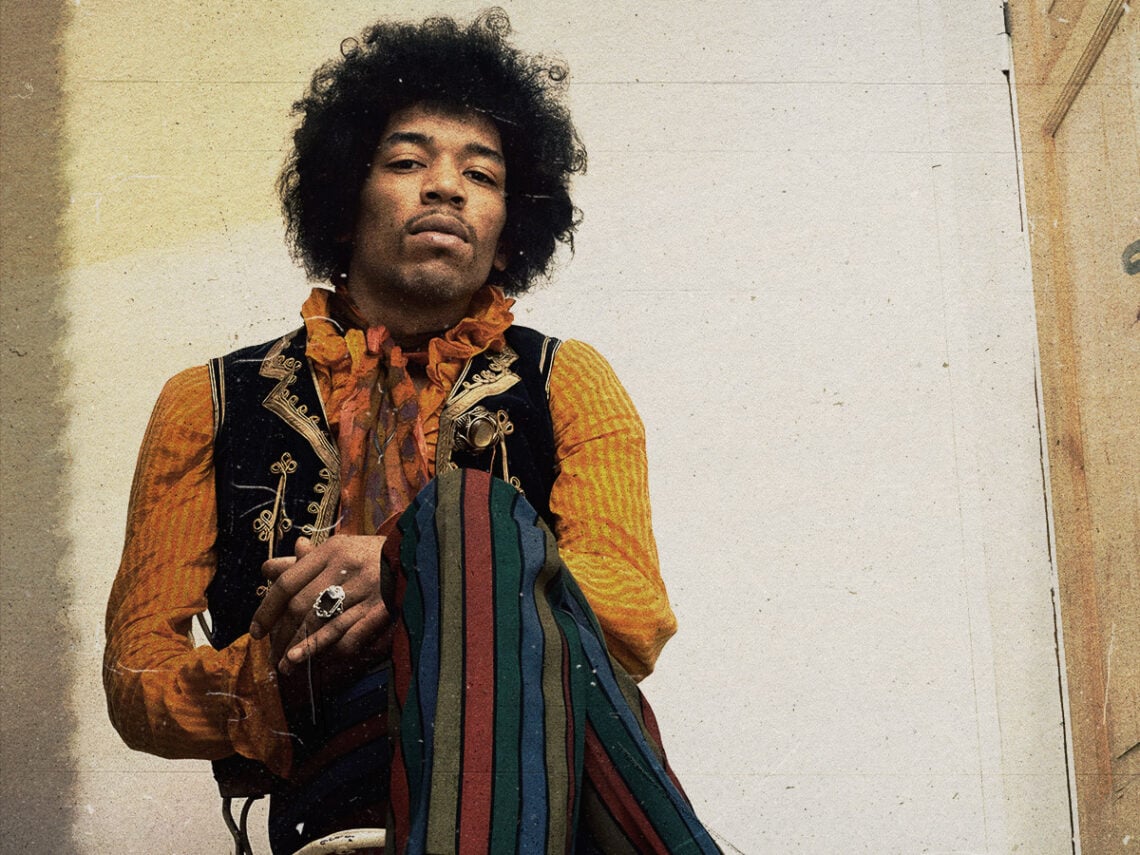
(Credits: Bent Rej)
Tue 23 December 2025 16:39, UK
Jimi Hendrix is rightly recognised as the greatest proponent of the electric guitar ever to sling the instrument across his shoulder, but he’s often underrated as a lyricist. Across three timeless albums and several explosive singles with The Jimi Hendrix Experience, he developed his own brand of otherworldly poetry that makes an ideal match for the band’s ethereal psychedelic sound.
Often, Hendrix reserved his most poetic turns of phrase for his song titles, with ‘The Wind Cries Mary’ and ‘Little Wing’ among the most magical. It’s another song title, though, that defines the language of Hendrix’s lyrics more than any other.
‘Voodoo Child (Slight Return)’ was a game-changer when it came to rock music, redefining what the outer limits of what electric blues could accomplish. Its swashbuckling guitar lines drive the song forward with more force than a jet engine, while Hendrix was making more sweet noise with his fingertips than an entire mic-ed up orchestra could have managed.
Yet we shouldn’t let the unprecedented might of the song’s guitar part lead us to overlook the power contained within its title. It’s a title that Hendrix used for two different songs on his final Experience album Electric Ladyland – ‘Slight Return’ and a 15-minute jam recorded a day earlier with the alternative spelling ‘Voodoo Chile’. It was the first direct reference Hendrix had made in music to his African heritage.
‘Voodoo Chile’ was compiled with Hendrix, Mitchell and the help of Steve Winwood and Jack Casady, the track worked as the basis for the more famous version of the song. This one still has plenty of chops, though, restrained and guarded, it actually feels a little more menacing than the more polished return to the song. A little-known fact: ‘Chile’ is a phonetic spelling of ‘Child’, so feel free to smugly correct anyone who has been inventing a new kind of chilli.
 Jimi Hendrix wilding out on stage in 1970. (Credits: Far Out / Alamy)
The final song in Hendrix’s time with The Experience is certainly one of his most iconic. The song he and the group had sketched out earlier on in their final LP Electric Ladyland comes back with full force as ‘Voodoo Child (Slight Return)’.
Mitch Mitchell and Noel Redding liked the track and went about learning it right away as Redding explained, “We learned that song in the studio… They had the cameras rolling on us as we played it”. The cameras were those of ABC’s, and they were intent on capturing the band in their magical flow. Hendrix added, “Someone was filming when we started doing [Voodoo Child]. We did that about three times because they wanted to film us in the studio, to make us—’Make it look like you’re recording, boys’—one of them scenes, you know, so, ‘OK, let’s play this in E, a-one, a-two, a-three’, and then we went into ‘Voodoo Child’.”
What is voodoo?
Voodoo, which was traditionally spelt “Vodou” in French-ruled Haiti, is a set of religious practices which arose among the West and Central African diasporas sent to America via the slave trade. It appeared in Haiti in the 16th century, synthesising elements of different African religions with Roman Catholic traditions.
While the state of Louisiana was still a French colony, new variants of Voodoo developed there, based on traditions passed down through generations of Haitian African Americans. Via Louisiana, the Voodoo culture and rituals found their way into the blues songs of the Mississippi Delta.
 (Credits: Far Out / Sony Music Entertainment)
The most famous example of Voodoo’s influence on the blues is the reference to a “mojo” we find in the song ‘I Got My Mojo Working’, recorded by Muddy Waters, among others. In Voodoo tradition, a mojo is a bag containing one or more items that act as magical charms, which a religious practitioner carries on their person as a form of prayer. The mojo is intended to protect or heal its carrier or otherwise bring them good fortune.
By calling his song ‘Voodoo Child’, Hendrix portrays himself as a direct descendant of both the blues tradition and, further back in time, of the African diaspora in the Americas. That he casts himself in this light while making such a forceful musical statement turns the song into a symbol of the Black Power movement in the United States
“The Black Panthers’ national anthem”
Indeed, Hendrix went as far as to introduce ‘Voodoo Child (Slight Return)’ as “The Black Panthers national anthem” when performing the song live at the Fillmore East in 1970. He’d obviously changed his views on the Black Panther Party somewhat from an interview he gave in Britain back in 1966.
The raw, essential power of the song, along with the African rhythms introduced by Hendrix’s guitar-scratching opening, seems to reflect his newfound confidence in appearing as a symbol of the Black struggle. Sadly, we’ll never know whether he would have continued making new music in this vein, as he was dead within nine months of the Fillmore East concert.
Related Topics