
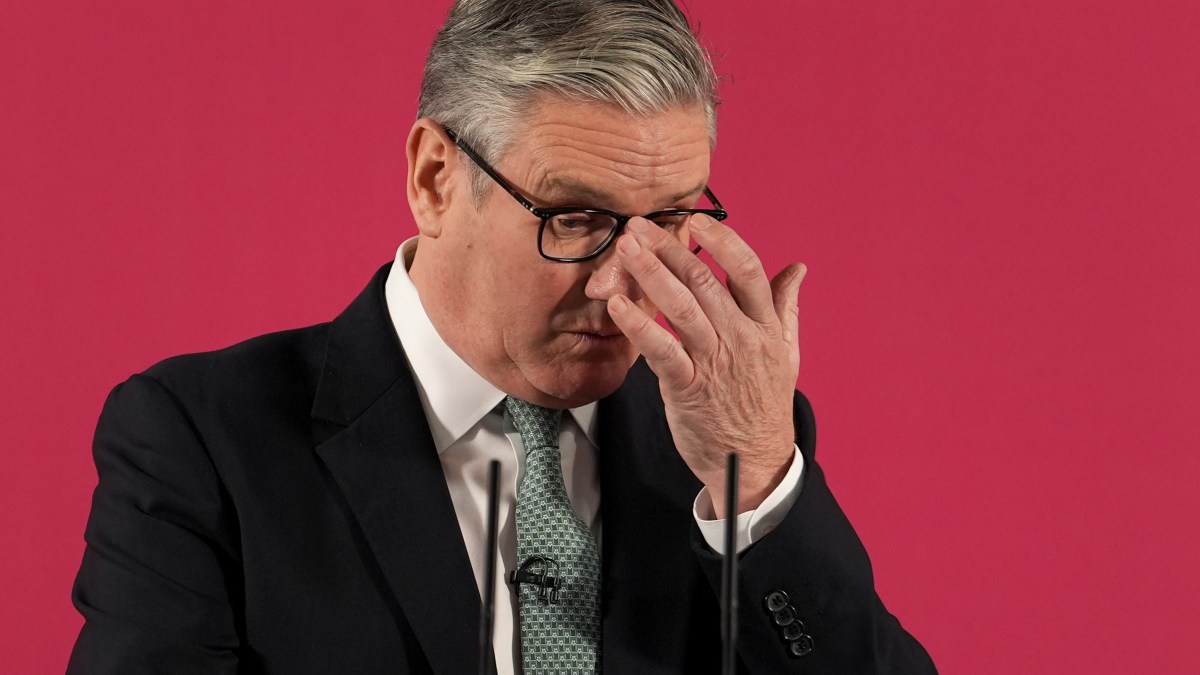
Sir Keir Starmer’s administration is characterised by a lack of reforming zeal
GARETH FULLER/WPA/GETTY IMAGES
Why is Sir Keir Starmer so disliked in the country? That the prime minister is unpopular is beyond reasonable doubt. While most fresh incumbents in No 10 enjoy a honeymoon, Sir Keir’s was depressingly brief. Take a look at the periodic polling on public satisfaction with his performance conducted by YouGov since Labour’s victory in July last year: it is, except for the occasional small mogul, a consistently downhill ski slope. At the end of August last year, barely two months into office, just 36 per cent of those questioned felt Sir Keir was doing a good job. And this month? Only 15 per cent remain positive, while 76 per cent believe he is, to put it brutally, a dud.
Sir Keir’s unpopularity is infectious. A thousand pub landlords, horrified by the rise in business rates, have barred Labour MPs from their premises. Buyer’s remorse is everywhere. The elderly and the young flock to the protest parties of Reform UK and the Greens. Meanwhile, back in their constituencies, Labour MPs engage in festive plotting. When at last Sir Keir tucks into his Christmas dinner an observer might conclude that there are two turkeys at the table. Sir Keir is not hated in the way Margaret Thatcher was by her opponents — there is not enough there to hate. He is simply the object of cynical disillusionment, of weary resignation.
This is not entirely fair. Sir Keir has — at times and behind the scenes — been a ruthless political operator, but he is clearly not a bad man. He was also dealt an especially tough hand in the debt burden bequeathed by the Conservatives due to their handling of the Covid-19 pandemic, and in the disruption to growth and trade inflicted by Brexit and President Trump’s tariff war. But he must accept the lion’s share of the blame for his predicament.
The challenging environment the prime minister inherited required a man or woman of vision, energy and conviction, ruthlessly focused on expanding the economy while reining in spending. It also required a fully thought-out plan before the election, and a willingness to die on the hill of radical reform. It was a task for which Sir Keir, a career lawyer late to politics, a process man most at home in an establishment setting, was temperamentally unsuited. Baroness Thatcher never ceased being an outsider; Sir Keir, the toolmaker’s son, spent his life trying to get on the inside.
The prime minister’s lack of reforming zeal is illustrated by his cabinet. Almost wholly bereft of experience in business, its members are the products of the public sector, charities, unions and think tanks. With a few exceptions such as Wes Streeting and Shabana Mahmood, Labour ministers represent easy prey for a pathologically risk-averse civil service. Sir Keir subcontracts the economy to his chancellor, whose own limitations are now all too painfully apparent. If he were a political Svengali his lack of economic grip might be just about forgivable. But he is not. A wooden performer, he can suck the life out of any announcement. In the Commons his prosecutorial manner can work, but in general he appears ill at ease.
Voters can forgive a lack of charisma, and maybe even a disingenuous pre-election pitch on tax, but not serial incompetence. That is where Sir Keir’s tenure has been such a shocker. Cock-up has been followed by cock-up. Policy announcements (of which, as usual in modern government, there are far too many) are often followed by panicked retreat. Winter fuel, grooming gangs, welfare cuts, and now the partial U-turn on inheritance tax on farms. The £1 million threshold was always ridiculously low, a fact that completely evaded ministers and Treasury officials, and was bound to cause uproar. But that is the way of this government: stupid decision followed by stubborn defence followed by humiliating climbdown. Sir Keir was never loved but he could have earned public respect through dogged progress. Instead, the suspicion must be that he has forfeited any chance of gaining it.