
For decades, the 3.2-million-year-old fossil called “Lucy” has been a centerpiece in stories about human origins. A member of the species Australopithecus afarensis, Lucy was long presented as the most plausible direct ancestor of later humans, a missing link that joined earlier apelike hominins to the genus Homo. New fossil finds from Ethiopia are now challenging researchers to revise that narrative and accept a more complex, branching family tree.
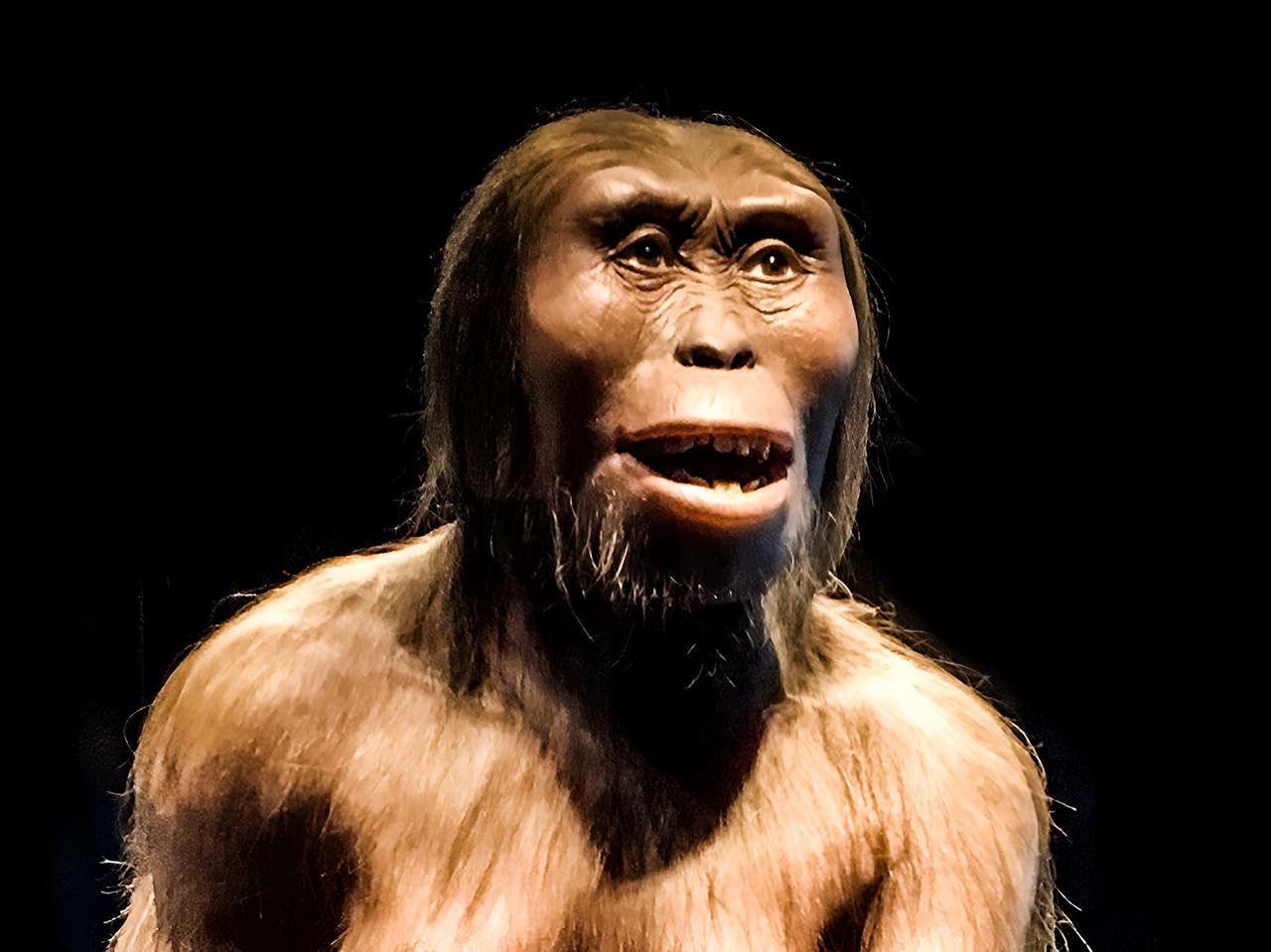 Model of a female Australopithecus afarensis. Credit: Ernesto Lazaros, CC BY-SA 4.0
The shift comes from recent analysis of remains of another early hominin species, Australopithecus deyiremeda, discovered in the Woranso-Mille region of the Afar Rift. Newly recovered jaw and tooth fossils have now been confidently linked to an unusual 3.4-million-year-old partial foot, known as the “Burtele foot,” which was found years earlier but could not previously be assigned to a species. Together, these remains confirm that A. deyiremeda was a distinct species living at the same time and place as Lucy’s kind, rather than a variation of A. afarensis.
Anatomical comparisons reveal that A. deyiremeda retained more primitive features than Lucy’s species, particularly in its teeth and feet. The structure of the Burtele foot indicates strong grasping capabilities, suggesting that climbing trees remained an essential part of its lifestyle. Chemical signatures preserved in the teeth also point to a diet dominated by forest foods like fruits and leaves, unlike A. afarensis, which consumed a broader mix that included grasses.
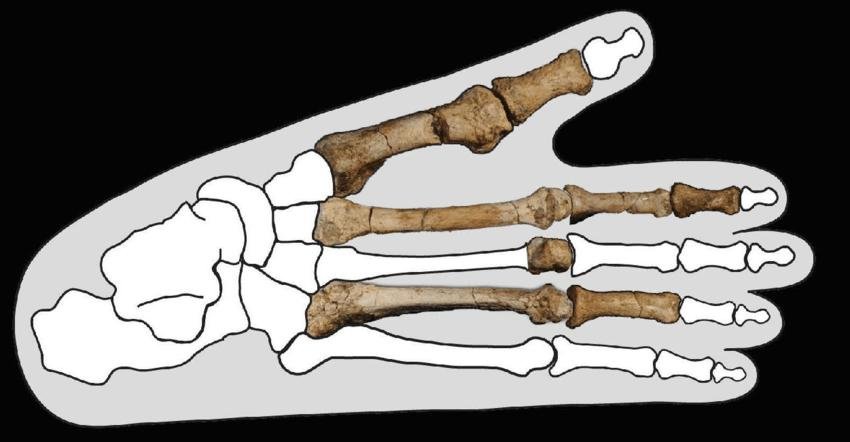 The Burtele foot. Credit: John Nygren / CC BY 4.0
Importantly, the new analysis suggests that A. deyiremeda might be more closely related to an even older species, Australopithecus anamensis, than to Lucy’s species. If that interpretation is correct, A. anamensis, which lived more than four million years ago, might sit closer to the base of the human lineage, giving rise to multiple later branches, including Lucy’s species and others. That possibility undermines the long-held assumption that A. afarensis was the single ancestral trunk from which all later human species emerged.
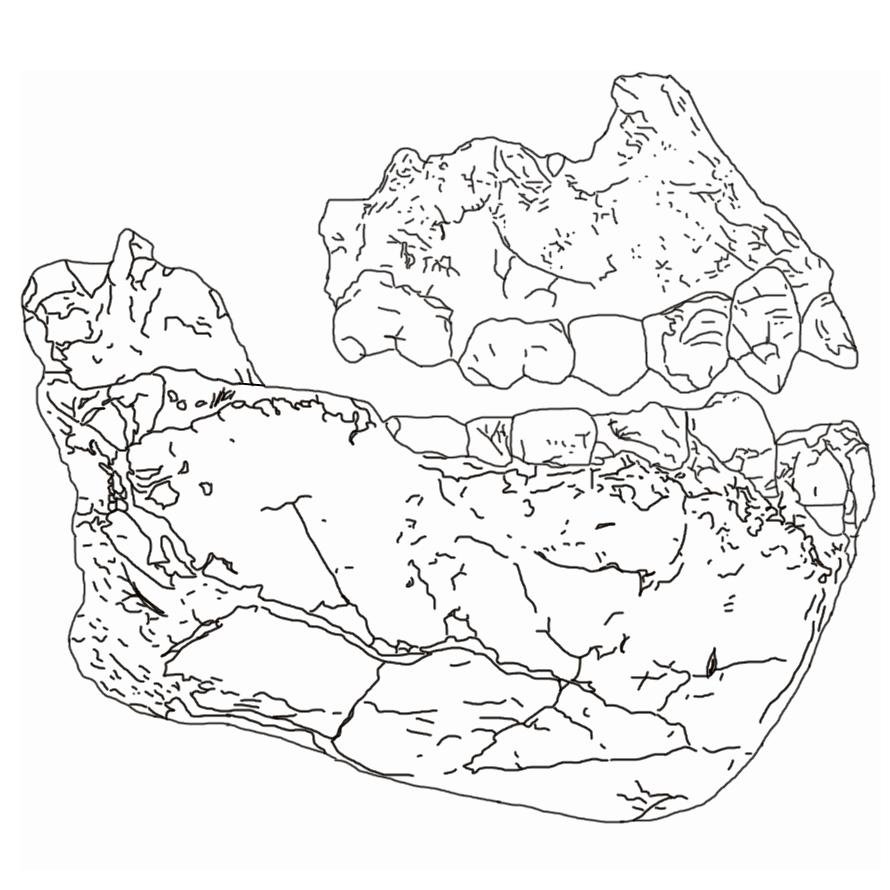 Fossil jaws and teeth of Australopithecus deyiremeda. BRT-VP-3/1 (reversed) and BRT-VP-3/14 shown in occlusion. Credit: A. C. Tatarinov
These findings further solidify evidence that eastern Africa between 3.5 and 3.3 million years ago was inhabited by multiple hominin species, which occupied distinct ecological niches. Early human evolution no longer looks like a simple linear progression toward modern humans but rather more like a dense evolutionary “bush,” wherein many different species were experimenting with different diets, behaviors, and ways of moving through their environments.
Not all researchers agree on what this means for Lucy’s status, and debate remains intense. Some scientists argue that A. afarensis still has the most compelling general case for being ancestral to Homo, while other experts say that the fossil record will never allow a definitive answer. What is becoming ever clearer, though, is that Lucy was not alone—and the path to humanity was much more intricate than once imagined.
More information: Haile-Selassie, Y., Schwartz, G.T., Prang, T.C. et al. (2025). New finds shed light on diet and locomotion in Australopithecus deyiremeda. Nature 648, 640–648. doi:10.1038/s41586-025-09714-4