
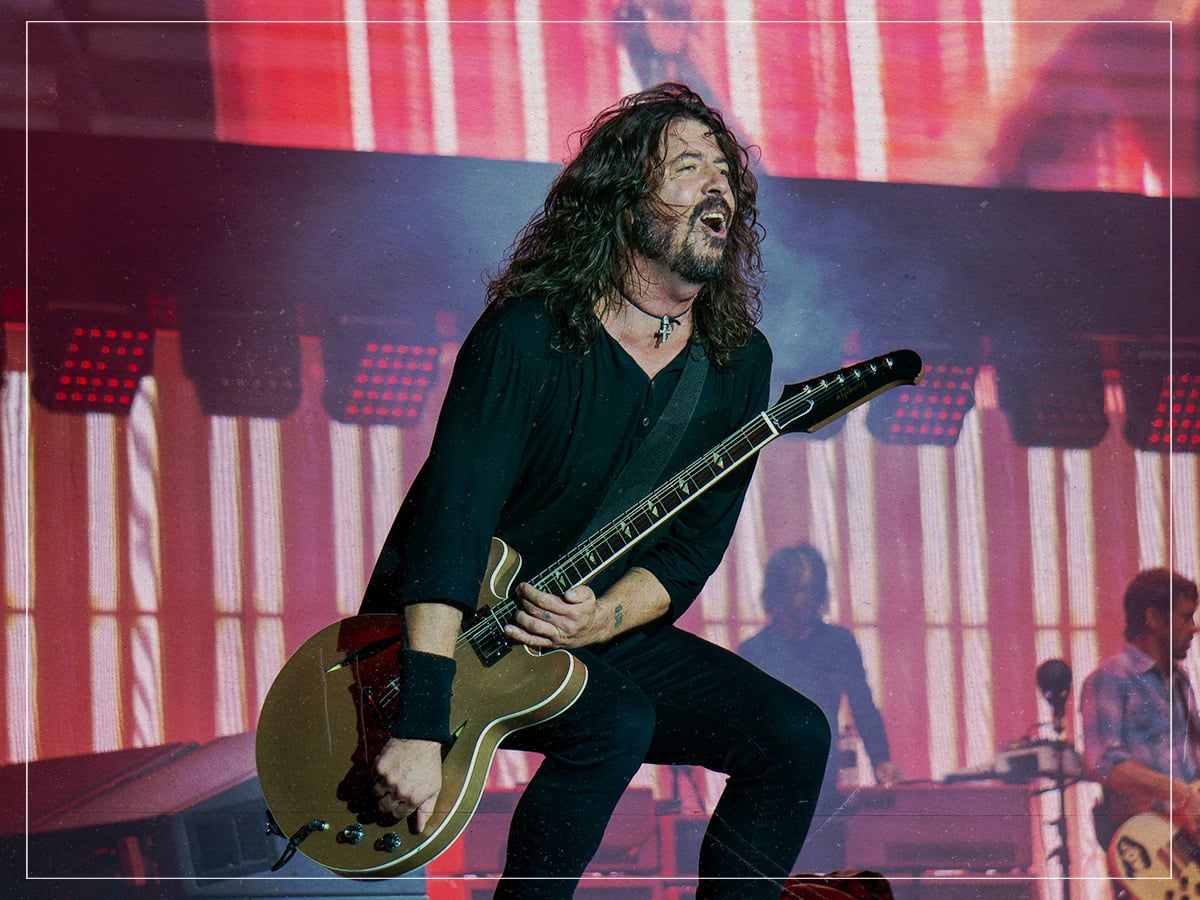
(Credits: Far Out / Raph Pour-Hashemi)
Wed 24 December 2025 17:58, UK
The fact that Dave Grohl got a second shot at the big time is miraculous. After the dissolution of Nirvana, Grohl initially didn’t want to entertain the idea of playing music again, thinking that it clashed too much with his feelings regarding the death of Kurt Cobain. Even though the wounds were still raw, Grohl knew that getting back into music would be his way to overcome that loss.
After hiding away in the countryside for a while, Grohl knew that he would never escape the afterglow of Nirvana when he saw a kid wearing a Kurt Cobain shirt while driving along the road. Knowing that he needed to get out of the funk he had been in, Grohl thought the next best thing was to return to Seattle and record some of his favourite songs that he had been working on for the past few years.
While many of the tunes had been written while Grohl was in Nirvana, he had no intention of ever showing them to Cobain. Since Cobain dealt with the lion’s share of the songwriting in those days, Grohl was known to contribute only a handful of arrangements, only singing lead on the B-side ‘Marigold’ from the single ‘Heart Shaped Box’.
While he finished the track relatively quickly, Grohl said he was not as confident as a songwriter when putting together those demos. As opposed to the raw passion that came from Cobain, Grohl thought that he didn’t have the same type of energy in his delivery, which made him feel self-deprecating about his voice.
At that point, music felt less like a career and more like a private coping mechanism. Writing songs allowed Grohl to process everything he was unable to articulate out loud, even if he never intended for anyone else to hear them. Those early recordings were made without expectation or ambition, functioning more as emotional documents than the foundation of a new band.
 Dave Grohl in more assured ground. (Credits: Far Out / Exclusive Media Group)
That lack of intention became part of their power. Free from the pressure of living up to Nirvana or proving himself as a frontman, Grohl leaned into instinct rather than polish. By stripping the songs down to their core and trusting his gut, he unknowingly created the blueprint for Foo Fighters, built not on reinvention but on survival and forward momentum.
When talking about his tone of voice, Grohl told NPR that he thought his singing voice was particularly bad on the first Foo Fighters demos, saying, “Once I started recording in studios, I would record songs of my own — I never let anyone hear them because I was mortified. I thought, ‘Oh God, these lyrics are terrible. Oh my God, my voice is terrible.’”
Between recording the final mixes of what would become the first Foo Fighters record, Grohl would receive a call saying that Tom Petty wanted to play drums for him on Saturday Night Live. While Grohl was apprehensive to play the drums for the first time since Nirvana’s end, it would be the fellow Heartbreakers who would convince him to give his outfit a shot.
When listening to music backstage, keyboardist Benmont Tench was the one to convince Grohl to keep Foo Fighters going, saying that he would probably be more creative and fulfilled when working on his music. Even with the demo recordings, Grohl thought it would be best to release them bare, with the final product being nothing more than the finished cassette that he had been playing to various people.
While Foo Fighters would become a seasoned rock powerhouse by the end of the 1990s, Grohl did admit still feeling apprehensive before going on the road, telling Back and Forth, “It wasn’t easy telling Tom Petty that I wasn’t going to be his drummer. I just remember putting the phone down and going, ‘Okay, let’s see what happens.’”
Related Topics