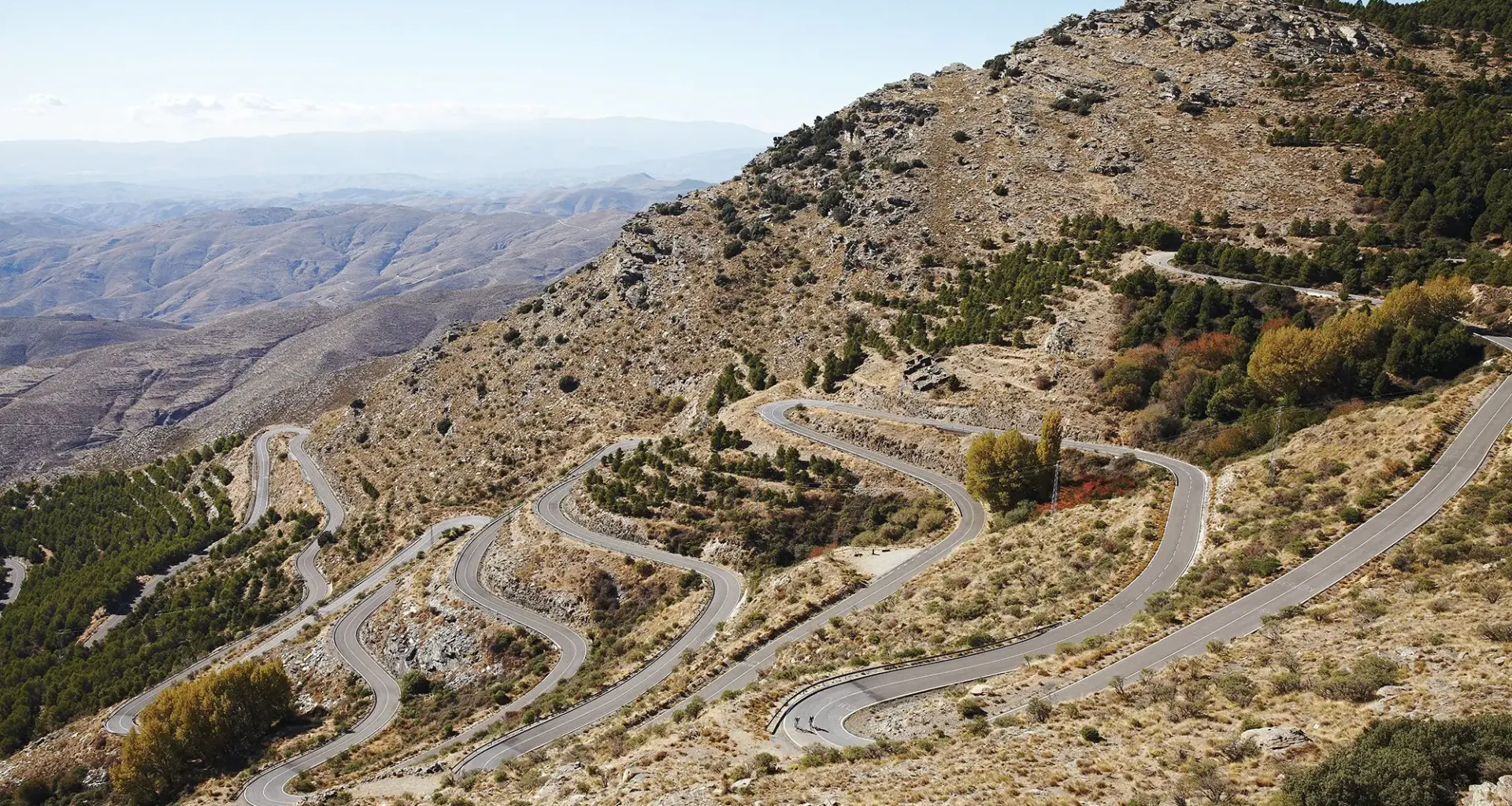
Set to take place between Saturday 22nd August and Sunday 13th September, the 2026 Vuelta a España will send the riders Monaco to Granada on a parcours littered with characteristically hilly profiles and a generous 40km of individual time-trials.
The final Grand Tour of the season will start in Monaco for the first time, with four consecutive days scheduled on foreign territory in France and Andorra. Once over the border and into Spain, the riders will navigate its way along the Mediterranean coast with summit finishes proimised at Alto de Aitana, Calar Alto and Sierra de la Pandera. Like the Giro and Tour, the Vuelta features a double ascent of Alto de Hazallanas on its final mountain stage. Despite rumours suggesting a Canary Island trip in thev race’s final days, the Vuelta will conclude in the southern city of Granada for ths first time in its history.
Primož Roglič and João Almeida lead the headliners on the early startlist, with Tadej Pogacar still unconfirmed, even if it starts in his own backyard in Monaco.
Related questions you can explore with Ask Cyclist, our AI search engine. If you would like to ask your own question you just need to , or subscribe.
Vuelta a España 2026 key information
 Harry Talbot
Dates: Saturday 22nd August to Sunday 13th September 2026
Start: Monaco, Monaco
Finish: Granada, Spain
Live television coverage: TNT, Discovery+, Peacock, SBS, FloBikes, Supersport, Sky Sport, RTVE
Most wins: Roberto Heras, Primož Roglič (four)
2025 winner: Jonas Vingegaard

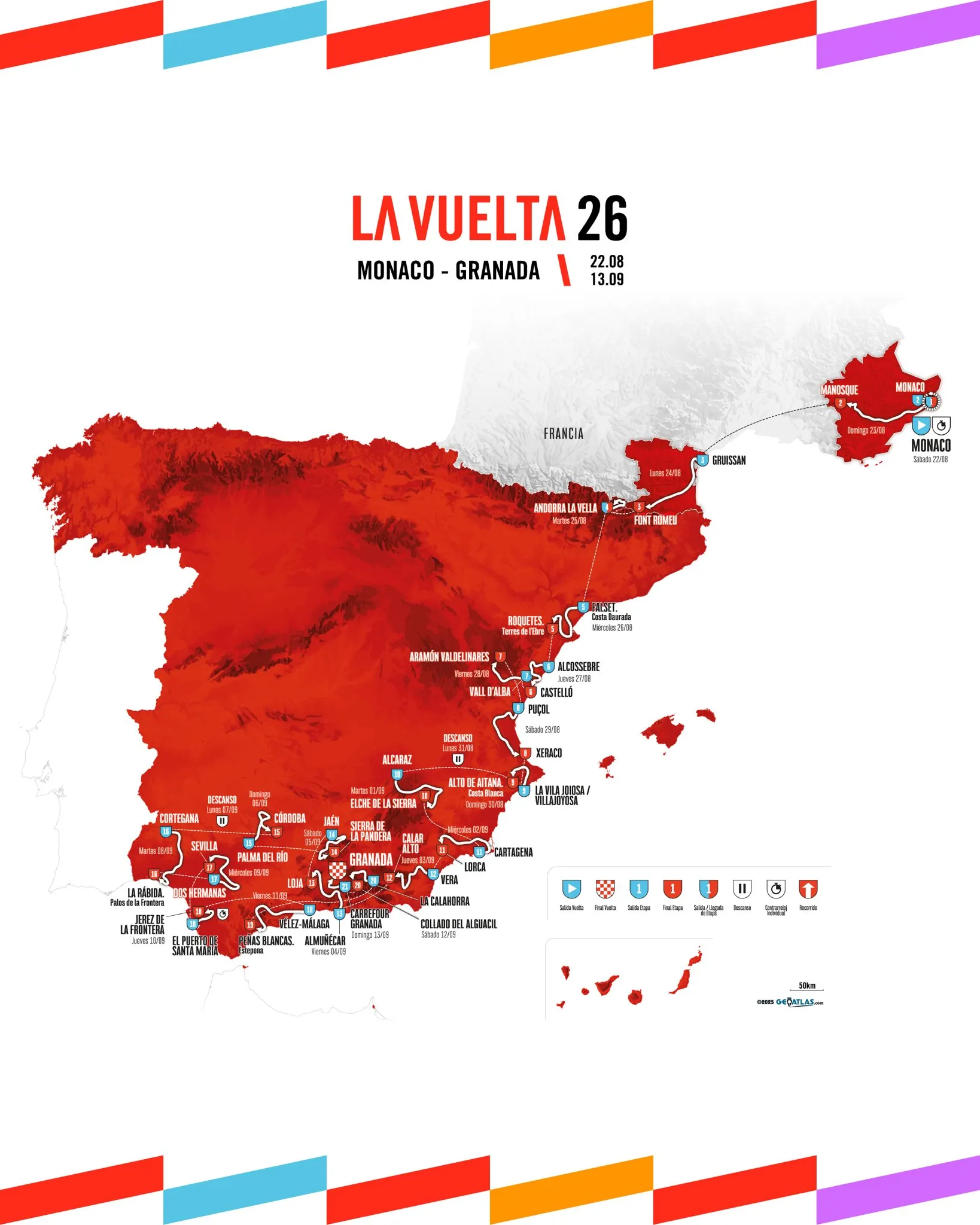
The 2026 Vuelta a Espana begins on foreign territory for the second consecutive year. This edition we visit Monaco for the first time in the Vuelta’s history. For the occasion, the principality will host the opening stage: a 9km-long time-trial past the homes of the rich and famous. The following days are all abroad as well, with two finales in France, including an early summit finish on the French side of the Pyreneean border, and a mountain-packed day in Andorra on Stage 4.
Firmly on Spanish soil on the fifth day of racing, the parcours skirts along the Mediterranean coast, with a serious GC rendezvous on Stages 7 and 9, both boasting uphill finishes.
After a rest day, the Vuelta restarts in muted form for a pair of transition stages further in land, acting as a palette cleanser before a razortooth profile on Stage 12, crossing over the Alto de Velefique and Calar Alto. This takes us deep into the Spanish south, where the race concludes its second week after another mountaintop finish to Sierra de la Pandera.
The final week of the 2026 Vuelta is not as backloaded as next year’s Giro and Tour. Instead, it offers two sprint stages before a final race against the clock in Jerez on Stage 18. Clocking up 32km alone, this time-trial is still longer than any at the 2026 Tour de France. Nevertheless, the three remaining stages will pose enough of a GC challenge at the summit finshes of Peñas Blancas (Stage 19) and Collada de Alguacil (Stage 20). The final road stage isn’t plain sailing either. The Granada procession features a fair kicker in its final circuit.
In total, the pan-European route clocks up a total distance of 3,310km and 58,000 metres of elevation gain, the most of any Grand Tour next year. According to the race organisers, the course covers four flat stages, nine hilly stages, six mountain stages and two time-trials. Like last year’s trace, the Vuelta will visit four countries, including debutants Monaco.
Vuelta a España 2026 stage-by-stage preview
 Harry Talbot
Stage 1: Saturday 22nd August, Monaco – Monaco, 9.6km (ITT)
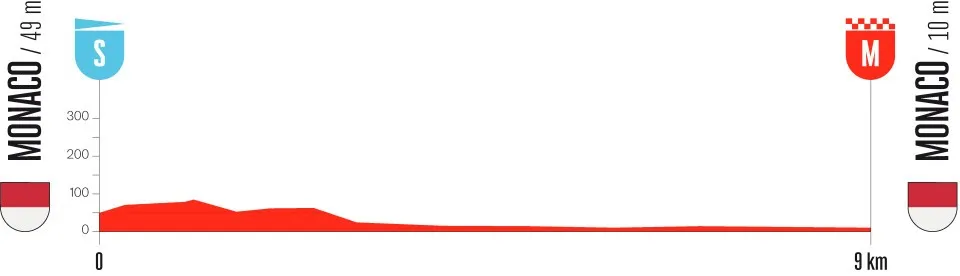
F1 capital and tax-free Monaco makes its Vuelta debut for next year’s Gran Salida. The Vuelta will be the only Grand Tour to open with a traditional prologue in 2026, with this 9km-long race against the clock offering up the first maillot rojo in the pocket-sized nation.
Stage 2: Sunday 23rd August, Monaco – Manosque, 215km
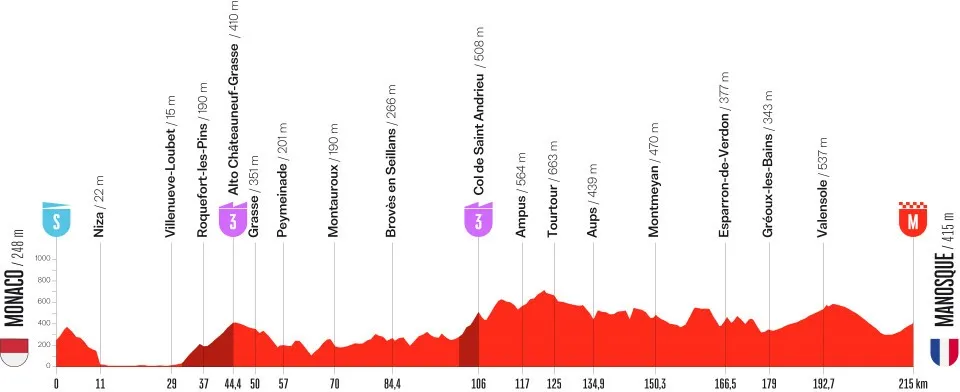
We bid farewell to the principality on Stage 2 for a sprint stage through Provence.
Stage 3: Monday 24th August, Gruissan – Font Romeu, 166km
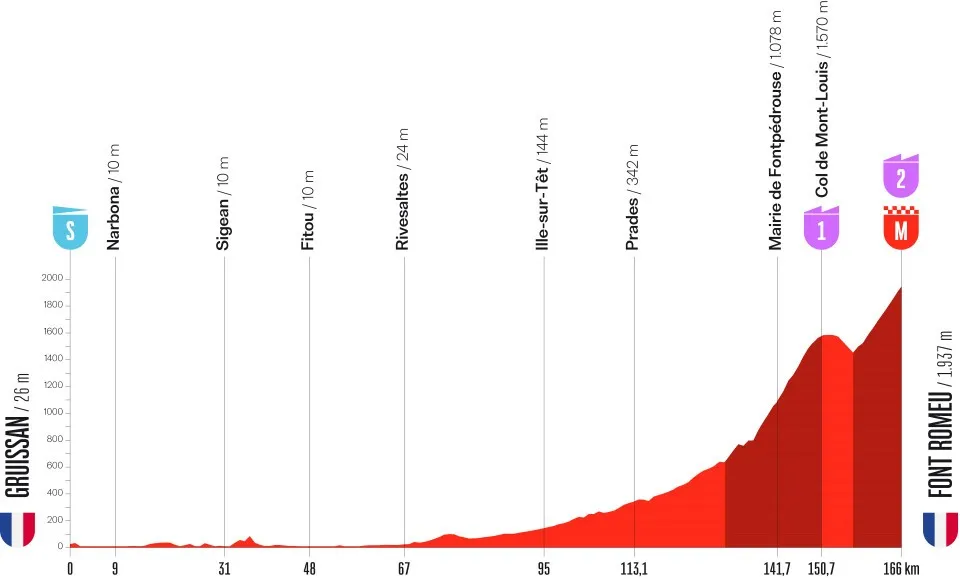
Our final day abroad offers a brief excursion into the Pyrenees. Close to the border, the final climb at Font Romeu has never hosted a Grand Tour stage before.
Stage 4: Tuesday 25th August, Andorra la Vella – Andorra la Vella, 104km
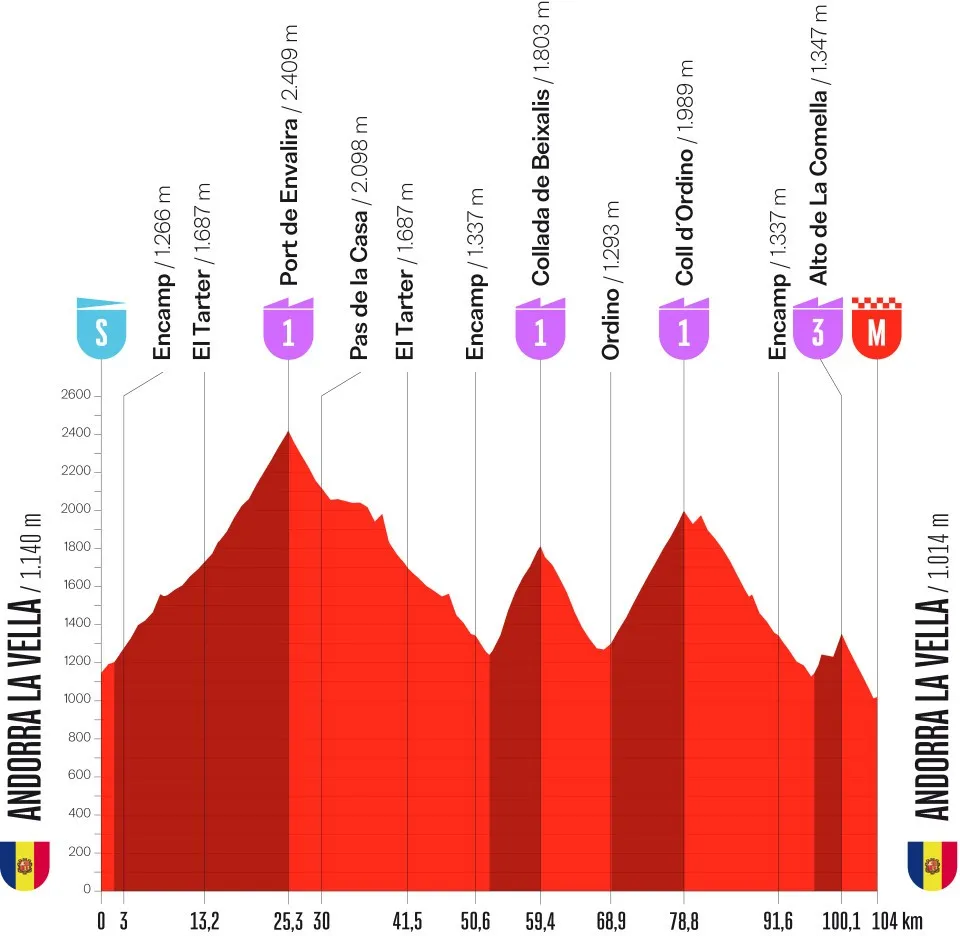
After a popular day in Andorra at the 2025 race, the principality is back on the Vuelta’s radar. Many of the riders will be on familiar roads.
Stage 5: Wednesday 26th August, Falset – Roquets, 171km
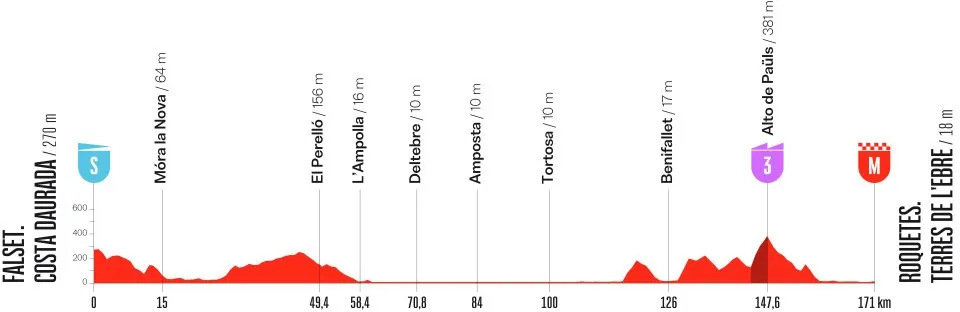
This is as flat as the Vuelta gets.
Stage 6: Thursday 27th August, Alcossebre – Casteló, 176km
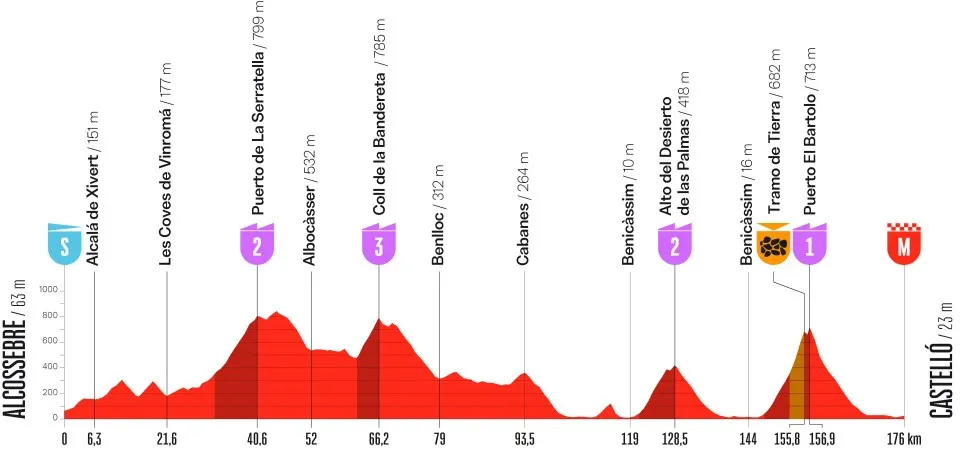
Stage 6 is a bumpy ol’ profile. To make matters worse, the organisers have thrown a gravel banana skin on the final climb.
Stage 7: Friday 28th August, Val d’Alba – Aramón Valdelinares, 149km
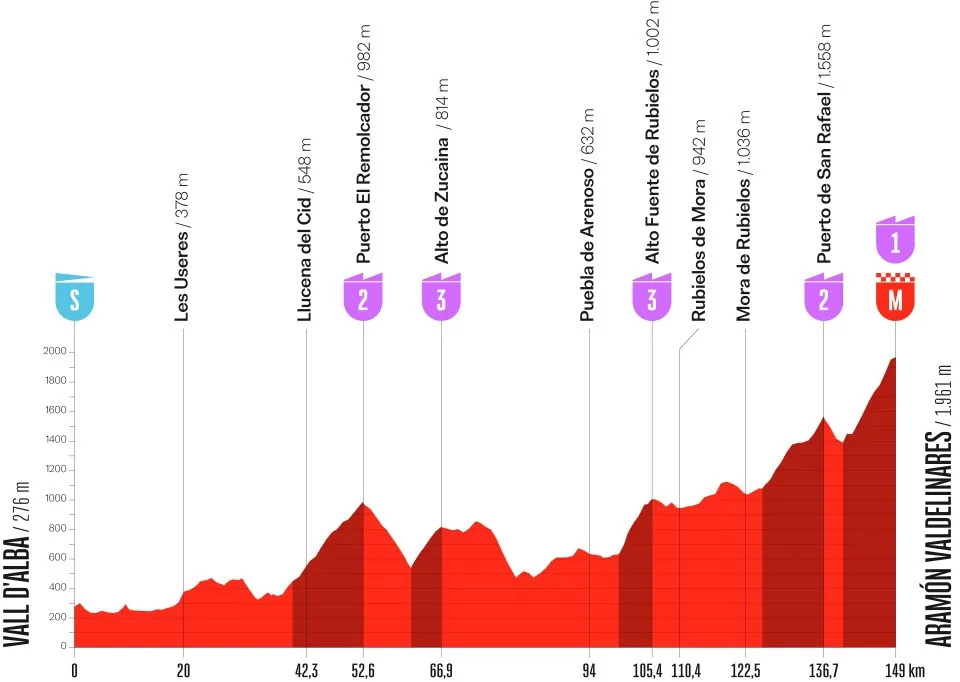
The first summit finish on Spanish soil, Aramón Valdelinares is a real slog, and split up into several parts. The Vuelta last visited the Aragonese climb back in 2014 when Winner Anacona claimed the stage solo.
Stage 8: Saturday 29th August, Puçol – Xeraco, 168km
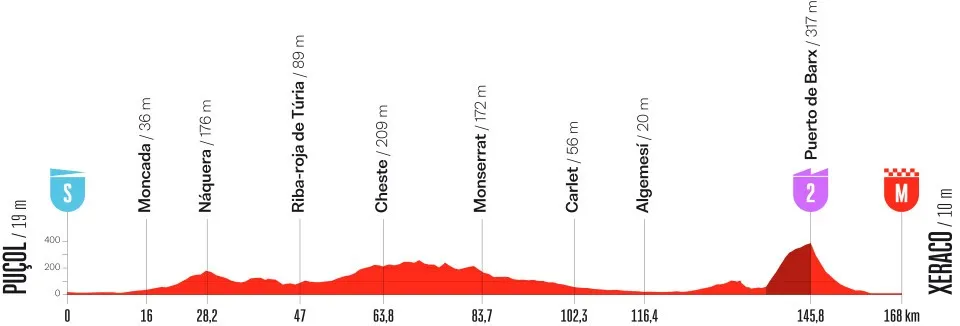
There’s a small speedbump along the way, but a sprint should be the outcome in Xeraco.
Stage 9: Sunday 30th August, La Vila Joiosa – Alto de Aitana, 186km
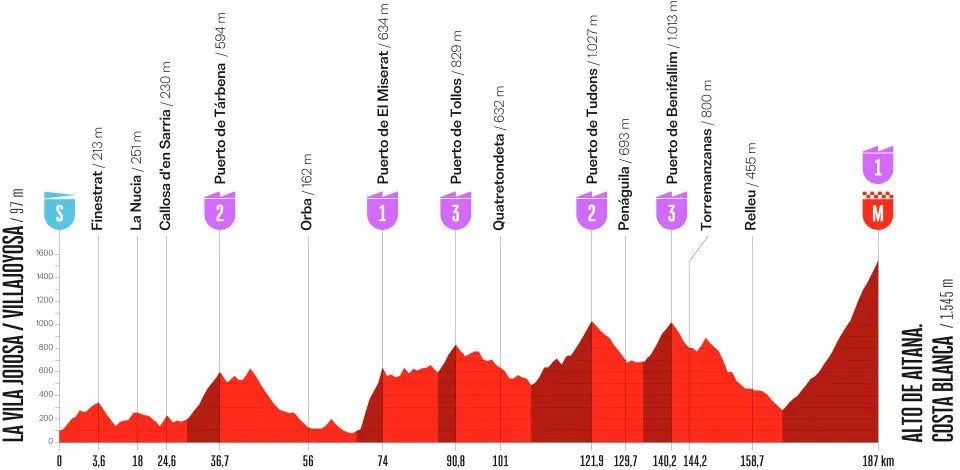
Week one closes with a stage starting from La Vila Joiosa, literally ‘the joyful town’. After some categorised tests, the Alto de Aitana (22km at 5.7%) is one of the longest summit finishes at next year’s Vuelta. The pass was last used in 2016, but it might be familiar to the pros since it’s right next to Benidorm and the usual training camp locale of Calpe.
Stage 10: Tuesday 1st September, Alcaraz – Elche de la Sierra, 168km
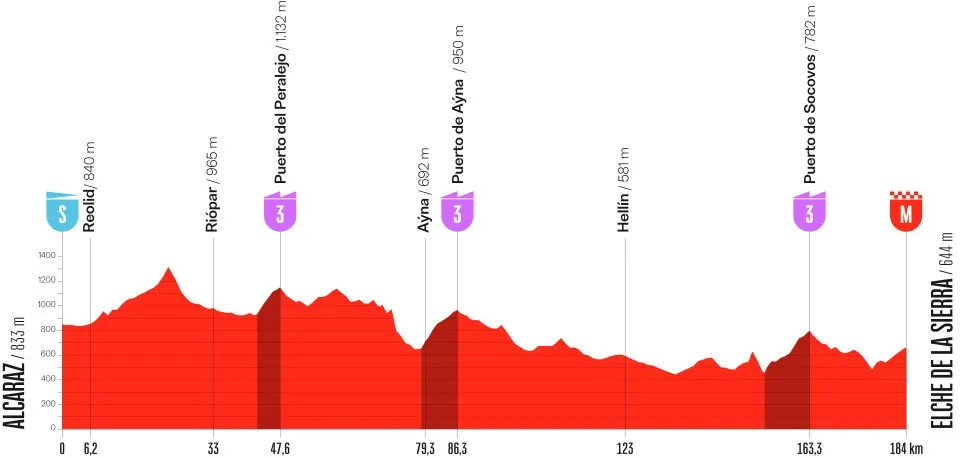
No connection to Carlos, the race restarts after a rest day in Alcaraz. It’s a dictionary definition transitional stage. Breakaway or sprint, take your pick.
Stage 11: Wednesday 2nd September, Cartagena – Lorca, 156km
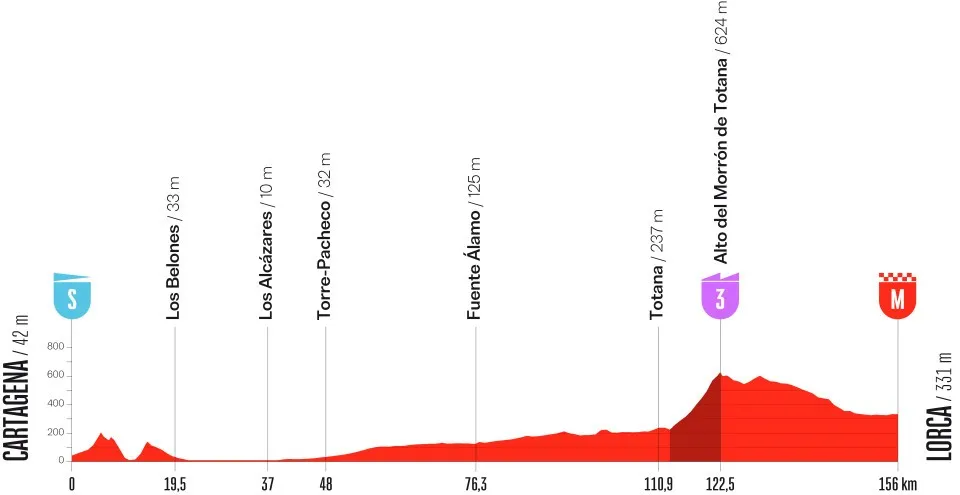
Similar vibe. Murcia has hills, but we certainly dodge them here.
Stage 12: Thursday 3rd September, Vera – Calar Alto, 166km
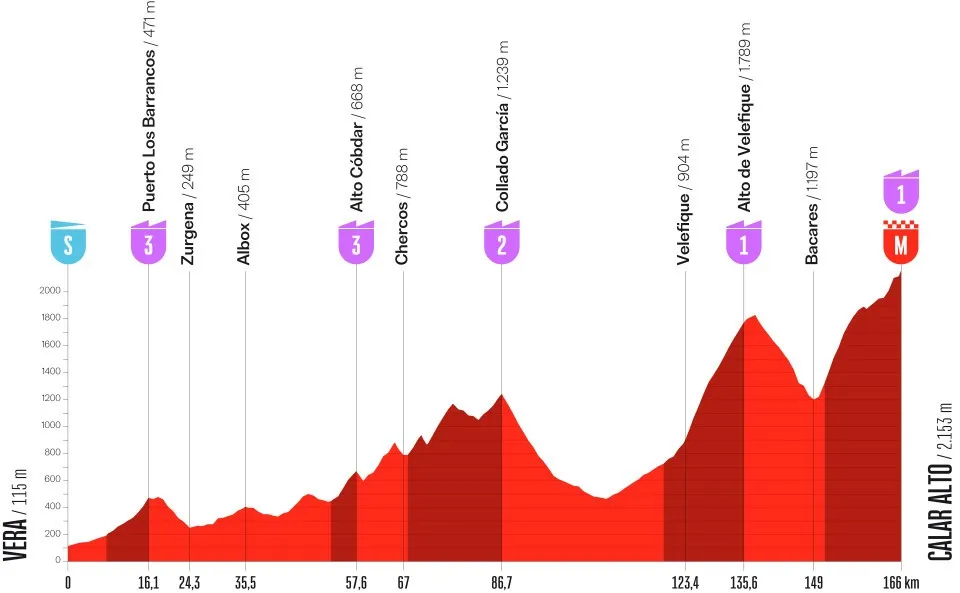
Stage 12 is one of the toughest at next year’s Vuelta. We tick off two Almerían giants in the Alto de Velefique (29km at 4.6%) and Calar Alto. Velefique hasn’t featured in the Vuelta since 2021, but it should be part of a crucial turning point in the GC next autumn.
Stage 13: Friday 4th September, Almuñécar – Loja, 193km
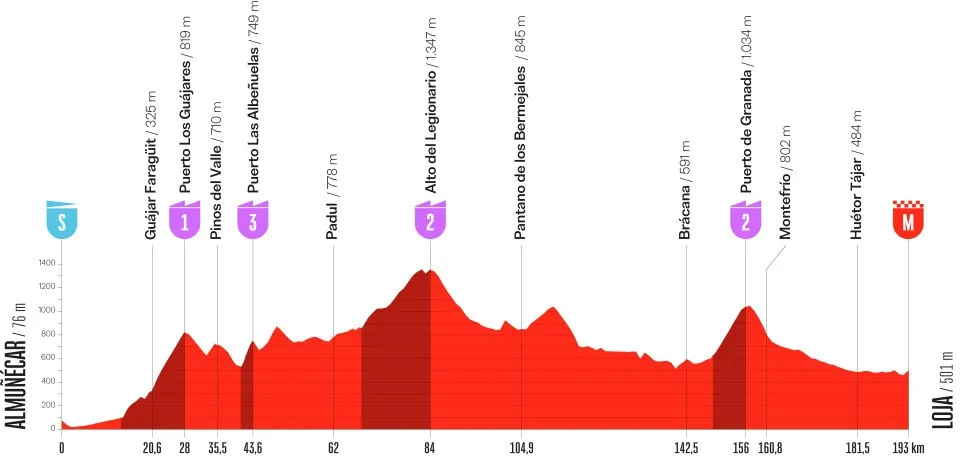
It’s breakaway o’clock after a tough day in the mountains.
Stage 14: Saturday 5th September, Jaén – Sierra de la Pandera, 152km
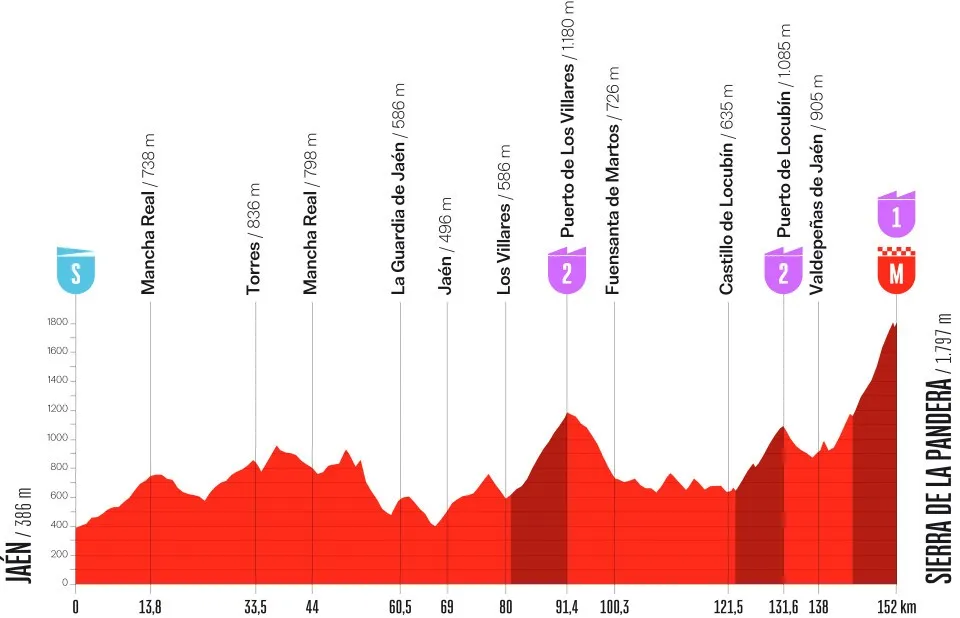
Starting from the olive groves of Jaén, we open Pandera’s box in Stage 14’s finale. The Sierra de la Pandera (22.6km at 5.7%) rounds out the day, with ramps hitting gradients as high as 18% at points.
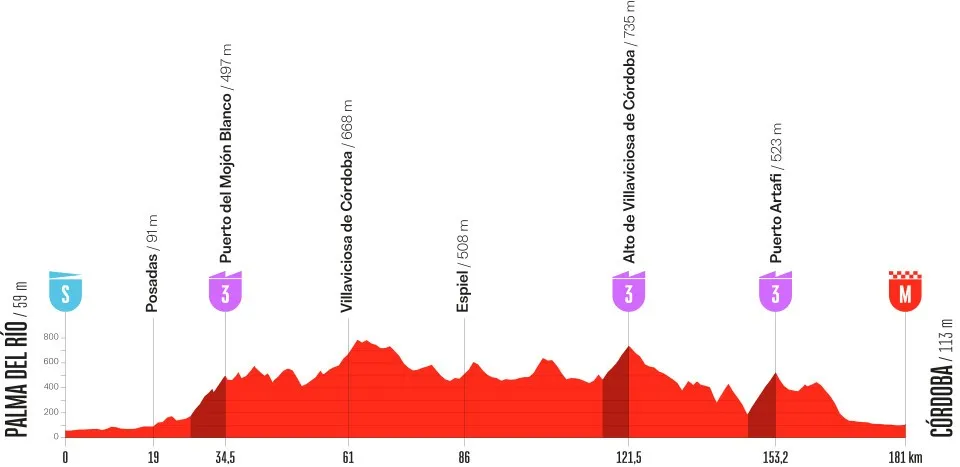
Stage 15: Sunday 6th September, Palma de Río – Córdoba, 181km
Stage 15, the final on offer in this second week of racing, starts off in Vegaedo. This village is one of the few Eonavian-speaking places in the region, hence the two town names. The climbing starts right away, so the breakaway might be successful once the race reaches its conclusion in Monforte de Lemos.
Stage 16: Tuesday 8th September, Cortegana – La Rábida, 186km
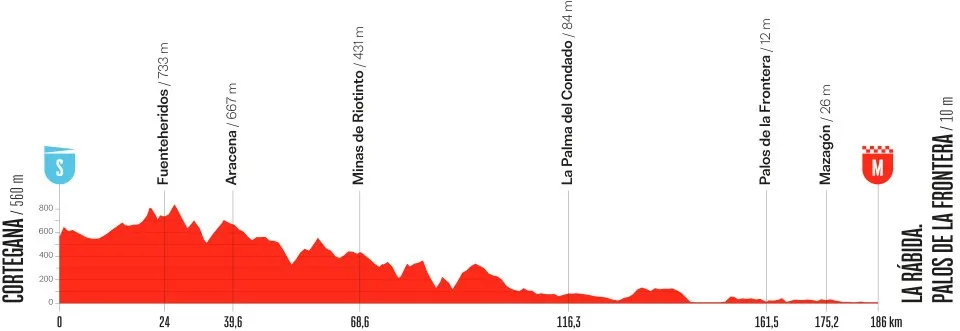
The Vuelta reaches its most westerly point after the final rest day. That’s about the only interesting tidbit from this, a run-of-the-mill sprint stage.
Stage 17: Wednesday 9th September, Dos Hermanas – Sevilla, 189km
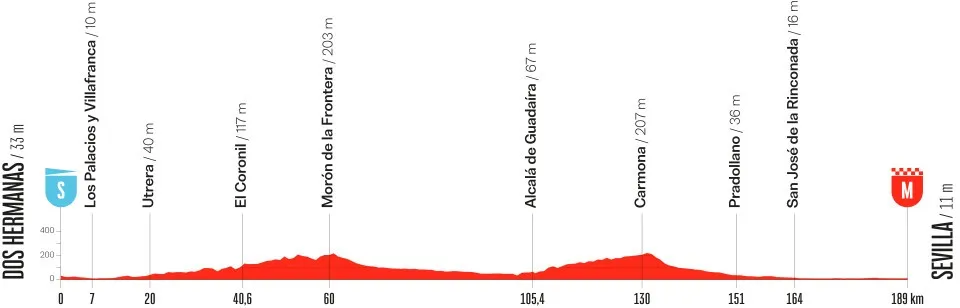
Two flat stages in a row, Vuelta. That’s insane.
Stage 18: Thursday 10th September, El Puerto de Santa Maria – Jerez de la Frontera, 32km (ITT)
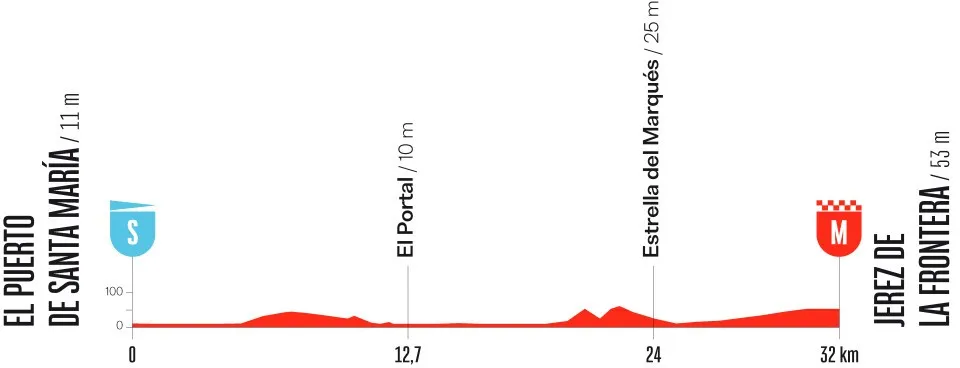
Two weeks on from the first time-trial, there are 32km against the clock during the Vuelta’s final week. There are a couple of meek climbs, but I would consider this a flat TT.
Stage 19: Friday 11th September, Véléz-Malaga – Peñas Blancas, 205km
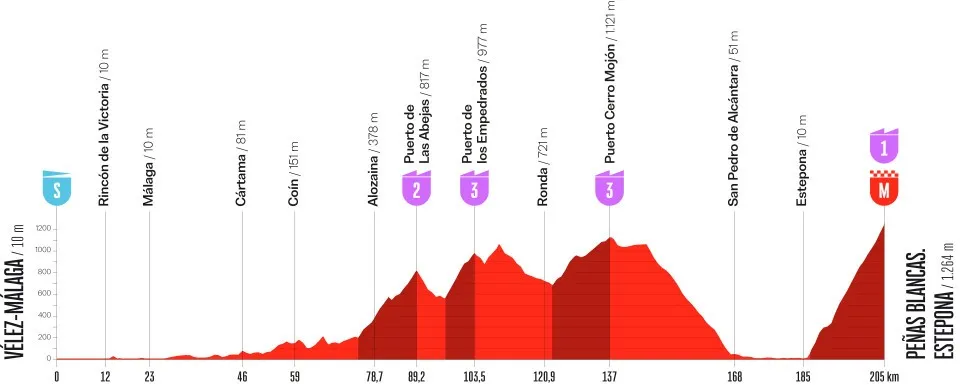
We jump right back into the thick of the GC mix. Peñas Blancas (15.6km at 6.4%) is a tough closer, but it could shake things up before the final mountain stage the following day.
Stage 20: Saturday 12th September, La Calahorra – Collada de Alguacil, 187km
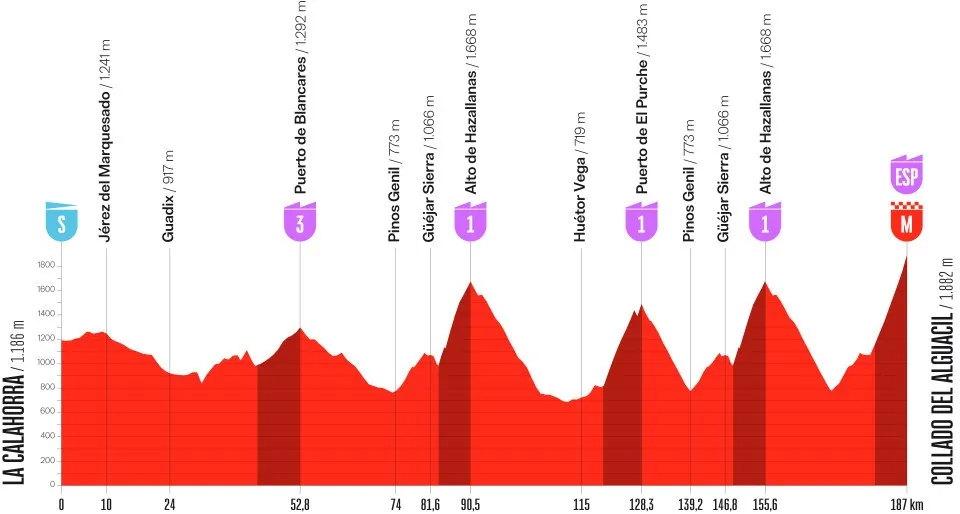
What’s better than one category one climb? Three, and a top-rated summit finish to pair with it.
Lapped mountain stages seems to be the falvour of Grand Tour racing in 2026. We cover the Alto de Hazallanas on two occasions ahead of the especial-rated Collado del Alguacil (16.7km and 6.9%). At its summit, we should know the name of our new Vuelta champion.
Stage 21: Sunday 13th September, Carrefour Granada– Granada, 99km
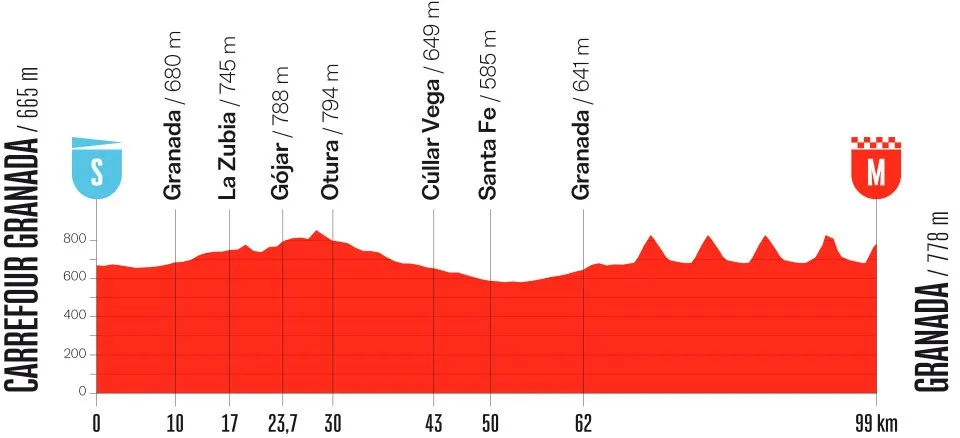
Good news, we get to stop by a supermarket for the start of Stage 21. It’s no walk in the park, however. There’s a slight kink to the finish line’s gradient.