
Sarah Cartwright-Styles — known as Mrs CS in the classroom — straightens the collars of her pupils before they sit on the carpet at North Bridge House independent school.
Her pupils in Hampstead, north London, aged two to seven, must have their shirts tucked in and top buttons done up. It is this sort of uniform discipline, along with a self-described “authoritative style”, that might give hint to what the 54-year-old gets up to at the weekend.
Away from the school gates, she becomes Commander Styles. Instead of grappling with Play-Doh and papier-mâché, the Royal Navy reservist is more likely to have an SA80 rifle in her hands.

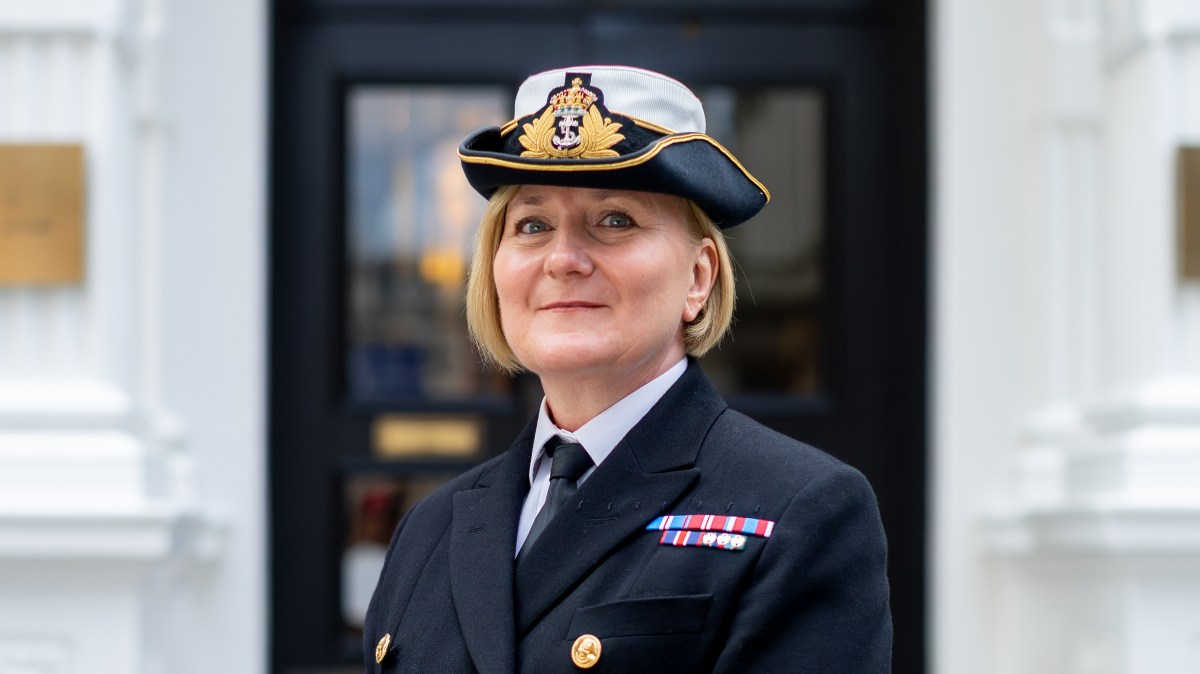
Cartwright-Styles was the First Woman to get a made-to-measure military uniform from Gieves & Hawkes
IAN JONES PHOTOGRAPHY
She has juggled both roles for nearly three decades. As military chiefs warn of the looming threat of war with Russia, is she prepared to fight for her country? “Absolutely, yes,” she says without hesitation.
“I wear the King’s commission. I should be ready to do whatever is asked, and that is an expectation of anyone serving in the forces. And hopefully some of our children will also follow in those footsteps as well.”
Styles is one of 22 female commanders in the navy reserve out of 107 commanders overall. She is the only one, however, to manage a high-ranking position in the navy while also being a primary school headmistress.
To mark her promotion to commander, Styles has been fitted for the first made-to-measure military uniform for a non-royal woman at Gieves & Hawkes’s military department. The Savile Row outfitter, which was founded in 1771, made the uniform worn by Prince William on his wedding day.
“When I was first commissioned my father wanted to buy my first uniform,” Styles says. “So we went along into the store and they said they don’t do female uniforms.”
Her father, whose own uniform was from Gieves & Hawkes, has since passed away. “When I found out I was being promoted to commander I wanted to go back to Gieves and honour my father’s memory and get my uniform there,” Styles says. “They said they hadn’t actually made a tailored female uniform but they were just about to and I would be the first.”
For Styles, who is married to a navy veteran, being able to manage two careers is about time-management.
“What the reserves is really good at doing is understanding that you do have two careers,” she says. “At weekends [you] get yourself out of bed, get motivated and do something rather than procrastinating. You might want to stay in and watch a movie but [you] go out, do something different, push your boundaries.
“It’s about … being really strict on the diary. It’s about ring-fencing certain weekends for training.”
She said her school was “very amenable” if she had to dedicate time for military exercises, so long as she gets her “day job done”. Her personal motto, which she conveys to the children in the school assembly, is: “I will try everything once and I will either not like it, love it, or decide it’s not for me.”
Styles joined the Wrens — the Women’s Royal Naval Service which has since been fully integrated into the navy — in 1991 when she was 19 after being inspired by her father, who was an X-craft midget submarine commanding officer during the Second World War. “I can’t actually remember ever not wanting to be in the Wrens,” she says.
She signed up to the regular navy as a rating but decided she wanted to be a teacher. She trained for her new career in 1997 but decided by the following year to join the reserves so she could carry out both roles.

Cartwright-Styles with pupils at her Hampstead school
TIMES MEDIA LTD
“I thought, ‘this is a way of balancing two loves of mine’,” she says.
“I had a great time doing my officer training down at Dartmouth and all the things the maritime reserves allow you to do, whilst also being at university, training to be a teacher and getting a different balance and seeing the world through a wider lens,” says Styles, who has served in Gibraltar and travelled to Hong Kong during her military service.
She is now in charge of initial naval training. “You can have two careers and you can hold them together,” she says. “The world has changed … if a female came up to me and said, ‘shall I join the navy? Would you advise it?’ I would say, ‘go for it’. It doesn’t have to be your forever path. You can step out and do other things.”
Al Carns, the armed forces minister and a Royal Marine reservist, said in November that the division between the military and the public is “bigger than it’s ever been”. He said the average person on the street did not know a veteran or a serving member of the military and their only reference to the armed forces was through films.
For her part, Styles has brought her medals into school to tell the children about life in the military. “They enjoy that because it brings the human touch,” she says. “I think sometimes as a child you might see the military as a soldier on parade outside Buckingham Palace … [if] you actually know someone in the military I think makes it more real for the children.”