
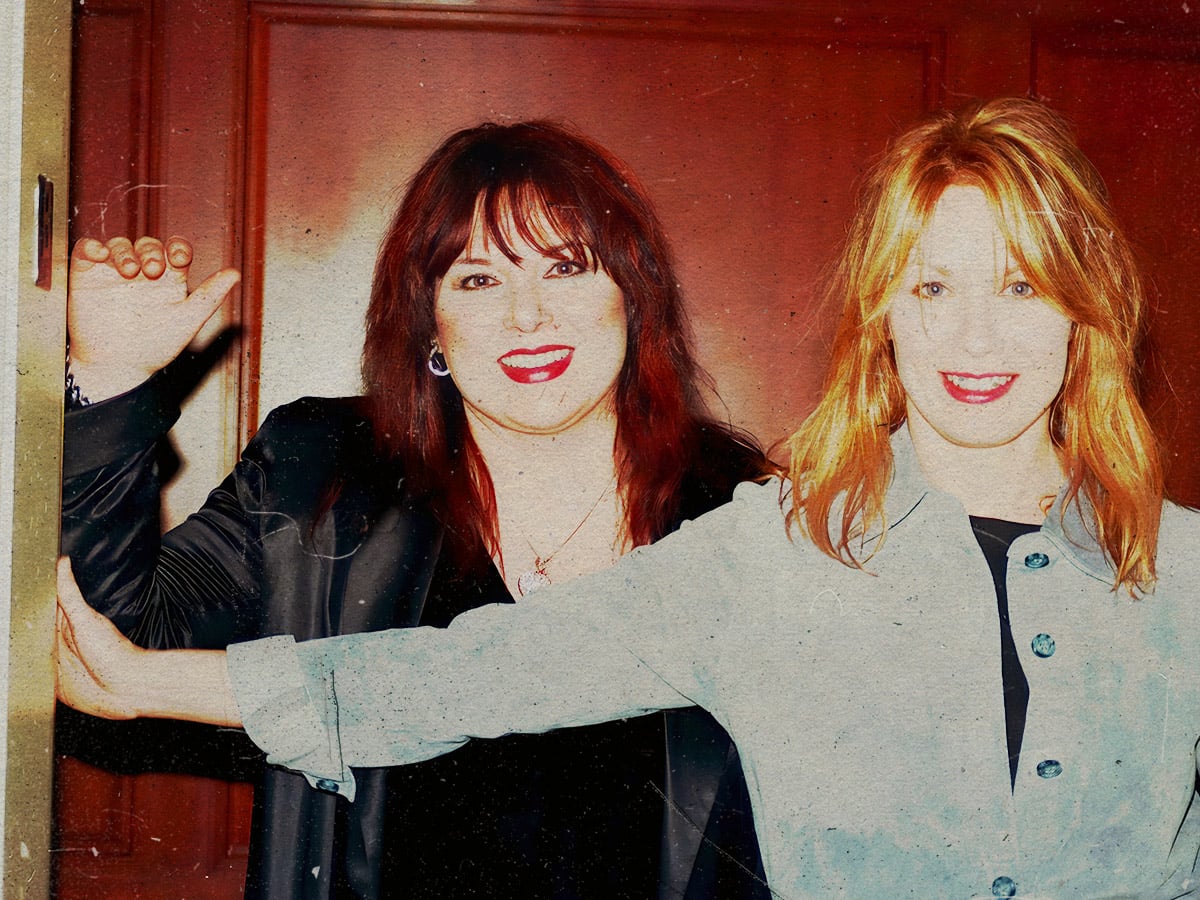
(Credits: Far Out / John Matthew Smith)
Thu 25 December 2025 16:37, UK
For Ann and Nancy Wilson, forming Heart seemed like the easiest decision ever. The challenge, however, was navigating a system built primarily to serve its male performers.
The Wilson sisters weren’t as privy to this until they started gaining a following of their own, and even before then, they quickly learned that they had to work twice as hard as their male peers to gain respect and get noticed. Much of this was, of course, because they had fewer female mentors to look up to, making them feel like the space around them was more competitive than it should have been.
This was something that Nancy recently commented on, saying that, before they came and “kicked the door open”, many female musicians didn’t believe they could do it. “I don’t know whether the woman thing in rock was the chicken or the egg because, for a long time, women didn’t even attempt to enter the rock scene because it was just too hard,” she said.
Growing up, therefore, most of the Wilson sisters’ influences were male-centric musical acts, like The Beatles, who opened their eyes to the possibilities of pursuing a career in music and making it work on passion alone, and the pair were lucky enough to see the Fab Four perform in 1966 in Seattle, a life-changing moment that sparked their journey to stardom.
As Nancy later recalled to Guitar Player, “It was really exciting and, like I said, life-altering, like, ‘Oh my god, this is what we’ve gotta do with our lives!’ We had guitars already, and we were getting proficient, and we knew all the Beatles songs. We knew every part they played, and all the harmony parts.”
 Heart during the 1970s. (Credits: Far Out / YouTube Music)
From there, the Wilsons discovered many other game-changing talents that shaped their own vision. Many of them were also major rock names who pushed the boundaries of innovation, from visionaries like David Bowie to conceptual pioneers like The Who. Among them were also singer-songwriter legends like Joni Mitchell, particularly records like Hejira, which taught them the core principles of anchoring emotional themes and withstanding the test of time.
As Ann once said, it’s the kind of record that becomes more enriched with time, almost like a “lifelong friend” that tells you all about their personal experiences and laces them with “poetic, unforgiving introspections”. These are the kinds of emotional responses that the Wilsons enjoy in the music they listen to – the sentimentality underneath the charm that resonates with you enough to pull you back time and time again.
Sometimes this can be achieved through vocals alone as the voice itself becomes the ultimate conduit of raw emotion. Chris Cornell, for instance, had an incredibly impressive vocal control and range, guiding many rock virtuosos when it came to enhancing a story through seemingly simplistic rock dynamics. According to Ann and Nancy Wilson, this is the kind of voice that lasts forever, or it should have, had his life not been cut tragically short.
As Ann reflected after his passing in 2017, “It’s important now to keep thoughts of Chris positive. He is on his way. We loved him well, now wish him well on his journey. He was and is a beautiful soul.”
Nancy also paid tribute, saying, “No one is ever prepared to hear about a death in the family. And today, Chris Cornell, my brother from my Seattle music family, is gone. I thought his voice would forever grace the world of music. Devastating.”
More recently, Nancy performed alongside Cornell’s daughter, Toni, during the grunge band’s Rock and Roll Hall of Fame induction. The pair delivered a chilling rendition of ‘Fell on Black Days’ as the room celebrated all the “hometown heroes” from Seattle. A place where, according to Nancy, it thrived because it was foremost about unity and community, and not the competitive atmosphere found in places like Los Angeles.
Related Topics