
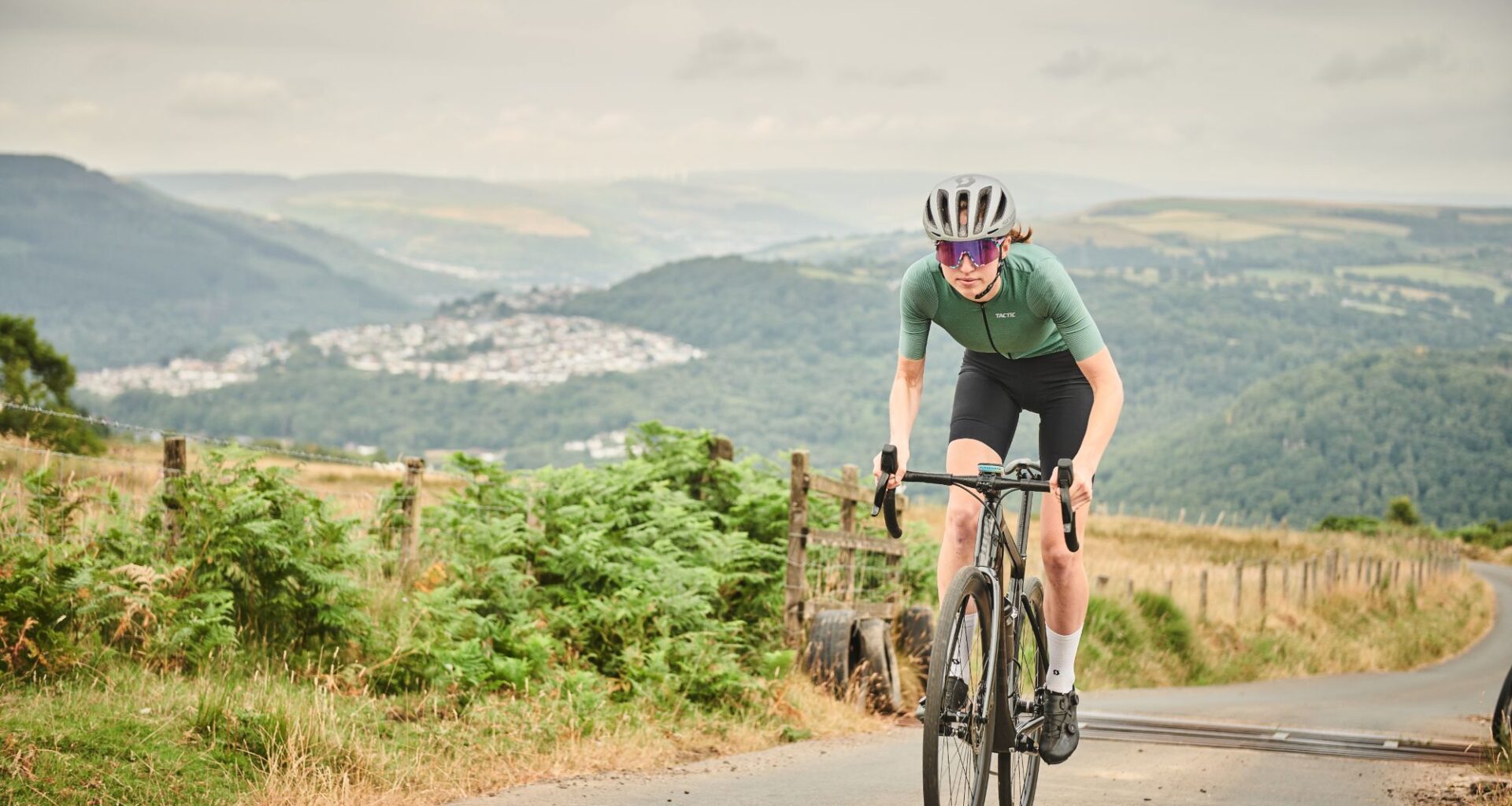
Earlier this month, we were a little surprised to learn that the most popular Strava cycling segment in the world, in 2025 anyway, is in Colombia – a climb called the Alto de Patios on the outskirts of Bogotá.
Not because Colombia isn’t a cycling-mad nation, it evidently is, but because there are so many other cycling hot spots around the world, from the Alps to Amsterdam.
It did, however, inspire us to think about where our favourite places in the world to cycle are, and as a result, I decided to survey the Cycling Weekly team. There weren’t any particular rules to this endeavour, just that they should be roads, paths, or places that you simply love to cycle down – or up.
You may like
Oude Kwaremont – Adam Becket
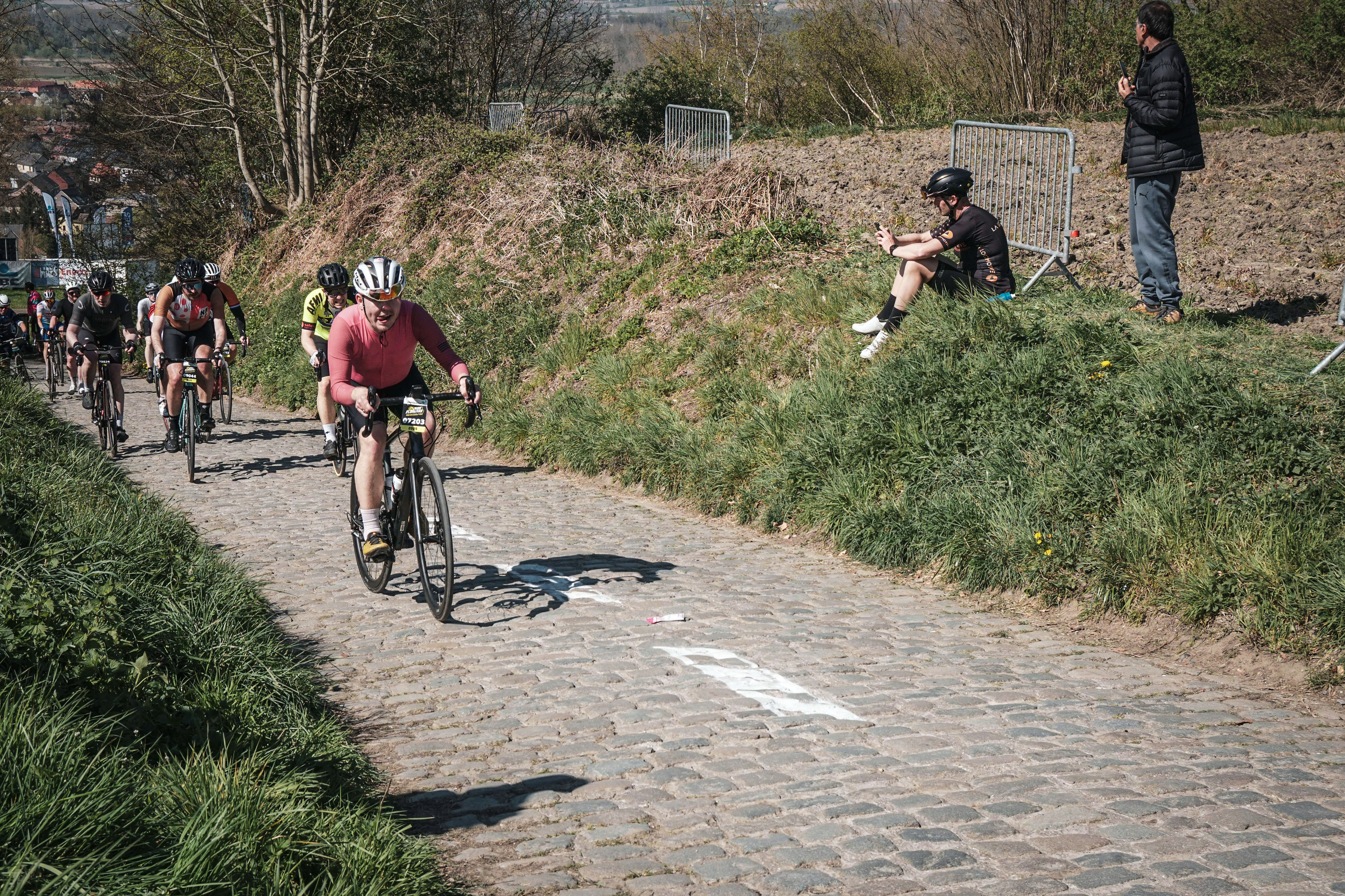
This probably isn’t the Kwaremont, but it is me riding on cobbles on the same day I rode the Kwaremont (Image credit: Sportograf)
In case it’s not obvious, I am not Tadej Pogačar or Lotte Kopecky. However, something that I do share in common with the pair is a love of the Oude Kwaremont, the crucial point of the Tour of Flanders, which lays claim to being the best bike race of them all.
The cobbled arena is the best place I have ever had the fortune to ride my bike for multiple reasons. I’ve only done it twice, but both occasions have been magical, out-of-body experiences.
Of course, there are many cobbled climbs in Flanders, from the Paterberg to the Muur van Geraardsbergen, but there is something special about the Kwaremont. I think the fact that it is only 4.8% helps, because the ascent isn’t as much as a grind or nightmare like the Paterberg – 350 metres at 13.5%. It’s the kind of climb that a, ahem, not pure climber like myself can put the power down on and feel good. You can stay in the big ring for a lot of it, if you can produce the watts, and you feel fast.
It’s 1.5km-long, too, so it’s not over too fast. You can really be present, something impossible when you’re forcing yourself up a wall. You notice the cobbles, of course, but that’s part of the fun.
The best thing about it, though, is that you can pretend to be Pogačar, or Fabian Cancellara, or whoever your rider is. You can ride the climb, and without looking at your speed, feel fast, feel like you’re racing Flanders, and make that turn at the top to go to the Paterberg. Even better, you can end the day with an Orval or a Bolleke in Ghent.
Box Hill – James Shrubsall, senior news and features writer
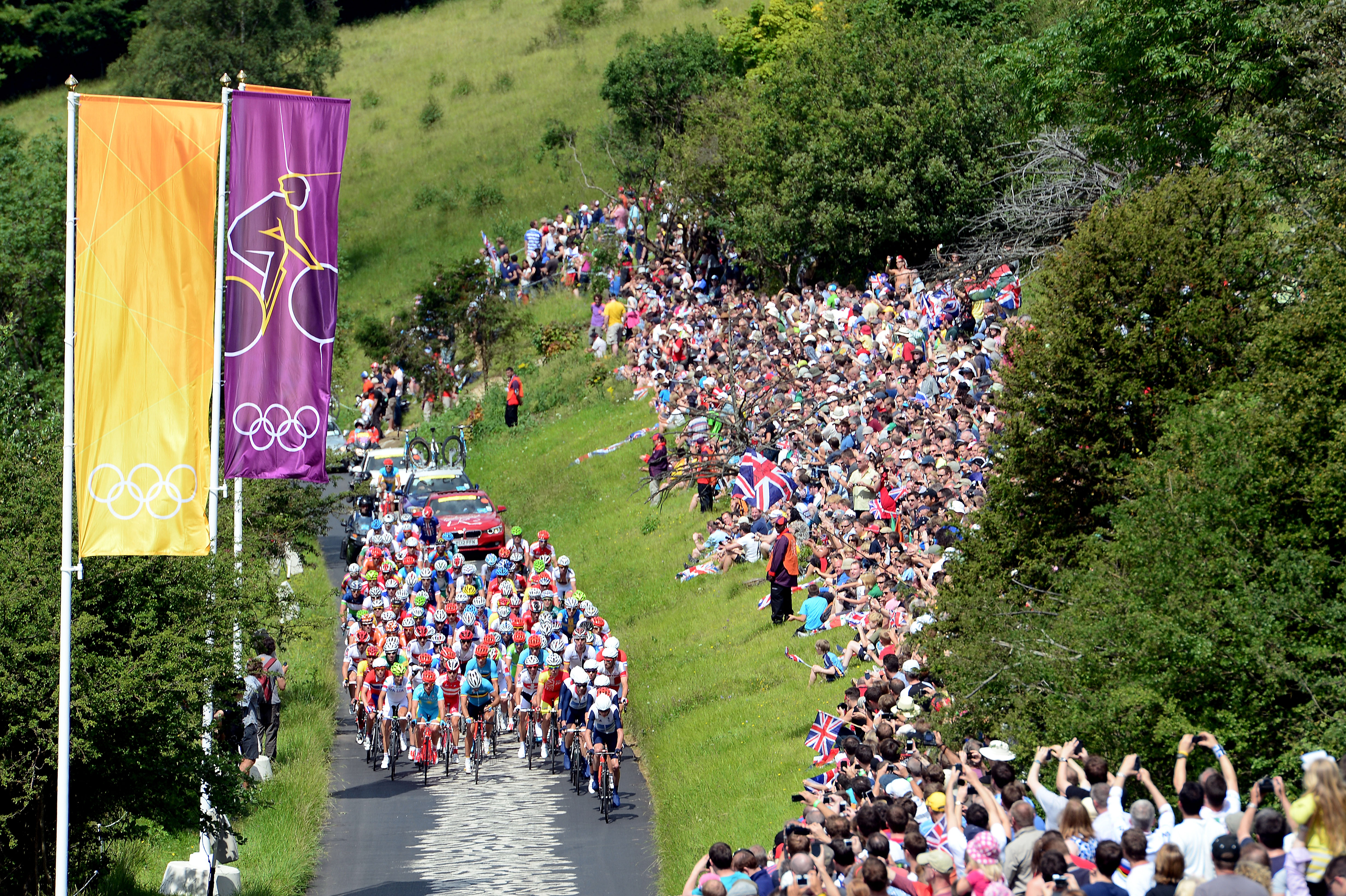
(Image credit: Getty Images)
While the legacy of its Olympic Games road race appearance is slowly tailing off, for a long time Box Hill was the cycling equivalent of the Bryan Adams hit ‘(Everything I Do) I Do It For You’. Number one in the UK for 16 weeks, it wasn’t a terrible song and was very popular, but it wasn’t long before few people had a good word to say about it.
You may like
Box Hill too became a victim of its own success, swamped by bike riders with plenty of ensuing friction, especially from the local motoring fraternity.
But it wasn’t always thus, and it’s a place I’ll always have a soft spot for. I was maybe 15 when I first discovered it, a little piece of cycling paradise that seemed to be lifted straight out of the Alps I’d seen on TV in the Tour de France, hairpins and all. A hilly, 50-mile round-trip away, it quickly became a pilgrimage for my cycling friends and me, one we’d test ourselves on two or three times a year.
It remained a regular haunt for the following 25-odd years, and while it’s tailed off a little since I found gravel, I still enjoy visiting now and then. Somehow though, I’ve noticed, it takes me far longer to reach the top.
Chapman’s Peak Drive, Cape Town – Aaron Borrill, tech writer
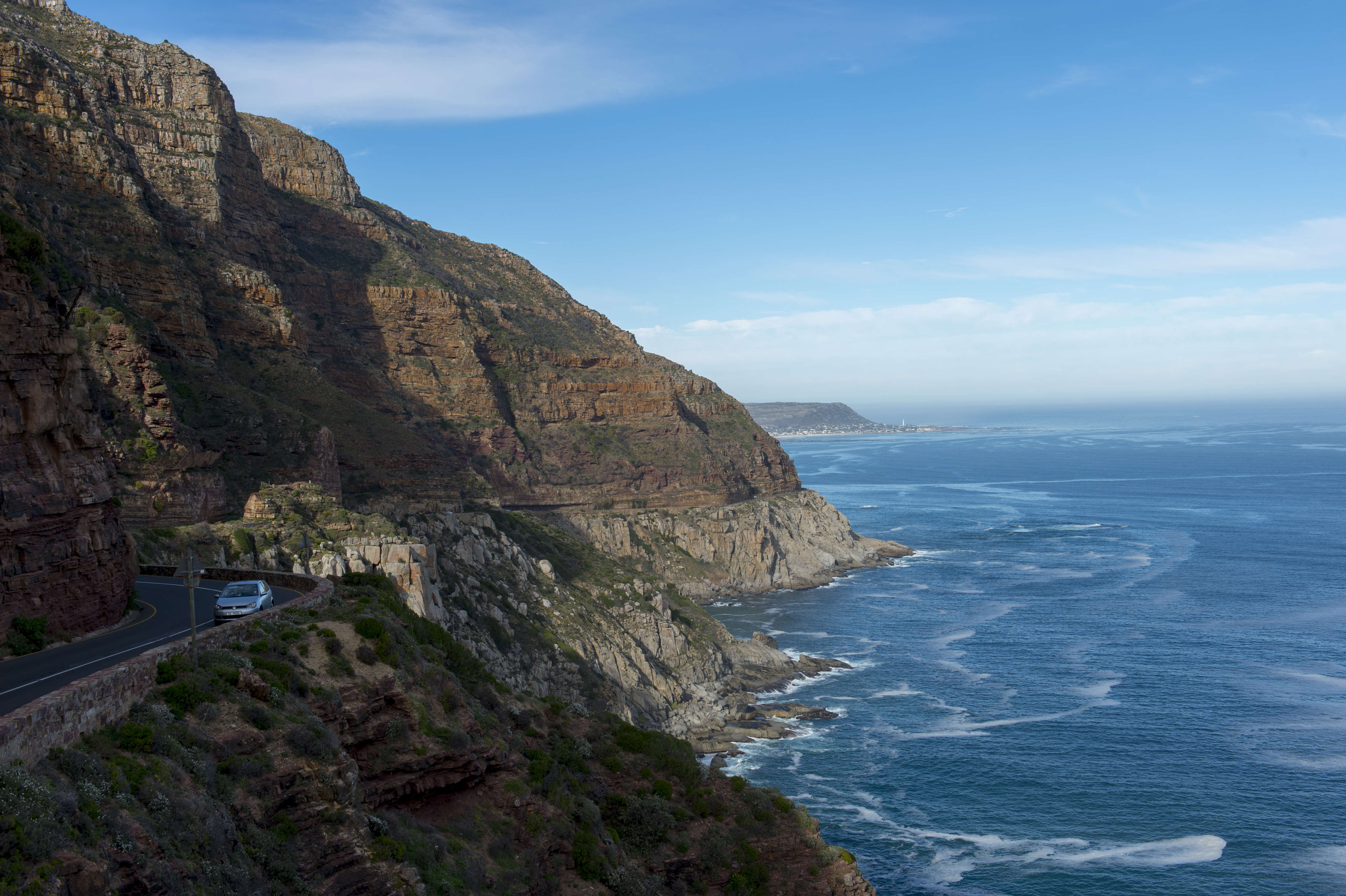
(Image credit: Getty Images)
It had been six years since I last sampled Chapman’s Peak Drive in Hout Bay, Cape Town, but I recently got another chance to revisit one of my old stomping grounds on a visit to South Africa in October. I’ve spent many years riding up and down this glorious road – both in many test cars when I was still a motoring journalist and then as a cyclist. Strava says I’ve climbed it over 300 times, and that still doesn’t feel like enough to me. I want more.
World famous for its inclusion in the Cape Town Cycle Tour – the world’s largest individually timed cycling event – and lauded locally for its magnificent views of the Atlantic Ocean, Hout Bay and Noordhoek, you need to experience it to understand the hype fully – although you’ll quickly get an idea if you see the pictures. At 5.1km long with an average gradient of 3%, it’s not particularly steep, but when the wind blows (and it does frequently), it becomes a real challenge.
Sure, it’s not Box Hill in terms of Strava popularity, but it sure is a prettier climb. Hell, I’d go as far as to say it’s the most beautiful road in the world. If you ever find yourself in Cape Town, South Africa, do yourself a favour and give it a go. There are many group rides on most days of the week that start in Cape Town’s CBD and head out to the summit and back. Proper bucket list stuff.
Col de l’Échelle, near Briançon – Andy Carr, tech editor
Everybody who rides in the Alps wants to tick off the big climbs. Still, this hidden gem is never requested by guests, but once experienced, it is not easily forgotten, not for its history or standing in the WorldTour, but for its spectacular and quiet setting.
It’s a relatively easy climb that rises on a shallow gradient, gently up from the Vallee Claree to the north of Briancon, and meanders along a flowing river towards Italy. The route turns via a sharp right onto a long ramp and into what is one of the least trafficked, but stunning collections of tree-covered hairpins anywhere in the Alps.
The business end of the climb is only 3k or so, but it averages 9% and it is the perfect first-day climb to acclimatise friends or guests. In the shoulder seasons and at many times in high season, it’s deserted, with a fantastic view into Italy via Bardonecchia and the beginnings of the Susa valley next door. A picnic in the meadows towards the top is a must on a rest day.
The Wash, Derbyshire – Hannah Bussey, tech writer
To meet my daughter after school, I intentionally complicate my journey, taking an early train and hopping off three stops early. This gives me an hour to complete a challenging, hilly route instead of the pan flat alternative, which gets me there incredibly early.
This does, however, mean taking in ‘The Wash.’
My first attempt at this climb was entirely misjudged, but I somehow managed it on an old rim-brake road bike with thin 23mm tyres and inadequate gearing. At 1.5km, it’s 300 meters longer than the Mur de Huy and, at points, 3% steeper, maxing out at 23%. It was a brutal experience that I’ve somehow become addicted to.
I don’t track any metrics, but I’m impulsive when it comes to this kind of discomfort, and for some reason, like a cold plunge, I force myself to do it. I curse this personality trait until the final meters. Reaching the top, though, I feel completely alive. The raw experience of conquering the climb has become the most addictive dopamine-hitting reward.
Old Racecourse Road, Shropshire – Meg Elliot, news and features writer
There’s a little windy road that takes you out of my home town up to the old race course (now only a ruin with a double-headed stone horse). It’s a short road, just five kilometres long, but it is brutal – so brutal that it is the only road that comes to mind when I think ‘favourite’.
The reward at the end is immeasurable, and the views of the Shropshire fields splaying out large, unreal. It’s no Box-Hill-thoroughfare, but I have occasionally been passed by my old neighbour who laps the circuit on his bike wearing a suit, multiple jumpers and a tie. Way to show me up.
Nant Gwynant Pass – Simon Richardson, magazine editor
I haven’t ridden it for years, but my favourite road remains the A498 in North Wales. That doesn’t have the same ring to it, or history of Mont Ventoux or the Carrefour de l’Arbre, but go ride it, and you’ll see what I mean. Specifically, the section between Bethgelert and the Pen y Pass that goes over Mount Snowdon.
This was where I first started serious training on a bike, and a road that I could only ride on a three-plus-hour ride when the weather was good enough to brave heading into the mountains. That wasn’t very often. Perhaps the lack of opportunity made my desire stronger, but the gradient, sweeping bends and views make this a perfect cycling road.
Swain’s Lane – Tom Davidson, senior news and features writer
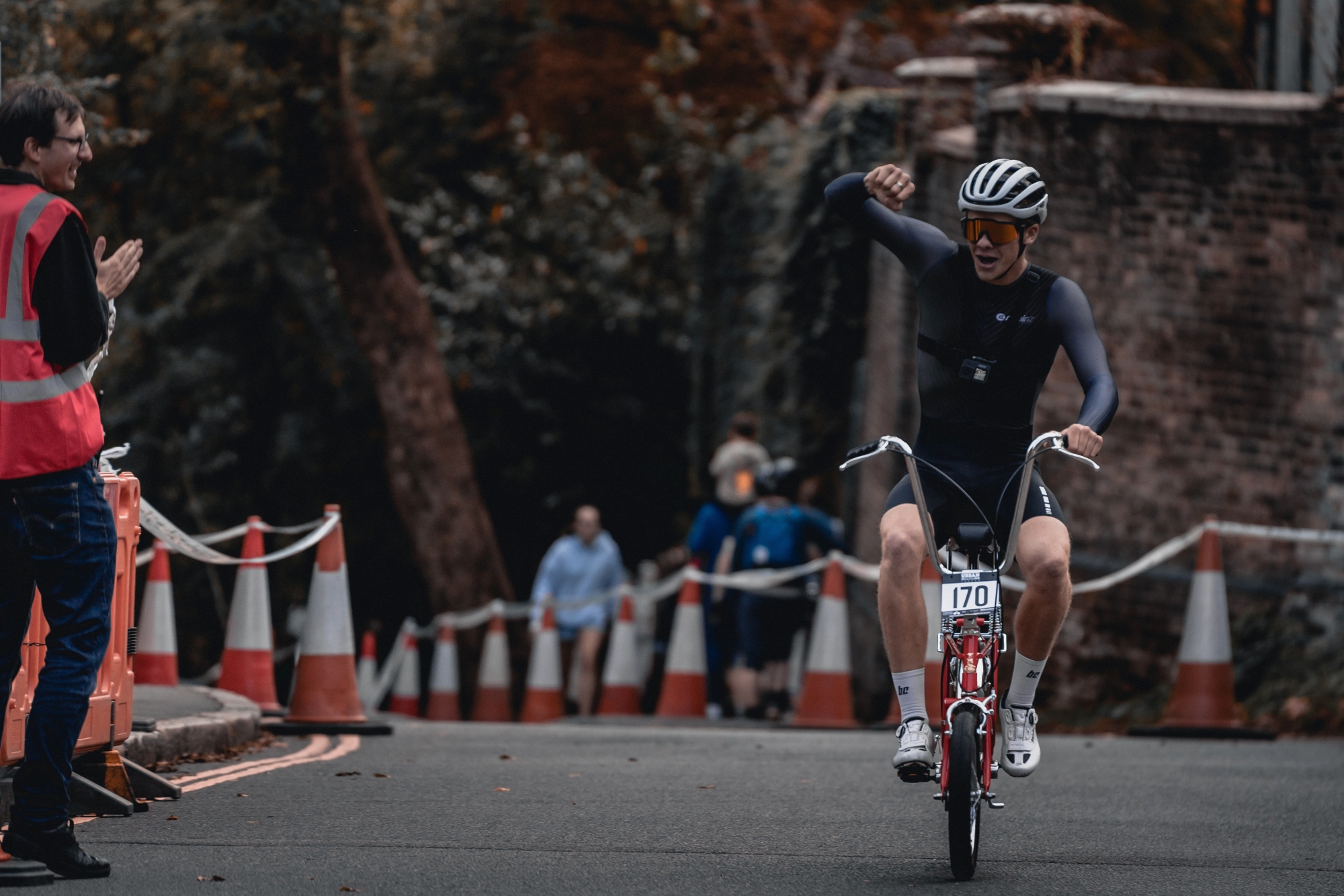
Swain’s Lane is used for a yearly hill-climb – you don’t have to use a Raleigh Chopper (Image credit: Keith Rotchelle)
Only a kilometre in length, but with a maximum gradient of over 14%, there’s a reason this brute of a road in North London hosts the annual Urban Hill Climb. My love-hate relationship with Swain’s Lane blossomed the first time I tackled it, around five years ago, when I set out way too fast and could taste blood by the end.
Since then, I’ve been back more than 50 times, smiling through the grimace on my face. What do I like about this climb? Well, it’s not the road surface, which is crumbling away, often covered by slippery leaves. Nor is it the traffic, the impatient car drivers eager to pass me.
What I like is that, no matter how many times you ride up Swain’s Lane, each ascent is a good, hard workout, and the summit is well-earned. Plus, the leafy air tastes so good when you’re done.
Windover Hill from the Icon Long Man of Wilmington along the Old Coach Road to Firle – Matt Ischt-Barnard, ecomm and tech writer
Bear with me, as this is roughly 10km, but this section of it packs in everything brilliant about the South Downs Way, while sheltering you from the worst of the weather, especially when it’s windy (which it is regularly here on the coast).
The South Downs Way is brilliant for gravel riding on a lovely summer day, and I wouldn’t change it. However, when it is wet, windy and cold like it often is, being up on those hills leaves you very exposed, and honestly, it can quickly break you.
However, on the lower slopes sheltered from the south westerlies is a gravel riding paradise. Starting from the Iconic Long Man of Wilmington on Wendover Hill, you drop down into the picturesque village of Alfriston.
From there, you head along West Street, an awkward false flat of a road toward Berwick, where rights for cars end, and you are graced with a hardpacked (albeit bumpy at times) gravel road, all the way to Firle and, combined with the brand new cycle path, Lewes if you wish.
It’s not Girona, it’s not Kansas, and it’s not even technically the South Downs Way, but it’s fun to ride in all weathers, and the views are still fantastic looking inland across East Sussex.
I am so lucky to have places like this to ride all year round, so close by, and I just enjoy riding this section so much.
Gorge de la Nesque – Anne-Marije Rook, North American Editor
(Image credit: Getty Images)
In 2024, I had the privilege of joining Rapha for its 20th-anniversary celebration in the picturesque Luberon region of southern France. Here, I join founder Simon Mottram, the then-newly appointed CEO Fran Millar, and some of the brand’s most passionate followers, its RCC members, for a few days of riding in the region where the cycling infatuation started for Mottram: Provence and an ascent of the formidable Mont Ventoux.
The nearly 120-mile (190km) route Rapha put together is not for the faint of heart but the effort is worth the reward. The ‘Géant de Provence’ is, of course, a mountain of legend. The paved route from Bedoin stretches just over 12 miles (19km) and gains 5015 feet (1528m) of elevation to an altitude of 6263 feet (1909m). But this was merely the halfway point of the ride, and the best was yet to come.
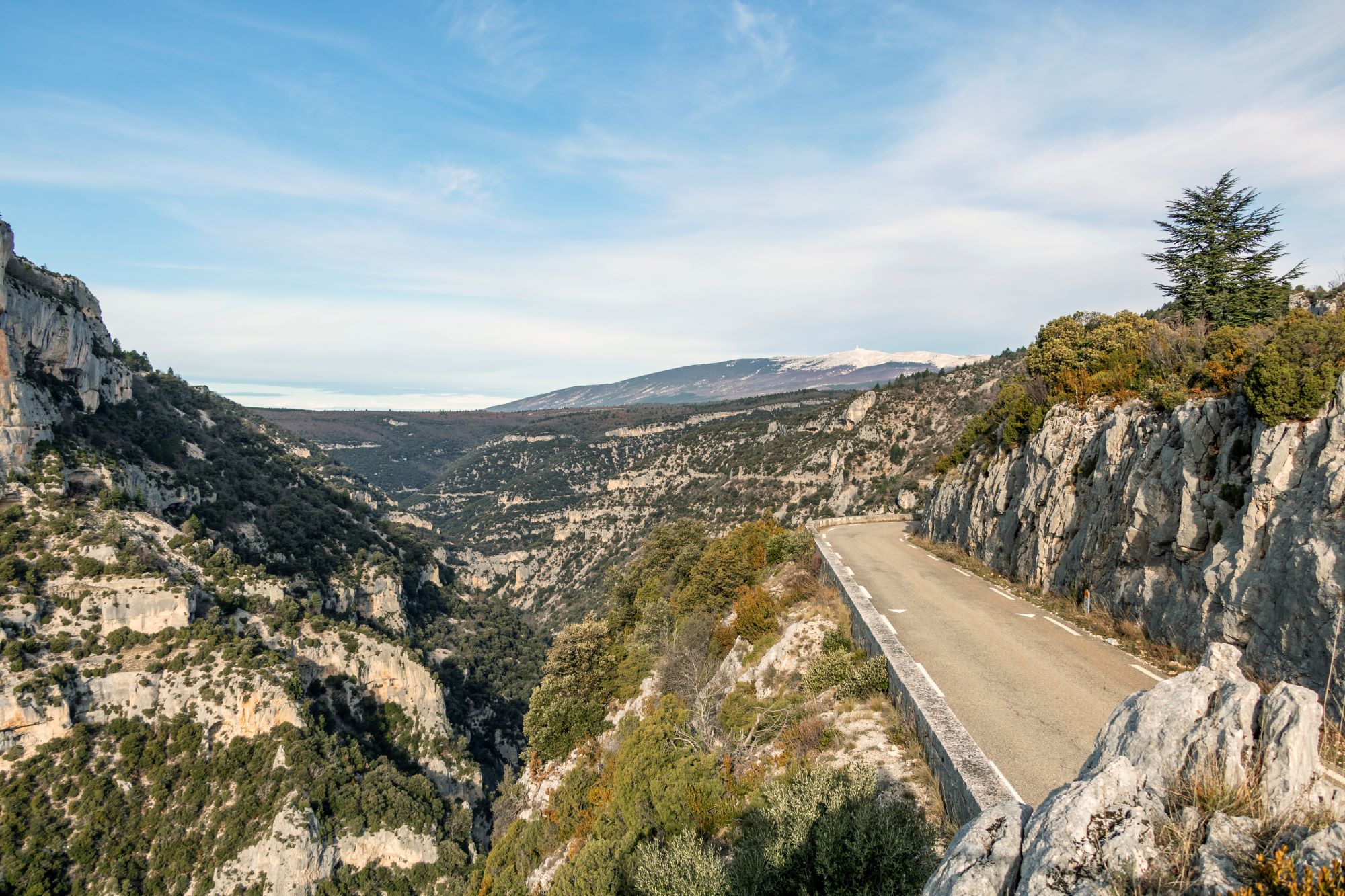
The hard work of climbing Ventoux was rewarded in the most spectacular way: descending the tunnel-lined rim road of Gorges de la Nesque. 11 heavenly miles of grin-inducing speed, railing corners, dodging fallen rocks and taking in vast canyon views instantly made this one of the Top 5 roads I’ve ever had the pleasure of riding.