
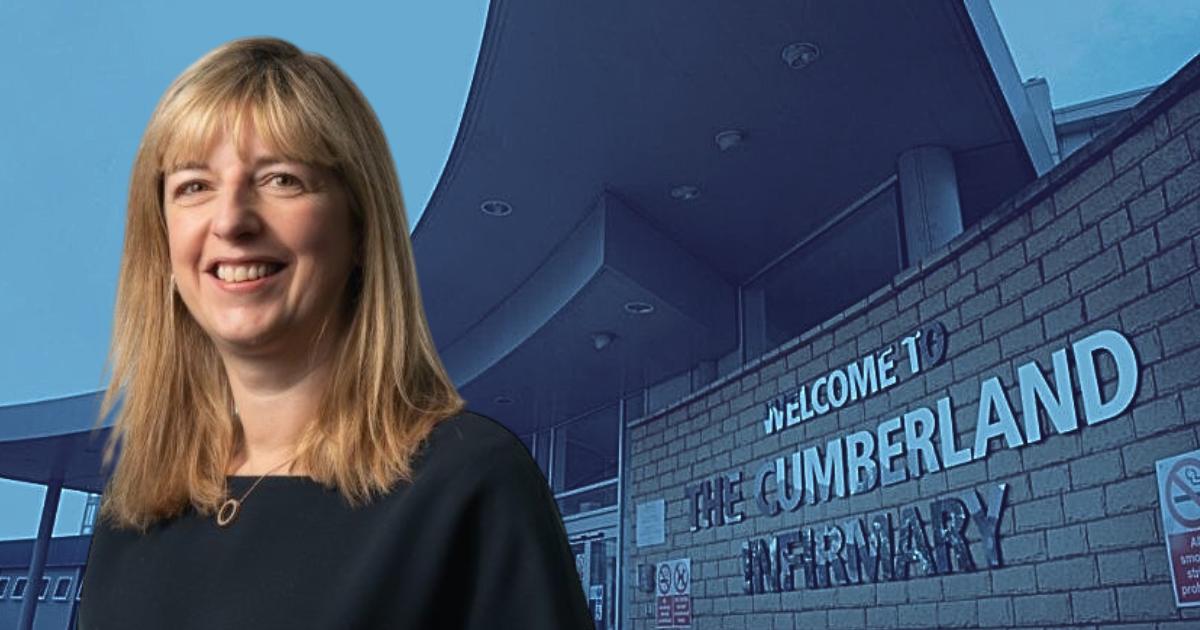
Ms Davies is currently serving a six month post as Interim Chief Executive at North Cumbria Integrated Care – the NHS trust is responsible for acute and community services in the area.
Ms Davies’ main role is as Chief Executive of Gateshead Health and while she believes the NHS faces overarching challenges, Cumbria requires a different approach.
Ms Davies said: “There’s always going to be a core common set of things you need to address as a chief executive and I’ve been in the NHS since 1992 so I’m not new to the NHS.”
Cumbria’s rural setting
Ms Davies said: “I think the difference in coming to Cumbria is where some of the challenges are a little bit more unique, we need to turn them into opportunities.
“It is quite challenging to have such disparate services over such a big geography, which makes it harder to get that common vision and mission for staff, because people are in different teams geographically as well as speciality-wise.”
Rural Penrith under a layer of snow and frost. (Image: Unsplash)
“The alternative view is to turn that on its head and say, ‘that is our unique selling point.’
“What an opportunity that we have got services over a huge geographical environment, with an opportunity to really engage with the communities that we are here to serve and the public to offer them something different locally.”
Recruitment
Ms Davies said that bringing skilled medical practitioners to Cumbria is another key challenge she faces due to the rural nature of the county.
“Attracting people of the highest calibre to locate themselves, work, live earn, spend, engage in this community.”
A stock image of a hospital ward. (Image: NCIC)
She said: “Somewhere in the east coast side, there are so many trusts around that workforce can be a little bit more fluid, you could work in Gateshead, or Newcastle and you don’t even need to move house.
“We need to engage with a very senior clinically expert workforce that is actually prepared to relocate and live here.”
She said the trust must work with schools, universities and partners “to really sell why people should come and live in Cumbria.”
The second strategy to address the issue is to “grow our own locally” with apprenticeships and “train the workforce of the future.”
Building trust
Ms Davies is keen to open-up conversations with the community as she recognises that the public have concerns about the continuation of local services.
“You can’t walk into an organisation and develop a trusted relationship with people, you need to earn that trust.
Ms Davies addressing members and directors of NCIC at the organisation’s AGM in September. (Image: Newsquest staff)
But she said: “I don’t think we want anything different for the people of Cumbria than the people of Cumbria want, which is high quality services, for our population that deliver as much locally as we can.
“But there might have to be some honest conversations about when that’s difficult and what can we do together to overcome that.”
Working differently
Ms Davies said that the trust must find new ways of working for the NHS to “survive” in the modern world.
She said: “I think we are going to have to do things differently. It’s not about stopping doing things and it’s not about people being frightened we’re going to remove services from their local hospitals, we need to keep things local but we will have to think about how we deliver those services so they can be really effective and efficient.”
This could involve learning lessons from the Covid-19 pandemic, using digital innovations to monitor patients closer to home. The trust recently achieved this with its virtual wards.
“It might be that we run even more in our locations because we might take things out of Carlisle and push that out, but I think each of those services require an intense look at the services themselves and they are really dependant on what the specialty is.”