
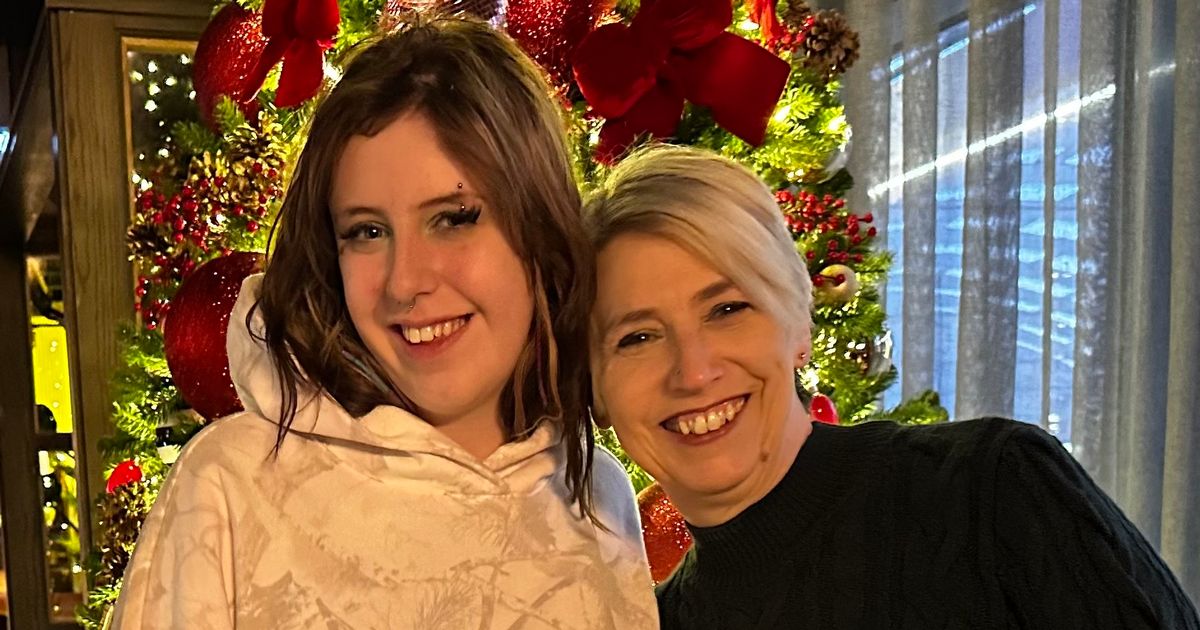
Melanie Stronach, 53, was diagnosed with endometriosis at the age of 32 after suffering from very heavy, painful periods since she was a teenager.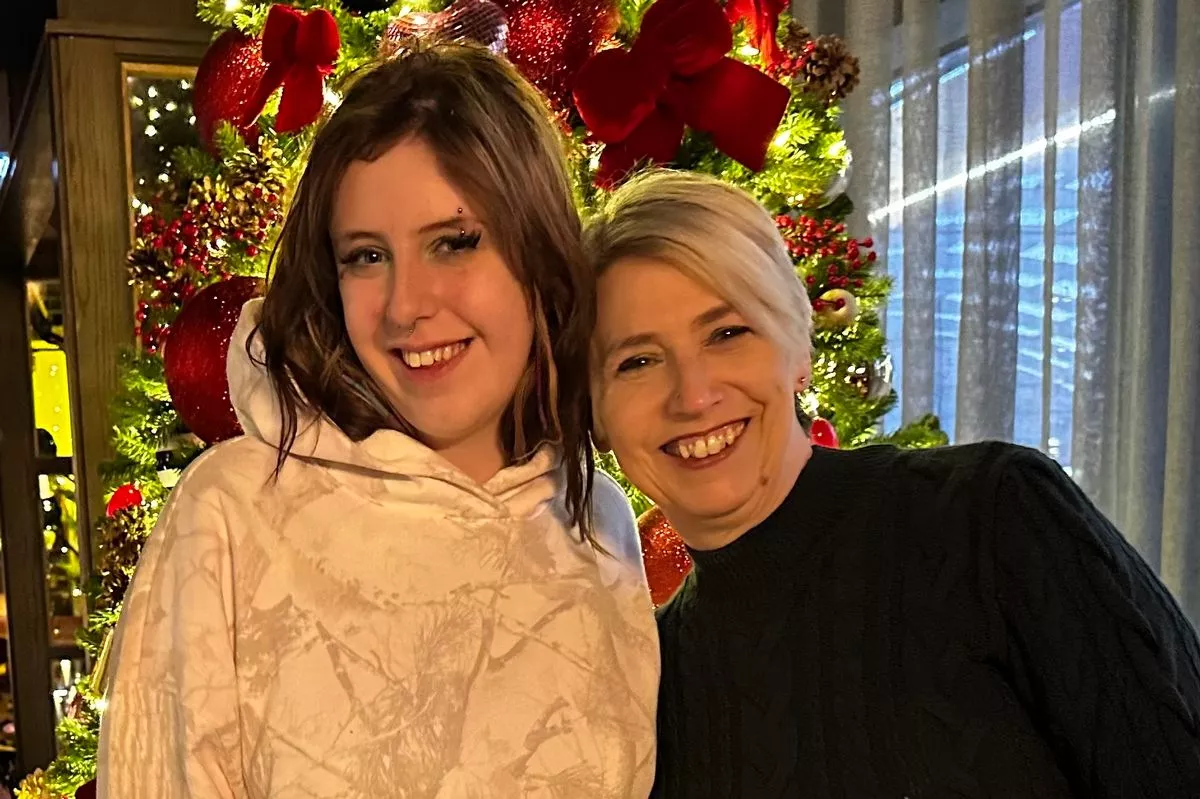 Melanie and Hannah
An Edinburgh mum has told how both her and her daughter are living with the same diagnosis, which has left them in so much pain they have fainted.
Melanie Stronach, 53, was diagnosed with endometriosis at the age of 32 after suffering from very heavy, painful periods since she was a teenager.
She was put on the pill at 16 which helped her manage the symptoms as best she could. Before then, she would suffer from agonising pain and would regularly faint at school.
Melanie got married at 25, but it wasn’t until her and her husband were trying for a child she realised something was wrong. She was sent for a test to figure out why she couldn’t get pregnant, eventually leading to her endometriosis diagnosis.
Endometriosis is a condition where cells similar to those of the lining of the uterus grow in other parts of the body, according to the NHS. It can cause the growth of lesions in areas like the ovaries, fallopian tubes, pelvis, and other organs such as the bladder and bowel.
The disease can be extremely serious and result in heavy periods, severe period pain, chronic pain, persistent tiredness, and difficulty getting pregnant.
Melanie gave birth to her daughter, Hannah, when she was 33 after completing her IVF journey. However, during Hannah’s early teenage years, she started suffering from the same symptoms as her mum.
Speaking to Edinburgh Live, Melanie said: “I had very heavy painful periods throughout my teens. I was fainting and being sent home from school.
“I understand there wasn’t as much awareness back in the 80s but I was told that was what life is. I was put on the pill early when I was 16 and that helped me manage it as best I could.
“I had never heard of it and it was so tough to deal with. I was put under anaesthetics and when I came round, the doctor told me I had endometriosis and said ‘don’t worry, you can have IVF treatment’.
“When I found out my child had endometriosis, it was hard because I hoped by that stage there would have been advances. She has always struggled. She ended up in A&E one night because she was in so much pain.”
Hannah Stronach, 19, started having issues when she was 14. In 2024, she had a period that lasted three months which resulted in her losing a lot of blood.
She was ending up in A&E with severe cramps and was told it was quite possible she had endometriosis. She is yet to be formally diagnosed.
She said: “I started having issues with my period when I was 14 and it was just consistently so painful, I couldn’t make it to school. I would be throwing up or passing out.
“I was on the pill for three years but we couldn’t find one that didn’t give me bad side effects so I moved to the implant when I was 17 and I have been on that ever since.
“I haven’t been officially diagnosed. Last year, I had a period for three months solid and I lost so much blood that I became anaemic. I was getting stomach cramps so bad that I was ending up in A&E, two to three times a week.
“They said it looked conclusive that I had endometriosis, and they told me to come back when it was worse. The blood loss is honestly awful, I am basically wearing diapers. I work in hospitality and I have fainted at work multiple times.
“It tore apart my relationship. I was being looked after full time by my boyfriend because I was too sick to do anything for around three months. It has also had a major mental impact on me, I wasn’t eating because I felt so sick. I was also gaining weight despite not eating anything.
“I lost friends because I couldn’t go out and see anybody. It’s hard seeing people out and doing things when I am completely bed bound.
“It honestly makes my blood boil thinking about my mum and I having the same diagnosis. When we were in the doctors for the first time and I was getting spoken to about it, my mum was told the exact same stuff when she went to the doctors.”
Endometriosis affects around one in 10 women, according to Scottish Government figures.
A spokesperson for Endometriosis UK said: “In Scotland, it currently takes on average 8 years and 10 months to get a diagnosis of endometriosis. That’s far too long and must come down.
“Not only without a diagnosis can the disease progress, but it can also have a devastating impact on all aspects of someone’s life including their relationships, career, education and their physical and mental health.
“In 2021, the Scottish Government produced a Women’s Health Plan, which among other matters, addressed endometriosis diagnosis and care.
“The Government is now entering the second phase of the Plan, and we welcome the opportunity to work closely with government on its implementation to ensure it works for everyone with endometriosis in Scotland.
“We want to see faster diagnosis – and a commitment to reduce risk he average time to a diagnosis to under 1 year by 2030; ensure a baseline in endometriosis care so that everyone with endometriosis in Scotland gets access to care and support in line with NICE guidance; and ensuring mandatory age appropriate menstrual wellbeing education is delivered across all Scottish primary and secondary schools, so that everyone recognises the signs of menstrual health conditions, what is normal for a menstrual cycle; and feels empowered to seek help if what they are experiencing isn’t normal.”