
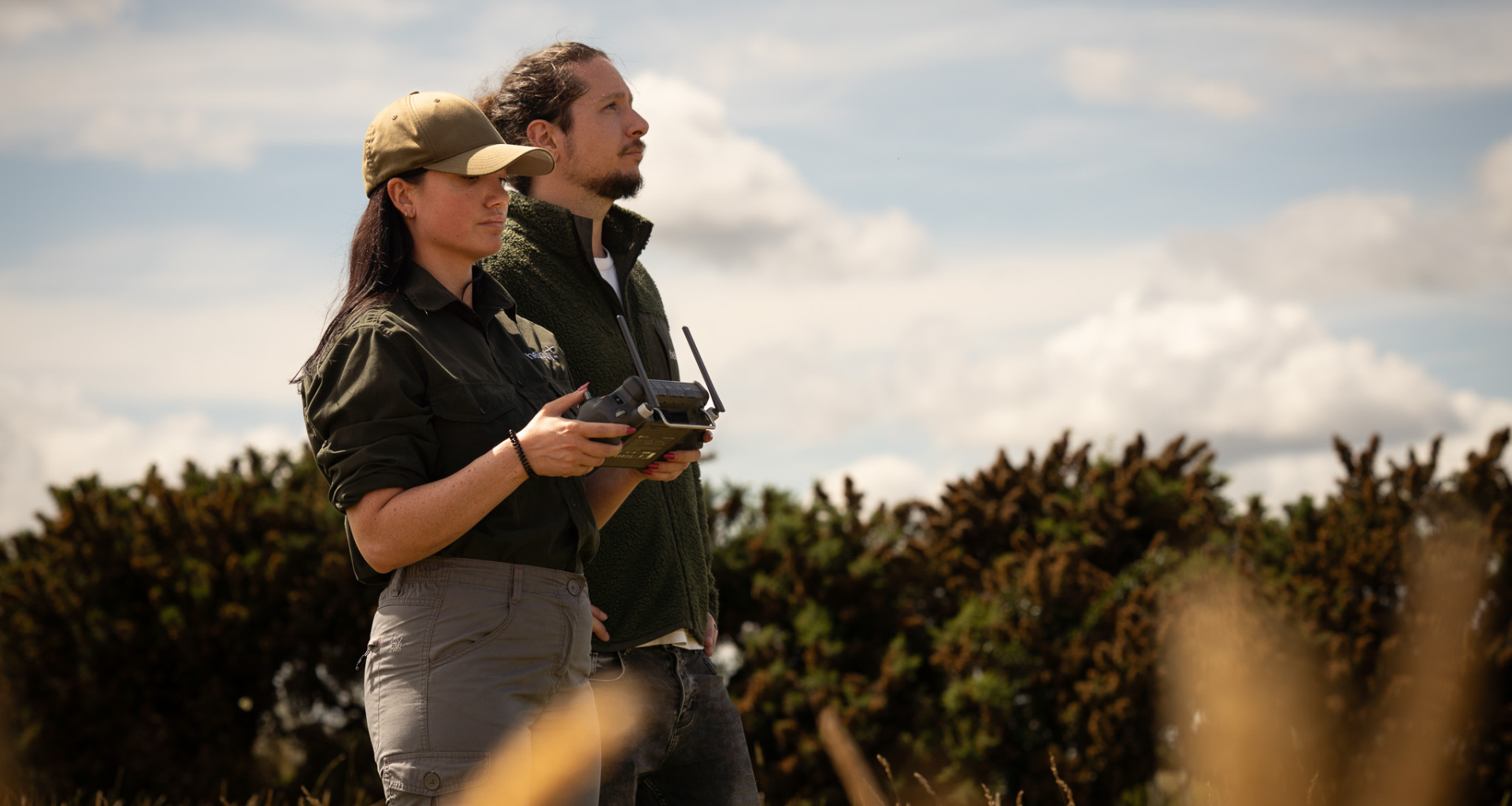
If you fly a drone or model aircraft in the UK, there are important regulation changes coming into effect from January 1, 2026.
These include:
UK class marks and recognition of European C-class marks.
Flyer ID now required for anyone flying a drone weighing 100g or more.
Introduction of Remote ID.
Green flashing light requirements.
Drone laws: What’s new for 2026?
Let’s take a deeper dive into what’s new for 2026.
For a more in-depth review of UK drone laws, read our full UK drone rules guide.
Drone class markings come into play in 2026
Class markings are a big one for 2026.
From January 1, 2026, all new drones placed on the UK market will use the UK class-marking system (UK0 to UK6).
However, in a big step forward, the current EU C-class marks will now be recognised under the equivalent UK-class mark.
E.g a C0 class drone will come under the same rules and regulations as if it were a UK0 class drone, C1 as UK1, all the way through to C6 as UK6.
This prolongs their use, and in some cases, means that UK operators will benefit from greater freedoms than previously.
Recognition of the EU C-class marks in the UK will run until the end of December 2027, after which, the class marking system will be replaced in the UK by the UK version.
Products without an EASA class marking (‘legacy products’) can continue to be used by following the regulations in the UK classes, based on their weight.
The table below shows the operational subcategories for class-marked drones.
UK Class Mark/EU equivalent
Open Category Sub-categories
UK0, UK1 (C0, C1)
Over People (A1)
UK2 (C2)
Near People (A2, A2 CofC certification needed)
UK2, UK3, UK4 (C2, C3, C4)
Far From People (A3)
For more details on class markings, read our in-depth guide.
Greater flight freedoms for drone operators
A2 CofC holders can now fly UK2-marked drones (or EU C2 drones until December 31, 2027) weighing up to 4kg and with feature-enhanced safety systems to:
Users of class-marked drones weighing up to 900g can now fly in the A1 subcategory – allowing them to fly over people, but not crowds.
Flyer ID required for drones over 100g
The UK CAA has changed the threshold for drone registration, especially in relation to the Flyer ID.
Previously, a Flyer ID was required for anyone flying a drone weighing 250g or more.
Now, anyone flying a drone weighing 100g or more must obtain a Flyer ID – available by completing the free test on the UK CAA website.
The table below shows the new rules for Flyer ID, as well as the requirements for an Operator ID (if you own or are responsible for the drone).
Weight of drone or model aircraft
Class
Flyer ID
Operator ID
250g to less than 25kg
UK1, UK2, UK3, UK4
Required
Required
100g to less than 250g; with a camera
UK0 with a camera
Required
Required
100g to less than 250g; without a camera
UK0 without a camera
Required
Optional
Less than 100g
Not applicable
Recommended
Optional
Remote ID
Before 2026, Remote ID was not mandatory in the UK. But from January 1, 2026, drone pilots will need to start to adhere to Remote ID requirements.
But this will not apply to everyone straight away.
From 2026, all UK class-marked drones (UK1, UK2, UK3, UK5, and UK6) will need to broadcast their Operator’s Remote ID and information when flying.
From January 1, 2028, Remote ID will become a requirement for a greater number of drone pilots, including those with non-UK class-marked drones.
Read our Remote ID blog for more details.
Green flashing light at night
A new requirement for 2026 is that, if you fly a drone or model aircraft at night, your aircraft must have a green flashing light turned on.
Class-marked UAS will comply with this requirement as part of the class mark design requirements. Non-class marked UAS will need to be retrofitted with a green flashing light.
The weight of the green flashing light add-on is included in the overall weight of the drone or model aircraft, so you must check to see if the weight of the light means different regulations apply to your operation.
Why the 2026 drone law changes matter
January is one of the busiest times of the year for new drone pilots — with thousands of drones given as gifts and flown for the first time.
But it also means that it’s more important than ever to know your responsibilities before take-off.
heliguy™ has in-house training instructors and regulatory specialists. Contact us if you need advice on these changes to UK drone rules.