
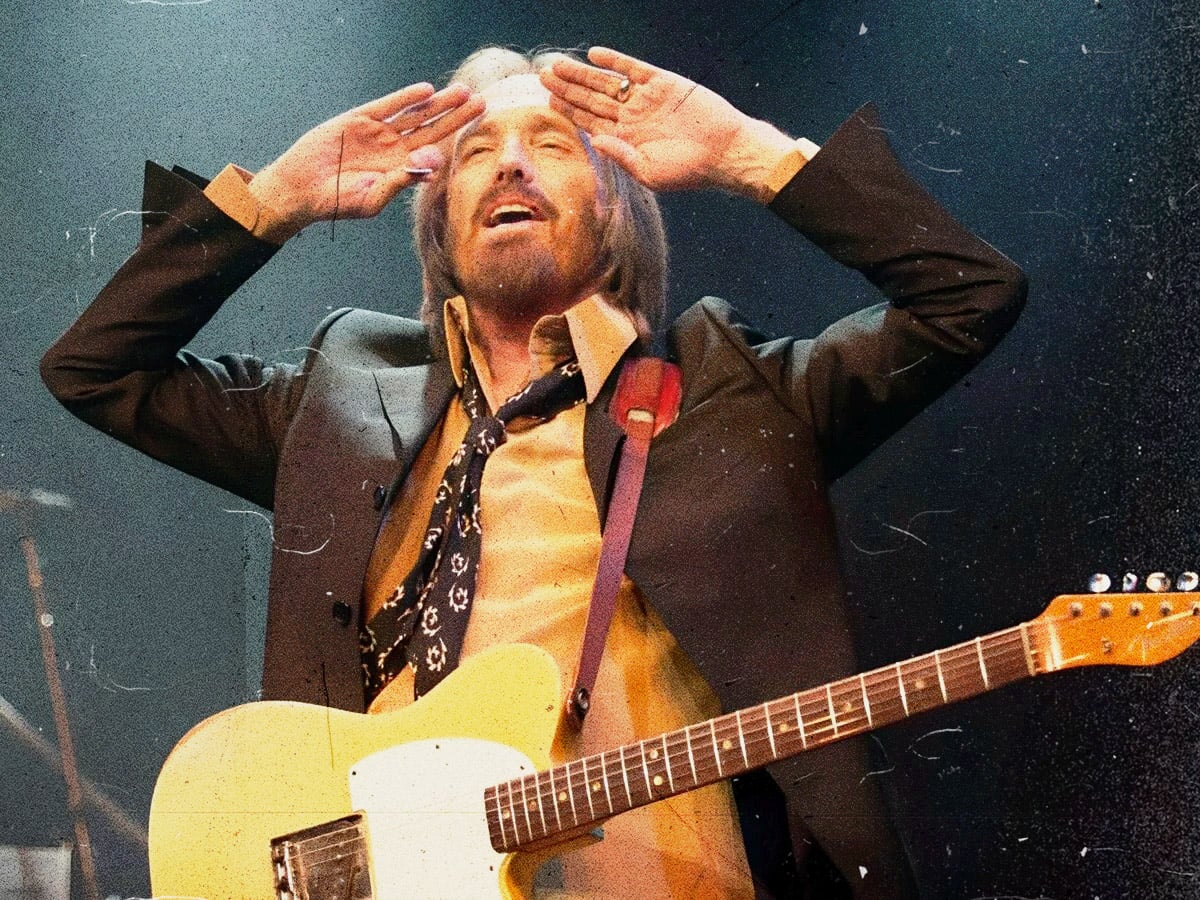
(Credits: Far Out / Mark Spowart / Alamy)
Thu 1 January 2026 16:33, UK
As an artist, Tom Petty was only able to control his output in the studio, and how it was received by the wider general public upon release was out of his hands.
Despite not being able to alter how his fanbase would take to each record, naturally, due to spending months slaving away on it in the studio and pouring his heart into every song, Petty did care, to a degree, about how his material would be perceived. However, he also knew that it wasn’t worth losing sleep over.
If Petty made each record attempting to appease the general public, he’d likely have never have become an icon. Greatness, in art, doesn’t come from giving the people what you think they crave, but the precise thing they least expect. Petty knew this more than most, which is why he refused to take the conventional path with his career. Instead, his heart informed his decisions, which occasionally led to mistakes. Nevertheless, Petty could never be accused of acting inauthentically or taking the safe option.
Following the mainstream success of The Heartbreakers’ third album Damn The Torpedoes, Petty could do no wrong in the eyes of many. The cherished record, released in 1979, contains tracks, like ‘Refugee’ and ‘Don’t Do Me Like That’, that still sound phenomenal all these years later. As a result, Petty become a heartland hero with his unique brand of Americana. It could have been easy and lucrative for him to follow that formula for the rest of his career, but instead, he refused to be typecast.
For his next album, Hard Promises, Petty exhibited a different side of his artistry, which was much darker than people had heard before from him. Additionally, another reason why it may have been received less warmly than Petty anticipated was due to a delay relating to a bitter dispute with his record label over its price in shops.
 The magnanimous Tom Petty. (Credits: Far Out / YouTube Still)
In those days, the typical price for an album was $8.98. However, for bigger artists, the cost for fans was $9.98, classified as ‘superstar pricing’. While Petty would have made more money if he kept his mouth shut, his principles were always more important than the number of zeroes in his bank account. After a lengthy battle with MCA Records, they eventually backed down. Although Petty never got involved in the dispute to gain favour with the general public, his fans were grateful for him fighting their corner.
During an interview with Record in 1983, Petty reflected on Hard Promises and the saga that preceded its release. “There are two things that we can constantly do without even trying: Spend money and stay in trouble,” he explained. “I don’t know, I never look at it as fighting the world, but I guess the songs convey that. It’s good to have something in the songs that inspires people. That’s our aim with the music—the highest it can achieve is to inspire people, to lift people up”.
“I would feel terrible if it dragged them down. I think Hard Promises was kind of a down album; it dealt with some morbid things. It was a little morose, but intentionally so,” he added.
Looking back further on the album, which included tracks such as ‘The Waiting’ and ‘A Thing About You’, Petty said with pride: “I enjoyed that album—it’s some of my favourite stuff.”
However, even though the press were kind to the album and it still charted well, Petty still believed it could have been appreciated it more, sharing, “At times it was hard, because even though I was pleased with the reviews and everyone was pretty nice about it, I could see that in some cases the kids just really didn’t understand. You know, they wondered why it wasn’t more like ‘Refugee’ or something. It was the first time I’d ever really had to deal with that on a big scale.”
The lukewarm reaction from some to Hard Promises was new for Petty because he’d never previously experienced a backlash. However, it was also a learning curve, and valuably taught him that it’s impossible to please everyone. Most importantly, it was an album he remained proud of creating, and as long as he continued to meet that remit. Once an artist starts making music with other people in mind, they lose track of themselves, and Petty never fell into that dangerous trap.
Related Topics