
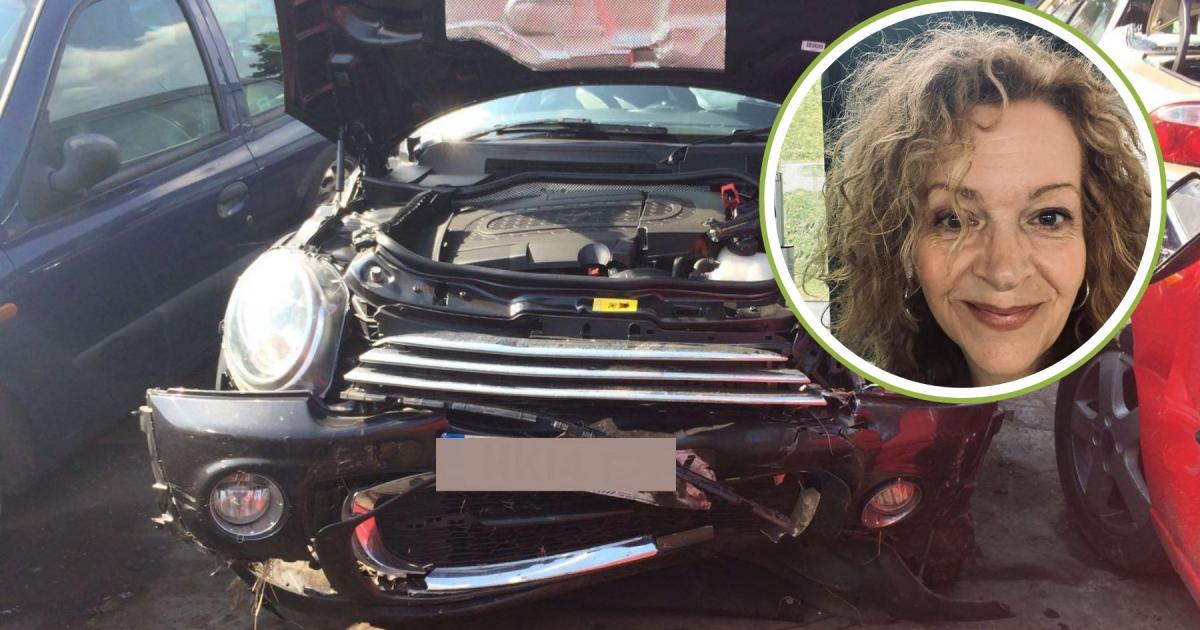
Susan Marks, 59, suffered severe knee injuries in a 2017 car crash on the dual carriageway between Abergavenny and Monmouth. “A car pulled out on me and I T-boned it,” she said. “Six ribs were broken, my sternum was damaged. It was a nasty crash.”
In the months that followed, the pain in her knees steadily increased. “Probably about six months later I realised something was wrong,” she said. X-rays later showed end-stage arthritis in both knees, but despite this, she was repeatedly denied a place on the waiting list.
Susan Marks, 59, suffered severe knee injuries in a 2017 car crash on the dual carriageway between Abergavenny and Monmouth. (Image: Susan Marks)
“They said I wouldn’t get on a list because I was too young,” she recalled. “I said I can’t walk now, I need a stick and they said there was nothing they could do other than give me painkillers.”
For years, Susan managed her condition using strong pain medication while continuing to teach full-time. But as her mobility worsened, she began looking for private options, a search that led her to Nordorthopaedics in Lithuania.
“What happens is things pop up on your Facebook,” she laughed. “I read reviews, joined a group of orthopaedic patients, and people were so happy with the service. So I took the plunge.”
The clinic asked her to send fresh X-rays. She was told both her knees needed replacing.
Susan flew from Bristol to Lithuania last summer for her first operation, a robotic-assisted knee replacement using the ROSA system.
“It was incredible, honestly,” she said. “Very little swelling from day one. The recovery shocked me.”
Robot-assisted surgery uses precise digital mapping to guide the surgeon during the procedure.
“Without the robot, the surgeon has to rely fully on experience to know where to cut and what size implant to use,” she explained. “With the robot, it reads the surface of the knee and tells them exactly how much to cut and where.”
She was walking on crutches the following morning and was back at work within eight weeks.
The 10-day treatment package cost about £9,000, including surgery, accommodation, daily transport, and physiotherapy.
“That’s about half the price of the UK,” she said.
Susan Marks, 59, suffered severe knee injuries in a 2017 car crash on the dual carriageway between Abergavenny and Monmouth. (Image: Susan Marks)
Reflecting on her experience with the NHS she says, “They agreed I needed a replacement, they just wouldn’t put me on the list.” “Knee replacements last about 20 years, so they don’t want younger patients needing a second one.”
Now walking with a stick due to her unrepaired second knee, she has already booked a follow-up operation in Lithuania.
“Honestly, I’m so pleased with it. It just doesn’t hurt at all. I trust the service so much.”
Her goal for next year is simple, to walk the Welsh hills, run for a bus, and play cricket with her four grandsons , things she hasn’t been able to do for seven years.
A spokesman for Aneurin Bevan University Health Board said:
“Patients are referred to the orthopaedic department primarily from their GP but also from physiotherapists or other secondary care teams. Each referral is considered on a case-by-case basis by a Trauma and Orthopaedics specialist, and decisions on a patient’s next steps following diagnosis are made in their best interests, ensuring they are fully informed.
“Although there is no age inclusion criteria for knee replacement surgery, patients are always advised not to have the surgery too young as a replacement will only be viable for 10 years. Patients with a high BMI that may impact the success of treatment may be referred to other supportive services.
“Patients can also be referred by the Orthopaedic team to the Keeping Well Service. Patients referred to this service will be contacted by the team and signposted to the appropriate information to self-manage their condition to ensure that they are fit and well for planned surgery. Residents in Gwent can also visit the Move Better Gwent website for information and advice on a range of MSK conditions.
“We’re sorry to those patients who feel they must self-fund care overseas. Our staff are continuing to do everything they can to reduce our waiting times and to prioritise the most clinically urgent cases.”
The Welsh Government says:
“Reducing waiting times is a priority for us. While they’re not where we want them to be, long waits have significantly reduced since we launched our programme for reducing waiting lists in April 2022. Orthopaedic waits are down by 90%, with improvements across all health boards.
“We will continue to work with the NHS to build on the progress we have made over the last three years to improve waiting times.
“If people are considering undergoing private healthcare, it’s important they research it properly. The approval process is undertaken by each health board, and guidance is available on local health board sites. We would encourage people to check they are dealing with someone reputable, ask to see their qualifications, ask about complications and side effects and, if possible, speak to other people who have been treated at the same clinic or hospital.”