

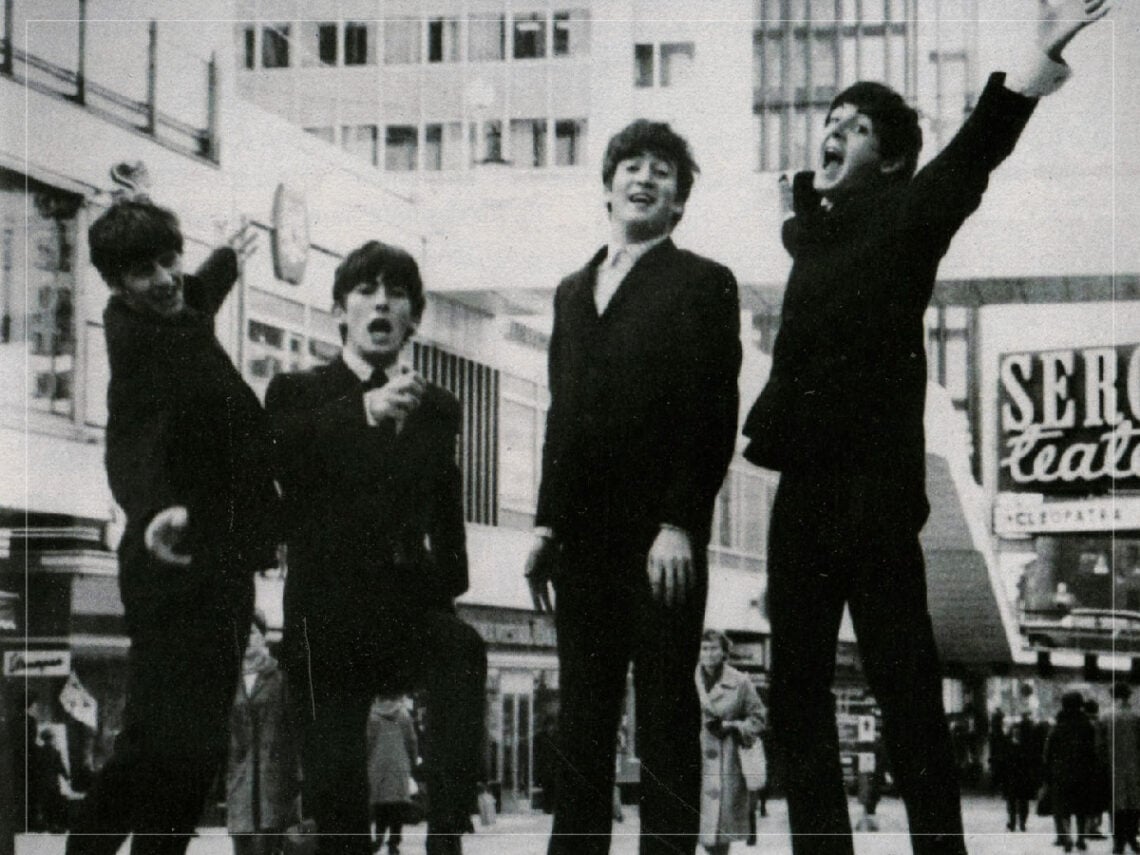
(Credits: Far Out / Public Domain / ingen uppgift)
Fri 2 January 2026 16:30, UK
Throughout the 1960s, as the musical landscape shifted from the fresh-faced sounds of Motown to the far-out realm of hippie psychedelia, the one constant of the pop charts was The Beatles.
From the moment that they unleashed their inaugural single back in 1962, the Fab Four were a force of rock and roll world domination, amassing a litany of truly iconic tracks and an at the time unimaginable wealth of chart-topping hits. In the end, though, their unparalleled grasp over the singles charts did not cease when the band decided to go their separate ways back in 1970.
Even before that split occurred, each individual Beatle had already begun concocting a distinct solo career, allowing them to exercise the artistic influences which weren’t quite right for The Beatles themselves. So, although the band’s run of hit records ended in 1970 – aside, admittedly, from a seemingly endless plethora of reissues re-entering the charts – the four Merseyside ‘mop tops’ continued to exercise their domination of the charts well into the 21st century.
George Harrison was the first to officially launch his solo career, unleashing Wonderwall Music back in 1968, and the guitarist’s desire for solo expression perhaps shouldn’t come as much of a surprise. Throughout The Beatles’ extensive discography, Harrison’s efforts routinely went underrated and overshadowed by the infallible songwriting prowess of Lennon and McCartney, leaving Harrison with a head full of unfulfilled ideas waiting to be released.
Even still, it is fair to say that both John Lennon and Paul McCartney were far more immediately successful when it came to their solo work, both amassing a multitude of hit records, albeit of differing styles. Macca tended to go down the route of mass appeal with Wings, where Lennon – along with Yoko Ono – was more willing to experiment with his songwriting, moving away from the hit single focus of his earlier days with The Beatles.
Meanwhile, Ringo Starr has had his own extensive career as a solo artist, demonstrating his undying love for country music along with a wealth of other disparate influences from across the musical realm. Ultimately, though, Starr and his ever-expanding cast of collaborators have never reached the number-one spot in the UK singles charts, making him the only former Beatle to have never done so.
You might assume, with good reason, that Paul McCartney would have been the last Beatle to top the charts, if only for the fact that his solo career is still ongoing. However, Macca’s last time at the top of the pops was all the way back in 1989, when he appeared on ‘Ferry Across the Mersey’, the charity single recorded alongside the likes of Holly Johnson and Gerry Marsden in the wake of the Hillsborough disaster.
So, who was the last to top the charts?
Unsurprisingly, John Lennon’s last time at the top spot came in January 1981, shortly after the songwriter’s tragic death a month prior. So, not only was it George Harrison who started the trend of Beatles solo records, but he was also the last individual Beatle to have a number-one hit, both in the US and in the UK.
Over in the States, where The Beatles first made their mark back in 1964, Harrison topped the Billboard Hot 100 in 1987 with his cover of James Ray’s ‘Got My Mind Set On You’ – a track which had been rattling around in his head since way back in the 1960s. In the UK, that cover peaked at number two upon its initial release, but in the wake of Harrison’s death in 2001, ‘My Sweet Lord’ re-entered the UK singles charts and went on to reach the top spot.
Harrison might have earned the accolade of being the last Beatle to strike upon a number-one in a solo capacity, but his record was somewhat overshadowed in 2023 when the lost, uncovered and remastered Beatles track ‘Now and Then’ topped the charts, over half a century on from the band’s very first entry into the pop charts.
Related Topics
The Far Out Beatles Newsletter
All the latest stories about The Beatles from the independent voice of culture.
Straight to your inbox.