
It’s hard to think of anyone whose life has not been influenced by social media over the past two decades. You may not have taken to LinkedIn (launched in 2003) to tell us what fatherhood has taught you about sales, poked someone on Facebook (2004), slid into someone’s DMs on Twitter (2006), or posted a photograph of your breakfast on Instagram (2010). But I bet an old school friend, former colleague or ex has come back into your life because of it, or you’ve had a mortifying picture from a night out posted without your permission. I mean, even my mother, who doesn’t have a smartphone, checks Facebook for family photographs.
But social media probably changed my life more than most. As an author who mostly works from libraries or home, Facebook and Twitter provided me with a virtual office packed with witty, knowledgeable pseudo-colleagues with whom to converse on any subject at any time of day. As a journalist, I suddenly had tools with which to get the latest on any story, riot, meme, resignation, pandemic or snack. And as an introvert, it gave me access to the best type of networking: the kind that could be done in your yoga kit, without leaving home. Unlike Gregg Wallace, who met two of his wives on Twitter, I never dated someone I met on social media, but I made several close friends through what has now become X and I got a ton of work from it.
“Holocaust denial and the n-word are now routine on social media”
MARK HARRISON FOR THE TIMES MAGAZINE
Looking back, things could sometimes get surreal. It became a daily occurrence to converse with the likes of Nigella Lawson on favourite fonts, JK Rowling on favourite desserts, or Philip Pullman on books. I live-tweeted so relentlessly and affectionately about Rahul Mandal when he was on The Great British Bake Off that I manifested him as a friend (he has a delightful real-life habit of turning up with cakes). I once posted about some music I was enjoying and was invited by the musician concerned to listen to their new album at their home. Cabinet ministers messaged to discuss political issues. More prosaically, I once mistook the hot chocolate I had sleepily ordered for a hotel breakfast for sauce, poured it over an omelette, tweeted my mistake, and the next minute Heart Radio DJs were discussing the faux pas on their breakfast show.
• Read more social media stories by our experts
The madness seeped into real life with increasing frequency. I found myself being quoted in articles in flattering and unflattering ways, invited to discuss the most banal musings on radio and TV, and tagged in all sorts of mundane situations as I went about my daily business: taking my family for dessert on Dudley Road in Wolverhampton; greedily scoffing a KFC at a motorway services in the West Country; looking gormless and tired on the Tube. I guess social media gave some of us former nobodies a weird kind of microcelebrity. And as with actual celebrity, there was a dark side to it. So dark, in fact, that I’m now talking about my involvement in the phenomenon in the past tense.
In 2025 I’ve deleted LinkedIn, having tired of its “broetry”, though it’s forever insisting that I re-establish my account. I keep getting locked out of my Facebook feed, and one day soon I will give up on resetting my password as I’m down to about two posts a year. My account on X, with its 112,500 followers (and falling), is sleepier than a Sunday morning on Sark. I’ve outsourced most of my postings about work projects to a social media manager, and while I used to post on other subjects five or six times a day, nowadays I might do so once or twice a week, and then often delete what I’ve said.
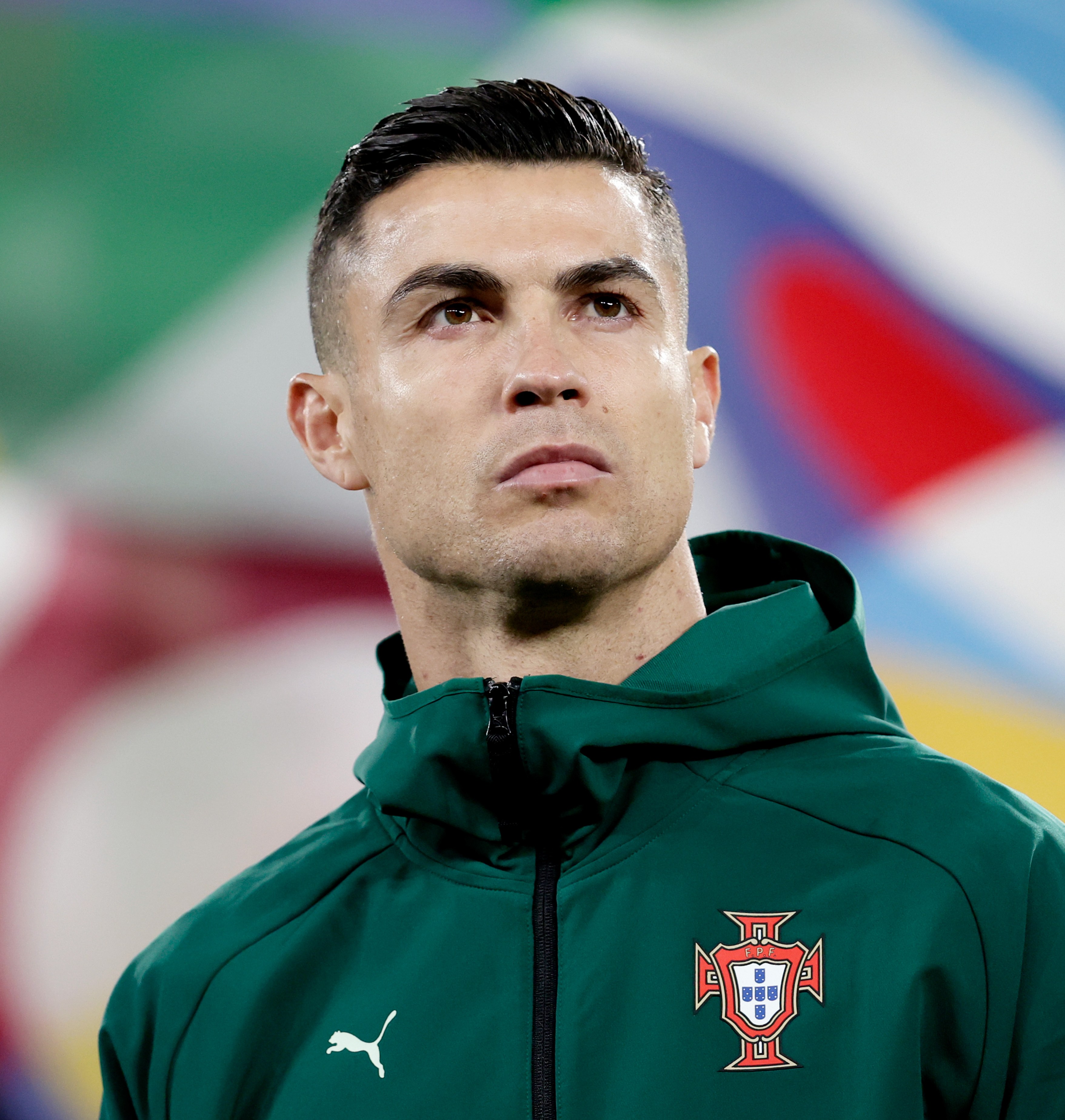
Cristiano Ronaldo, the most followed person on Instagram
GETTY IMAGES
Most followers on InstagramCristiano Ronaldo 668 millionDwayne Johnson 391 millionAriana Grande 372 millionKim Kardashian 354 millionKhloé Kardashian 300 millionJustin Bieber 292 million
Suddenly, every minute spent on social media feels like a minute too many. And I’m not alone. According to analysis carried out for the Financial Times, the amount of time spent on social media peaked in 2022 and has been steadily declining ever since. At the end of 2024, adults aged 16 and over in the developed world spent an average of 2 hours 20 minutes a day on social platforms, a decrease of about 10 per cent since 2022. Notably, the reduction is most marked among the people once seen as the keenest users — teens and twentysomethings. Separately, recent polling has found that nearly a third of all social media users post less than they did a year ago.
You can also sense that we are at the beginning of the end of the social media age anecdotally, through increasing talk of the “dopamine detox”, the “digital Sabbath”, “no-screen Sundays”, the phenomenon of “posting zero” and the rising popularity of the “Nokia dumbphone”. As a recent essay in The New Yorker put it, “People feel it’s not worth it to share their lives online any more.” Or as my colleague Caitlin Moran, who’s had an even more intense time on social media than I have, stated in these pages recently, “It turns out, ‘communicating with the whole world’ is not something we are built to do… Everyone’s scared that something they post might attract the attention of social media’s hordes of angry, bad-faith reactors, always ready to accuse you, variously, of privilege, bigotry, boasting or ignorance — even if all you posted about was last night’s TV or your child’s birthday party.”
• Social media is dead — none of my friends are posting any more
She is right. One Mandy Carp was joking when she recently responded to an article asking, “Why do so many murderers bury victims in their own backyards?” with, “Not everyone has the trunk space or gas money to drive way out in the middle of nowhere to dump their bodies. Check your privilege.” But the tone was typical of the response you may get to almost any remark on social media nowadays. Over the years I have been trolled for, among many other things, working for the mainstream media, thinking Jeremy Corbyn had a blind spot with antisemitism, thinking Boris Johnson had a problem with the truth, not speaking Punjabi with an authentic enough accent and being a member of the 0.1 per cent (after a writer for The Canary mistook a car review as proof of my ownership of a Ferrari).
I’m hardly unique in being the subject of pile-ons; I may even have deserved some of them. But it was unusual to be targeted by both the left and right with almost equal intensity. The hard left are often concerned, of course, with exposing people who are not morally pure enough, while hatred from the far right can be atavistic, the pursuit frequently descending into racial abuse. And while, five years ago, you could block and report such users, now it feels such language is encouraged by the platforms. A recent BBC investigation found that more than 2,000 extremely abusive social media posts — including death and rape threats — were sent about managers and players in the Premier League and Women’s Super League in a single weekend. In September, Sunder Katwala, director of the think tank British Future, began reporting examples of egregious racial abuse, such as the p-word, directed at ethnic minority public figures, including himself. He reported 30 incidents of p-word abuse to X, but only one user was suspended. The remainder, according to X, had not “broken our policies”.
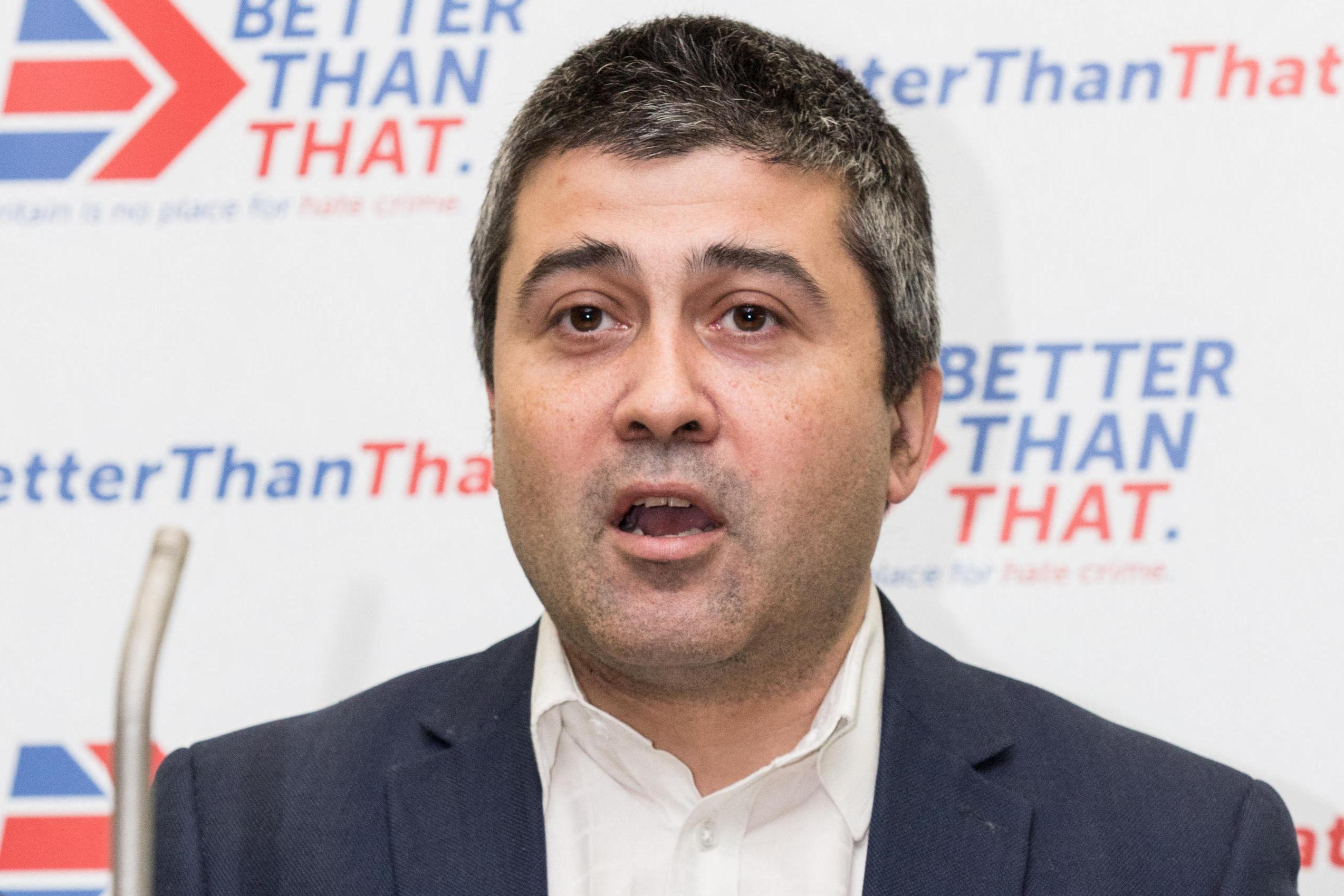
Sunder Katwala from British Future think tank
ALAMY
Disturbingly, Holocaust denial and the n-word are now routine on social media. While it is driving real social division and makes me fret that politicians still on X think such behaviour is now somehow acceptable, their sense of reality warped by what they see online, I doubt any of this is news to you. Most people understand the negative mental health consequences of being online and know of people who have been radicalised on Facebook or X. Looking back, the truly messed up thing is that so many of us got used to being on the receiving end of such behaviour. I remember going to a party a few years ago and a complete stranger asking me if I was OK. I didn’t know what she was referring to. It turned out she had read the hundreds of personally abusive messages I’d had received that day on Twitter.
I taught myself to become oblivious to the trolling
It’s not that I hadn’t noticed. It’s just that, in my case, the trolling was so hyperbolic and contradictory that it was hard to take seriously. I mean, there were days when I had dozens of people trying to out me as an Islamophobe at the same time as dozens of others suggested I was part of a conspiracy to usher in sharia in Britain. I was attacked for being too harsh when it came to the legacies of the British Empire, and for being too lenient. For being Sikh, yet not Sikh enough. For having succumbed to the establishment and for not having succumbed enough. It was all so silly that I taught myself how to become oblivious to it all. The abuse was not normal but nor, probably, was my response to it.
Let’s face it, social media has, in recent decades, made millions of us really quite dysfunctional. It is about simplistic takes, blind certainty and herd behaviour.
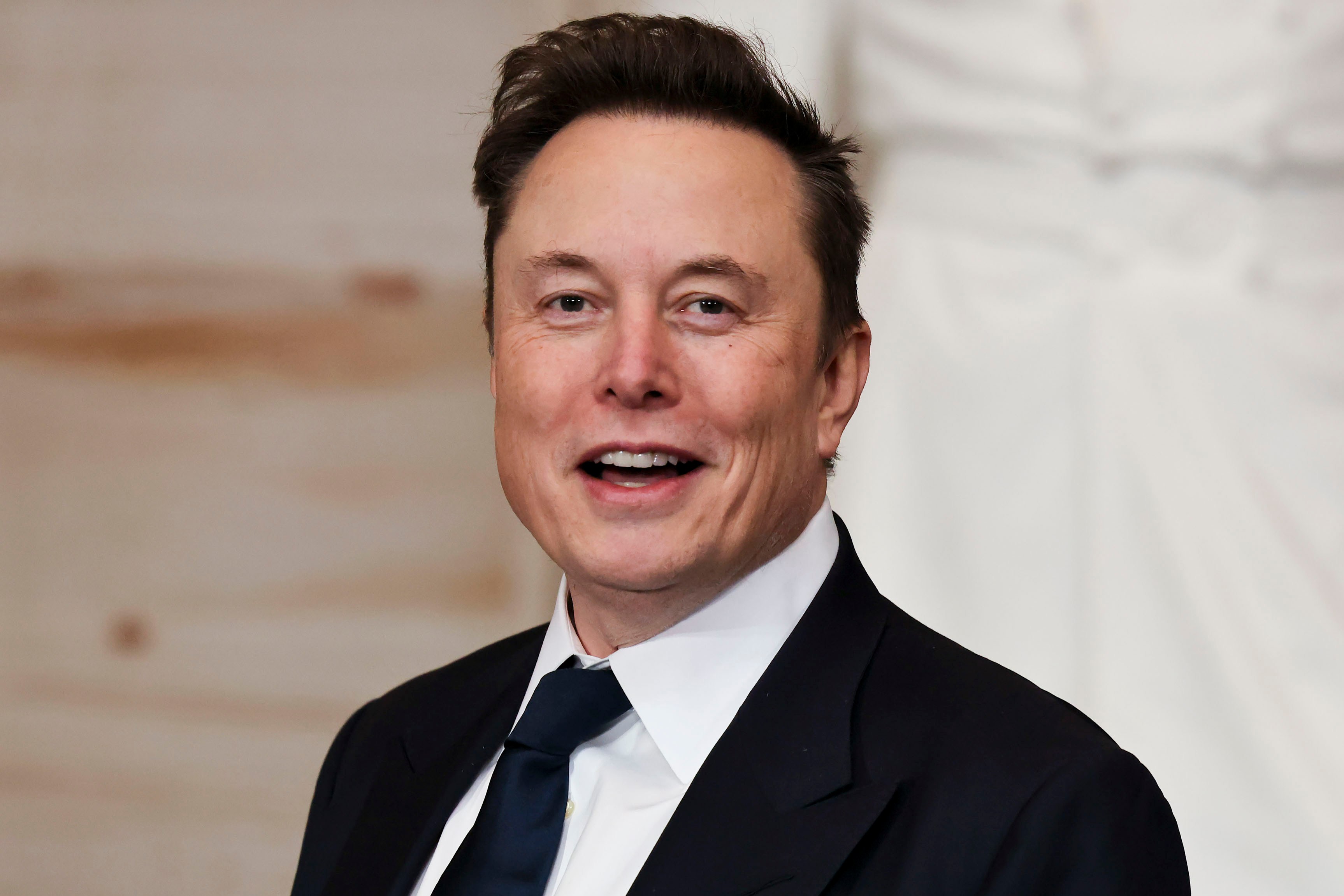
Elon Musk, X owner and the platform’s most followed person
GETTY IMAGES
Most followers on XNarendra Modi 106 millionCristiano Ronaldo 105 million
It is also a tool that will let you know, at any one time, what strangers from around the world think of you. Why would you want instant access to that kind of information in your pocket? Human beings aren’t designed to deal with that intensity of praise, hate and, sometimes, indifference.
My addiction made me a strange person. For about a decade there was barely a meeting, family dinner or drive that I didn’t interrupt because I had just thought of a joke to share or a sharp comeback. The people in my life often complained about it. Lots of us also invaded our own privacy and turned ourselves into newswires. We forced ourselves to have opinions on everything, so much so that if you didn’t post on a controversy or development, users would sometimes “note” your silence and condemn you for it.
Social media isn’t social any more
The full madness of this didn’t hit home for me until I’d been off the platforms entirely for several months, and my social media manager informed me I was getting trolled for not sharing a donation I’d made to a charity raising money for children in Gaza. It was being implied, apparently, that I was quiet about the donation because I was frightened of upsetting pro-Israel friends and colleagues. As it happens, my donation had been made public on some of my social media accounts and then shared by some of my Jewish friends. Besides, I wasn’t even online.
I guess these critics thought they were communicating with a person when I wasn’t actually there. And this is the thing that is killing social media more than the pile-ons and abuse: it’s not social any more. When I log in to Instagram now, I don’t see my friend’s photographs. Algorithms present me with videos of cars being cleaned for the first time in 30 years. I see Chinese men doing food challenges; drone videos of deserted valleys in Pakistan; fake news about the sports teams I follow; AI videos of events that never happened; rage bait designed to make me hate certain social groups; clickbait headlines; influencer-produced adverts and scams. Incredibly, according to Press Gazette, Meta, the owner of both Facebook and Instagram, probably made more money last year from advertising fraudulent schemes in the UK than the entire news industry made from legitimate online marketing.
• Read more by Sathnam Sanghera
According to the aforementioned research, the proportion of people who use social networks to stay in touch with their friends, express themselves or meet new people has fallen by more than a quarter since 2014. The users still logging on — and there is huge variation between platforms and regions, with LinkedIn and social media use in the USA still buoyant — do so mindlessly to browse the content that algorithms have decided they need to see. In short, despite these companies having spent decades insisting they are not publishers, they clearly are. They are also broadcasters, providing mass media of a highly personalised, isolating, divisive, brain-rotting variety.
Toxic social media or real life? I choose real life
In the face of this, many people are resorting to smaller, more private message groups. The “town square” model, where the entire world yells into a single terrifying void, is being replaced by the “digital living room” on platforms like WhatsApp, where users are less likely to be screamed at. And, on one level, this makes me sad. Yes, I invested too much time in social media: over the years, I typed the equivalent of seven novels’ worth of words into Twitter. And, yes, it got stupid, toxic and solipsistic, but it was also amazing. For a while, social media was a way to hold people and organisations to account — especially those who had previously escaped such scrutiny. It was a way to amplify your work, to brainstorm ideas, share experiences, rejoice in awkward BBC interviews interrupted by small children, meet brilliant people from outside your social circles and engage in silly running jokes.
Occasionally on Bluesky, which feels like an early version of X and hasn’t yet been shittified like most other social media platforms by algorithms and AI slop, I get a taste of this old world. Sometimes I receive notifications telling me when a British politician has made a socially awkward visit to an Indian temple, having started posting these joy-giving photos myself. It reminds me that, at its best, social media brought people together and was a laugh. Perhaps, if we have a big breaking news story like the pandemic, the UK riots of 2011 or the blue/black vs white/gold dress debate, I’ll be back. But the innocence has gone. In 2025, it feels as if we are being presented with a choice between toxic social media and real life. And I choose real life.