
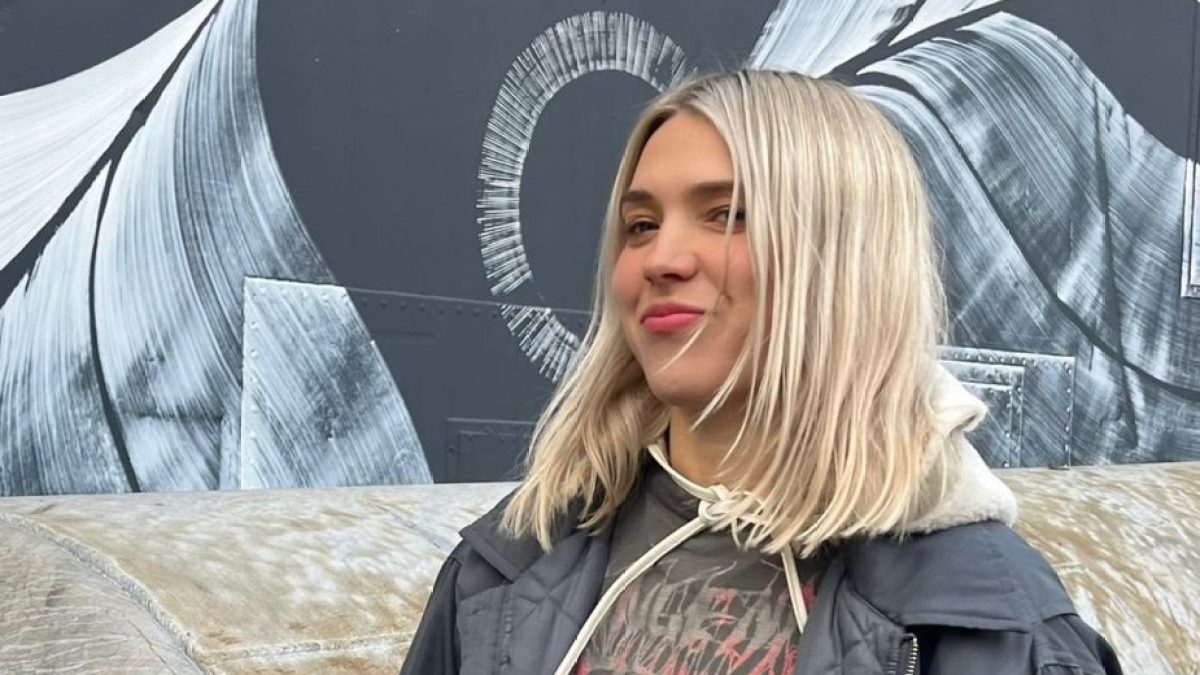
Rosie Lee Wilson moved from the inner city to a DIY community where some people pay their rent by helping others. Here’s what it’s like
Eight years ago, 34-year-old Rosie Lee Wilson moved from inner city London to Rockaway Park, a secret DIY artist community hidden in the countryside between Bristol, Bath and Glastonbury. She works remotely as a graphic designer for clients from Carhartt to Champion, and lives in a converted barn, with her own studio space. Here she explains why community trumps the convenience of the city. Interview by Jak Hutchcraft
When I step out of my door, I instantly see people that care about my wellbeing. When you live in, say, Elephant and Castle like I used to, you step out of your house and you’re in a neurologically stressful environment. But here, I see people I know and understand. It’s a really special and unique thing.
Around 30 people live here in Rockaway Park, and the majority pay £85 a week. People pay rent to Mark, an ex-punk singer and car broker who set the place up 10 years ago.
New FeatureIn ShortQuick Stories. Same trusted journalism.
The money goes back into maintaining and slowly developing the five-acre site: a cluster of self-built structures, mostly made from recycled and reclaimed materials. There are open fields, and a permaculture garden with vegetable patches, and communal spaces including a small library, a chapel, a café, and a venue used for talks and performances. On event days there’s also a mental-health check-in space. Around 15 households live here, a mix of cabins and small dwellings, and the rent contributes to upkeep, new builds, and shared infrastructure rather than profit.
This site started off fairly ad hoc, without formal permission. But under English law, if a use continues for 10 years without complaint it becomes lawful, so the site is now fully legal.
There’s an openness to think of non-financial ways of paying rent, too. If there’s some way that you can contribute to the community then you can do an exchange. There’s a chef who runs the vegan café five or six days a week. There’s a person who works as the videographer for Massive Attack, so he’s been doing reels for the socials. There’s flexibility and individual arrangements.
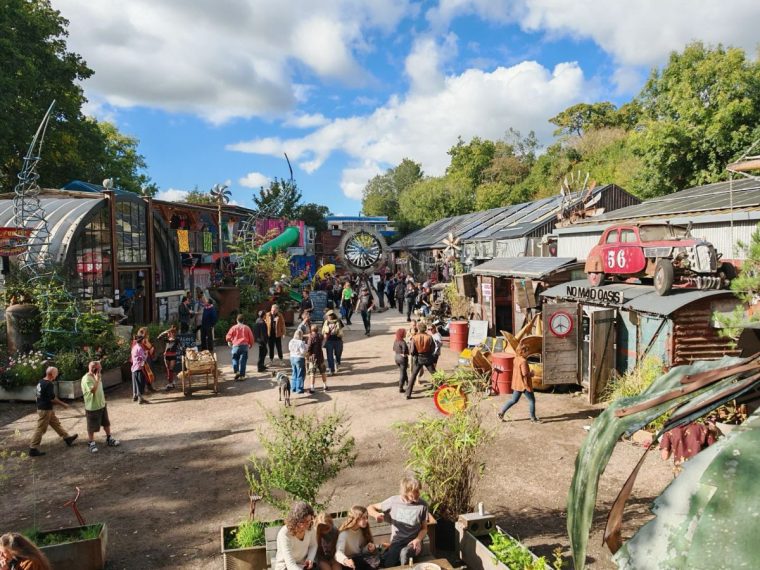 Rockaway Park is a five-acre site of self-built structures, mostly made from recycled and reclaimed materials. There are open fields, vegetable patches, a small library, chapel, and café
The community is a real mix of ages. People range from their mid-to-late 20s up into their 60s. There are four children living on site full-time, and another five who come and go regularly. This creates a very grounded and intergenerational feel.
There tends to be creative people here. There’s actors, creative directors, framers, carpenters – I’m a graphic designer. Lots of them work on festivals and events. We have the creative director of Glastonbury’s Shangri-La here, and my next door neighbour is Bertie, who made the Arcadia spider. Down the road, we have Luke, who makes huge, really incredible large-scale inflatable artworks. They tour the world appearing in cities and at festivals.
There are various installations and structures here that originally came from Glastonbury Festival, some are used year-round here and others will be reused at Glastonbury and other festivals.
Rockaway is open to the public – there are talks, music events, fundraising evenings, roasts, and markets, which help support the site financially. But primarily, it’s somewhere you can come without having to spend money, which feels increasingly rare. People are free to visit and spend time here.
I live in a beautiful flat. It’s inside a huge converted storage barn, now studio spaces and flats. In London, I shared a typical artist flat with four people and paid £600 a month, so now I’m saving £260 each month. People pay around £1200 for a one bedroom flat in London now. I loved the diverse communities of London, but nothing compares with being around the forests, and in tune with the seasons here. I tend to function better in environments that aren’t overly stimulating, where I can choose my level of engagement.
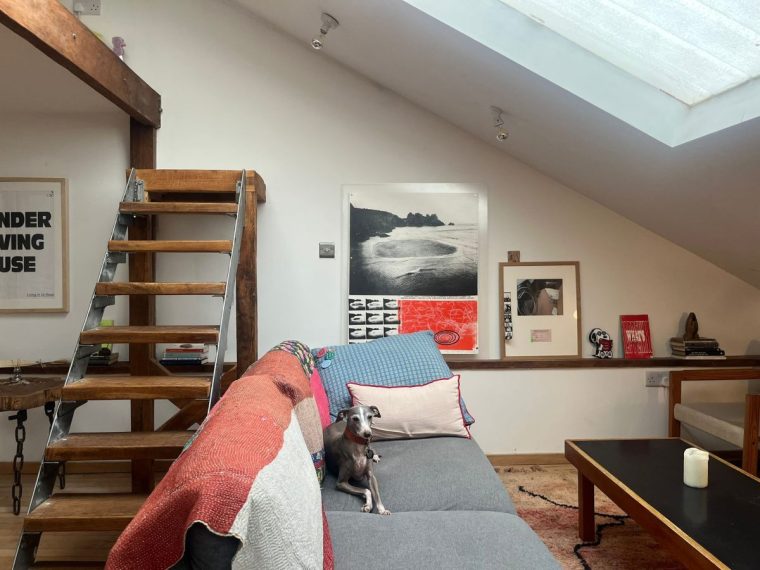 Rosie pays £340 per month to live in a beautiful converted barn, just minutes from her work studio
Other people live in converted shipping containers, trailers, cabins, and all sorts of alternative housing. When I first moved to Rockaway, eight years ago, I moved into an antique showman’s trailer. The people who used to live in it took great pride in their homesteads. It was an aluminium trailer, which was very beautiful and ornate inside, but it was a pretty hardcore shift. I was splitting all of the firewood to heat the place. You really felt the seasons there. It’s quite a beautiful thing, though, because when your environment calls for you to arrange your life in that way, you have no choice but to be present. But it was like a part-time job just to keep the house warm.
Moving here hasn’t affected my graphic design career much. I’ve only had a handful of in-person meetings this year, and I just get the train from Bristol for them. Most people in my field are set up to work remotely. It’s just second nature, and I think it can be more productive. One of the best differences to my life in London is here I’ve got a studio space that’s seconds away from where I live. You have to be very privileged to be able to do that in London – or be holding down one or two jobs to pay for both a house and a studio.
I still love visiting London. I have many friends there, and I really enjoy spending time in galleries and museums. But I don’t miss things like Deliveroo or the constant convenience. I like making use of what I have now – cooking from scratch, being more intentional. That feels nourishing rather than limiting. Here I do one weekly supermarket shop – it’s about a 10-minute drive away. I must save so much money by not popping into shops on my way to places.
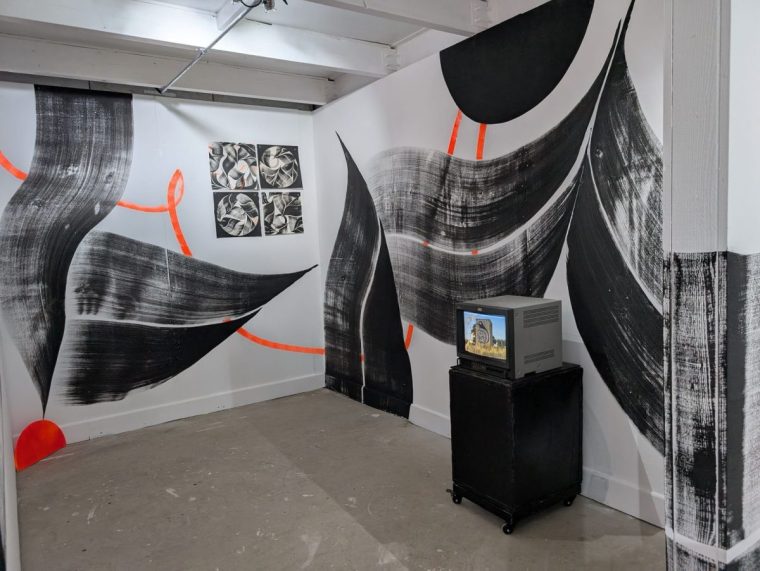 The art gallery at Rockaway Park is open to the public
One of my favourite things about Rockaway Park is that because it’s such a unique place, interesting people are passing through all the time – people that work in similar fields to me. The sort of people that are inspired by this kind of place and have made the trip are likely to be my people. So it’s like a concentrated community in a really isolated place.
There’s a real family feel; we have two single mothers who have babies here, and there are a few kids who live here with their families. It’s really sweet, actually, because it’s similar to my upbringing. I was born into a new age travelling community and I lived on a site when I was a baby. The shared labour of the parents is a really magical thing. One single mum living here told me the community and support is the difference between just surviving on the breadline and actually being able to live.
That said, childcare isn’t formally shared day-to-day, it’s more occasional and responsive. The children are different ages with different needs, and parents have different work patterns. But there’s always someone around in an emergency, or if short-notice help is needed. It’s very much that “it takes a village to raise a child” vibe. I’d be happy to raise children here at Rockaway. I think that families were always supposed to be like this.
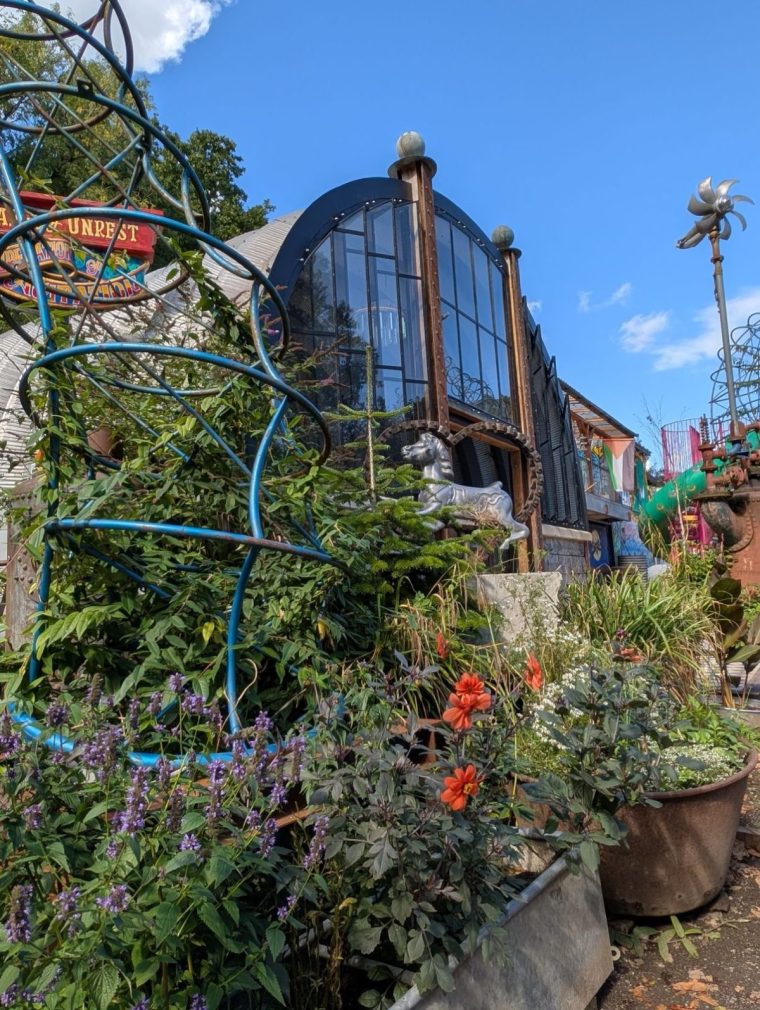 Rockaway Park has been operating for 10 years, which makes it a legal establishment
I didn’t realise I missed the strong community of my childhood until I came to Rockaway. Having community again feels like a kind of quiet security. It’s knowing that if something goes wrong, someone will be there – to lend you a tool, give you a lift to the doctors, help in small, practical ways.
A lot of people have been here for eight years or more, and that longevity creates trust. It feels comfortable. You’re not really in each other’s pockets but there’s a comfort in people being here for that amount of time.
What I’ve learned living here is that multi-generational living feels like it’s missing from our wider culture as a whole. It’s commonplace in lots of other cultures around the world; being looked after by younger people as you get older. You just couldn’t get that if you were living in a flat in a big city. We do it already here. There’ll be people having a medical issue or a scare or something, and people are there within seconds to look after them. I don’t know if I’ll stay here forever, but it would be a beautiful thing to look after my friends as they get older and, in turn, be looked after when I do.