
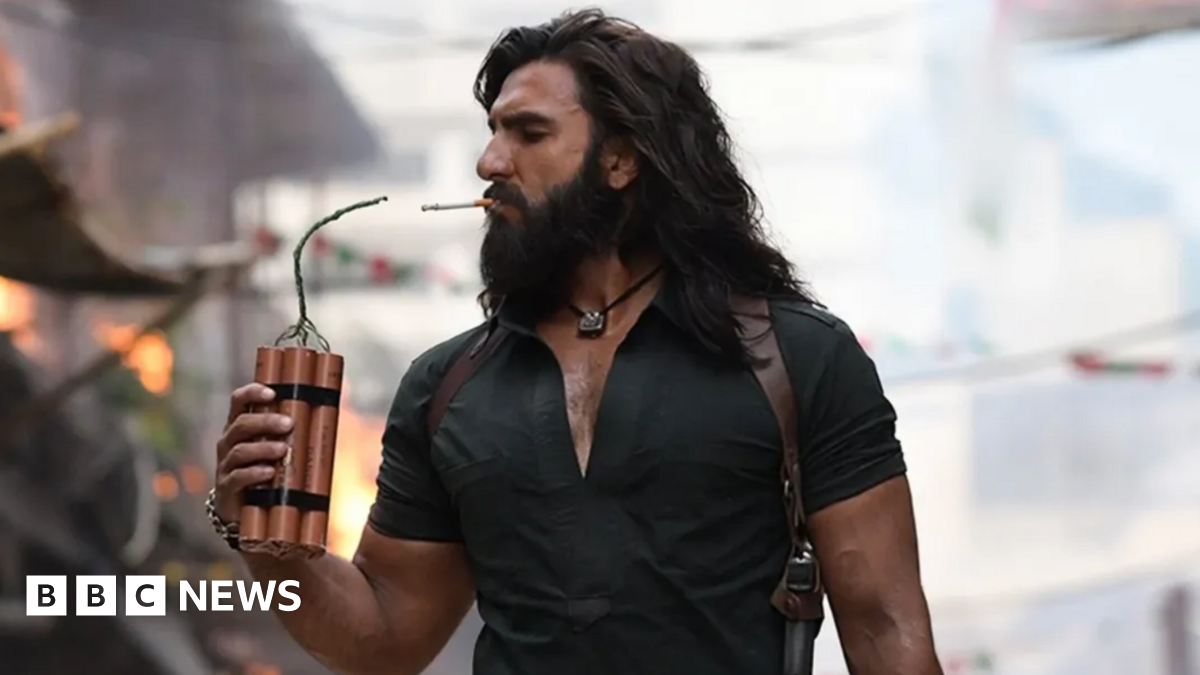
Trade experts argue that the shift reflects audience demand rather than creative regression in the industry.
“Indian films have traditonally been male-led but we have also had female-centric classics like Mother India and Pakeezah,” says analyst Taran Adarsh.
The accusations of toxicity, he says, come from a “handful of critics” and can’t change the fate of films.
“At the end of the day, the only verdict that matters is that of the audience,” he adds.
But attributing everything to audience tastes is an oversimplification, argues Anu Singh Choudhary, co-writer of Delhi Crime 3, the third season of a Netflix thriller that highlighted the issue of women-trafficking through a feminist lens.
“Macho blockbusters have existed for long because they reflect a society that’s always been patriarchal and male-dominated. Will that change overnight? No. But as the world order changes, so will our films,” she says.
There’s also the economic reality. Producers, distributors and exhibitors control the number of screens, marketing and visibility any film gets – and that often depends on the bankability of the male star. Independent and women-led films face an uphill battle, particularly if they are not fronted by big stars.
Films nowadays are also going through a “period of performative, exaggerated misogyny”, says screenwriter Atika Chohan, whose work includes women-led films Chhapaak and Margarita With a Straw.
Some of this, she thinks, is a response to the accountability demanded by women during the MeToo movement of 2017-19.
While the movement exposed widespread abuse within the film industry, its impact was uneven. Some of the accused faced temporary setbacks, but most returned to work and structural power imbalances largely remain.
“As long as these [hypermasculine] films make money, they aren’t going anywhere,” Ms Chohan says.
But as always, there are signs of hope, mostly from smaller, regional film industries and independent filmmakers.
A new generation of independent filmmakers in India is making “riveting, viable cinema” instead of “mass entertainers,” Ms Choudhary points out.
Sharp indies such as Sabar Bonda and Songs of Forgotten Trees dug into complex social and political layers and told sensitive stories of relationships.
The Telugu film The Girlfriend told the story of a woman in a toxic relationship learning to free herself, while Bad Girl (Tamil) was hailed as a successful coming-of-age drama told through a woman’s lens.
In Malayalam cinema, Feminichi Fathima – with “Feminichi” a social-media distortion of “feminist” – used humour to follow a Muslim housewife’s quiet rebellion against patriarchy. On the streaming side, The Great Shamsuddin Family has been praised for capturing the everyday resilience and complexities of modern Muslim women.
“It’s a quieter movement, working from the margins,” says Ms Choudhary. “And it isn’t going to disappear.”