
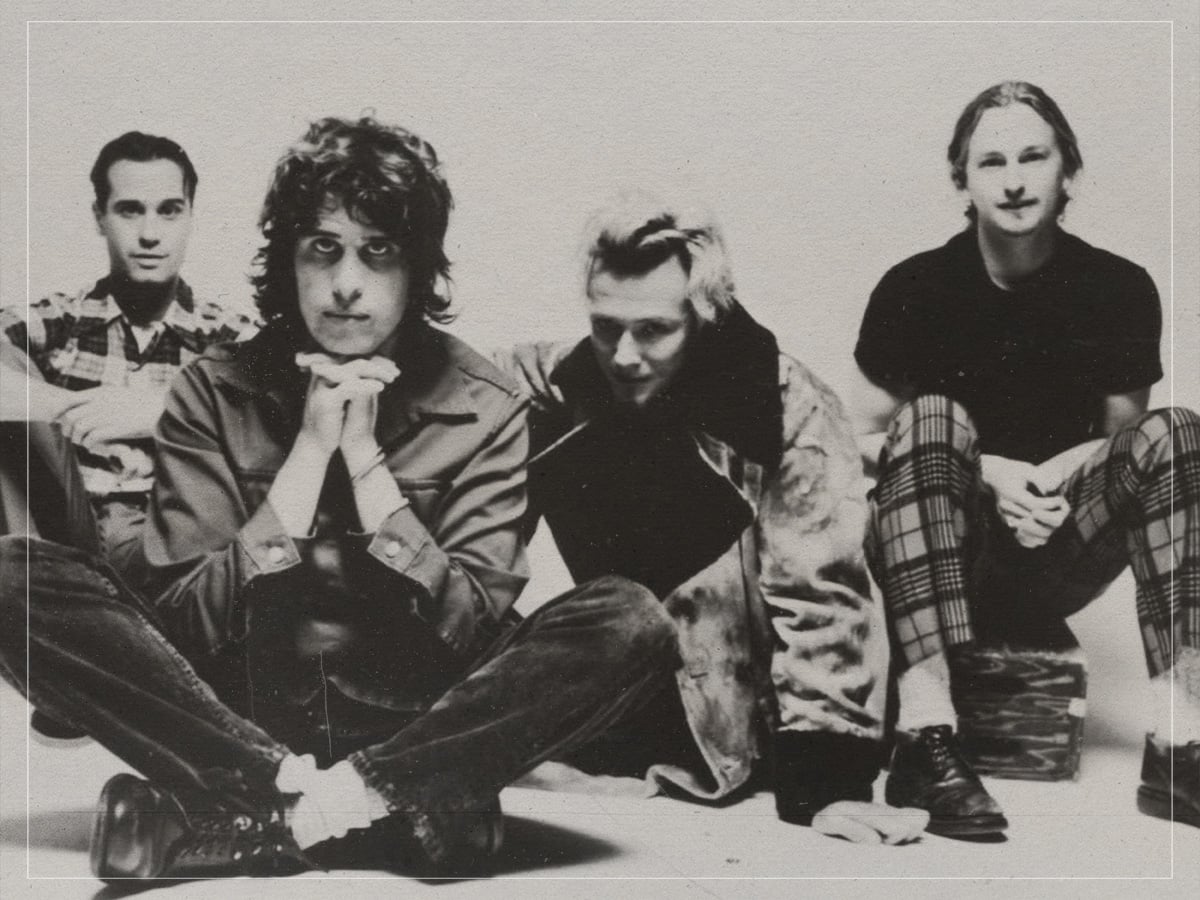
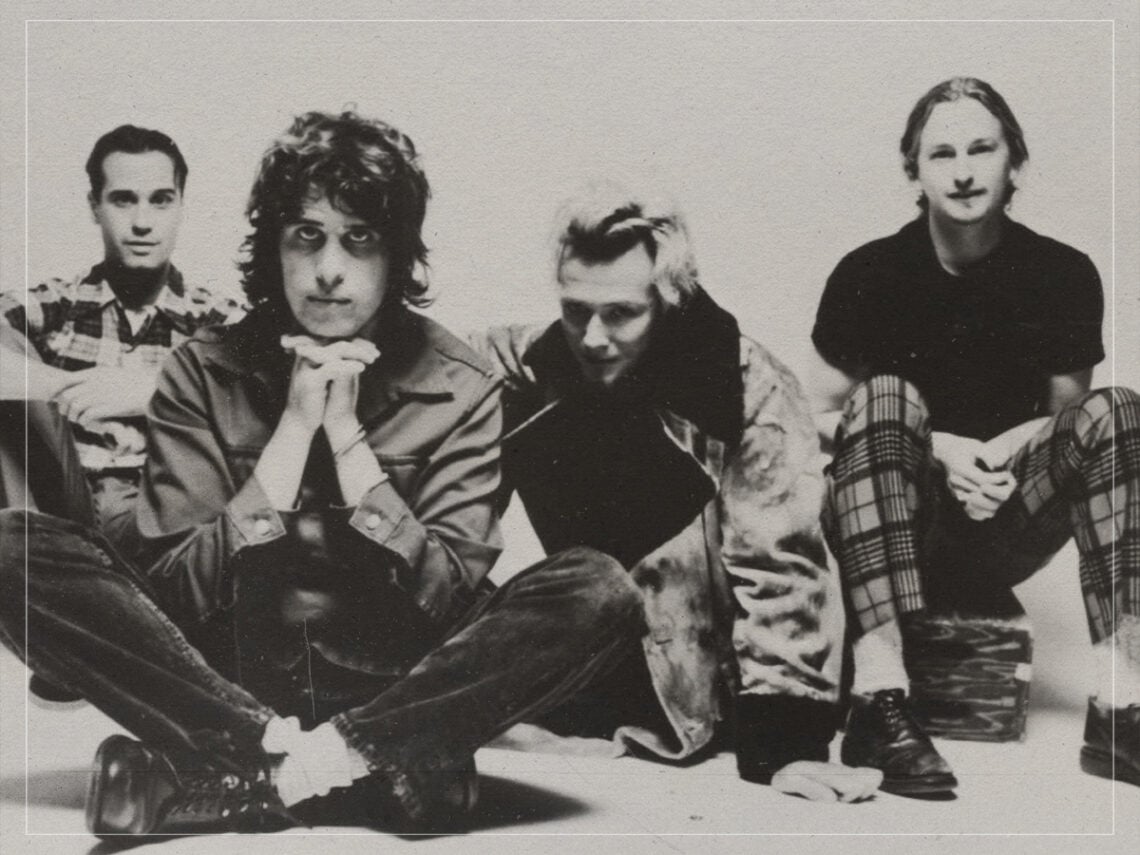
(Credits: Far Out / Atlantic Records)
Sat 3 January 2026 14:00, UK
While bands like Nirvana, Pearl Jam, and Smashing Pumpkins are often seen as the faces of 1990s alternative radio, there’s a strong case to be made that no group dominated US airwaves between 1992 and 1996 more than San Diego’s own Stone Temple Pilots.
For me, as a teenager tuning in to the Cleveland, Ohio rock station 107.9 WENZ, it wasn’t unusual to hear Stone Temple Pilots hits like ‘Plush’ or ‘Interstate Love Song’ played every half-hour like it was some sort of legal requirement. I also learned quite a bit about the band over the course of that inundation, including the origin story behind their name.
“Stone Temple Pilots doesn’t mean anything,” frontman Scott Weiland repeatedly explained, noting how he and his bandmates simply liked the initials ‘STP’ cuz they’d grown up seeing it on a brand of motor oil bottles.
At the time, this was just an innocuous factoid, easily ranking among the least interesting anecdotes in rock history, but some 30 years later, it manages to encapsulate a good deal of the criticisms this band spent its whole existence fending off; namely, that Stone Temple Pilots put style over substance, and beyond that, substance abuse over style. To put it another way, they didn’t mean anything.
Most of that antagonistic attitude was the result of how the band introduced themselves to a national audience, as two of the breakout singles from their 1992 debut album, Core, sounded like Johnny-Come-Lately rehearsals for the Grunge Club. ‘Plush’ was the one where Weiland sounded like Eddie Vedder, and ‘Creep’ (released a year before the Radiohead one) was deemed the Kurt Cobain soundalike.
 (Credits: Far Out / Atlantic Records / Chapman Baehler / Stone Temple Pilots)
Some of the criticisms were fair, and the Seattle bands weren’t exactly lining up to welcome their new SoCal rivals into their friend circle. Still, as time moved on, the best-kept secret about STP wasn’t Weiland’s escalating drug problems, but the increasing quality of the band’s songs; from the grunge-adjacent ‘Vasoline’ and ‘Big Empty’ to the Led Zeppelin folksiness of ‘Pretty Penny’, the slick glam of ‘Big Bang Baby,’ and the refined pop nuggets of ‘Lady Picture Show’ and ‘Sour Girl’, the Pilots were never groundbreaking, rarely deep, but always good.
“I think people have a preconceived idea of what STP is,” Weiland told the Philadelphia Daily News in 2000, “based on the fact that, as a live rock ‘n’ roll band, we have a pretty assaultive performance that centres around heavier material. But if you stay and watch the whole show, I think everyone is sort of shocked, except for our fans.”
Weiland, whose drug demons often overshadowed his considerable talent and ultimately led to his death in 2015, was routinely asked about STP’s connection to the so-called grunge genre, a scene rife with similar cases of heroin related tragedies.
“We got lumped into the grunge movement,” he said during a period of sobriety in 2000, “and we had a lot in common with those bands. We were in the same age group, we grew up listening to a mixture of Led Zeppelin and Black Sabbath and the Sex Pistols and other punk rock bands, as well as Echo and the Bunnymen and The Cure…a mixture of those influences that gave us all a similar sort of vibe.”
When describing the song ‘Sour Girl’, however, one of the Pilots’ biggest and least grungy hits, Weiland called it “an ode to a lot of the great mid-’60s British pop music; like The Beatles and even bands like the Raspberries and The Turtles all the way to Elvis Costello, all of whom were definitely an influence, melodically speaking… That’s one thing that sets this band apart. We’re not just a one-trick pony”.
Stone Temple Pilots fans might recall that the ‘Sour Girl’ music video featured a very in-demand young actor named Sarah Michelle Gellar, then at the height of her Buffy the Vampire Slayer fame, for which, it turns out, there was a surprising reason for, too.
“I’m a big Buffy fan,” Weiland said at the time, noting that he started watching the show during his time on “vacation” in a Los Angeles jail for drug offences in the late 1990s, adding, “That was one of the three shows I lobbied my fellow treatment inmates to vote for”.
Weiland and the original incarnation of Stone Temple Pilots, much like the slayer herself, were consistently underestimated by their foes, but in the end, they left a legacy that, also like Buffy, doesn’t require any nostalgic ‘90s contextualisation to enjoy.
Related Topics