
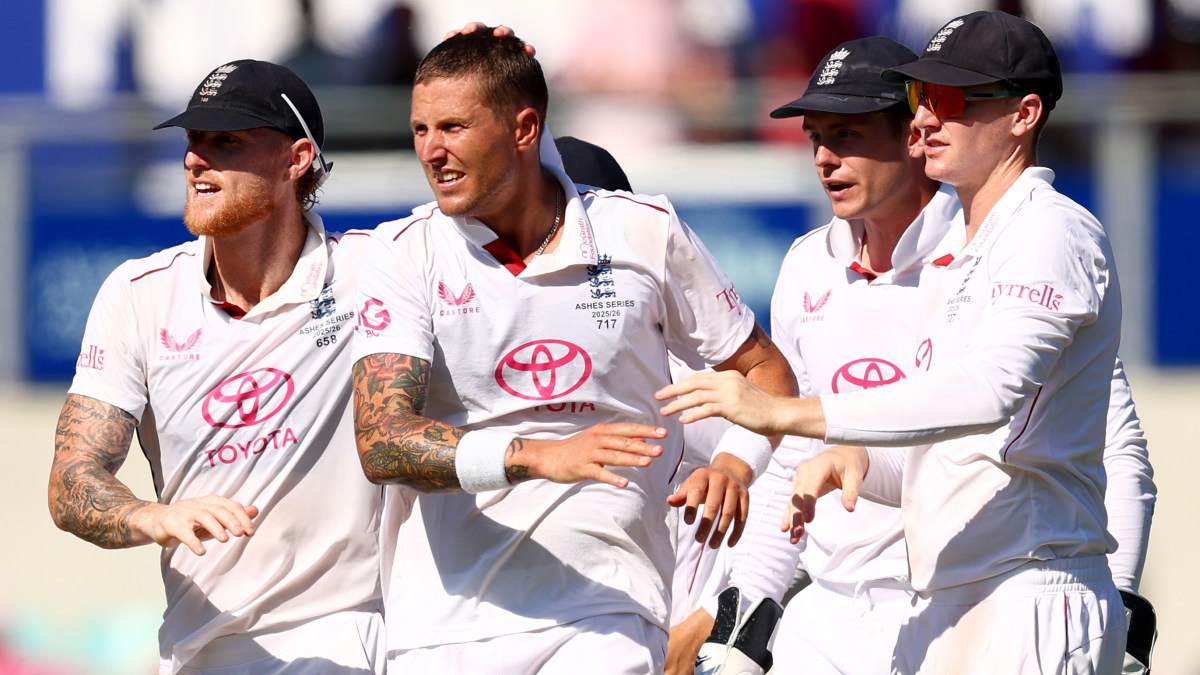
There has not been much to celebrate about England’s Ashes tour but Brydon Carse’s ability to keep going and keep taking wickets, despite sometimes being given roles he is clearly not qualified to fulfil, has got to be one of them.
Some of his team-mates may have been displaying obvious signs of mental and physical erosion — and three of the pace quintet that took the field in Perth have long since gone home — but the Durham dynamo continues to plug away tirelessly. There may have been times when he has leaked runs in infuriating fashion, but he does have a remarkable knack of getting players out.
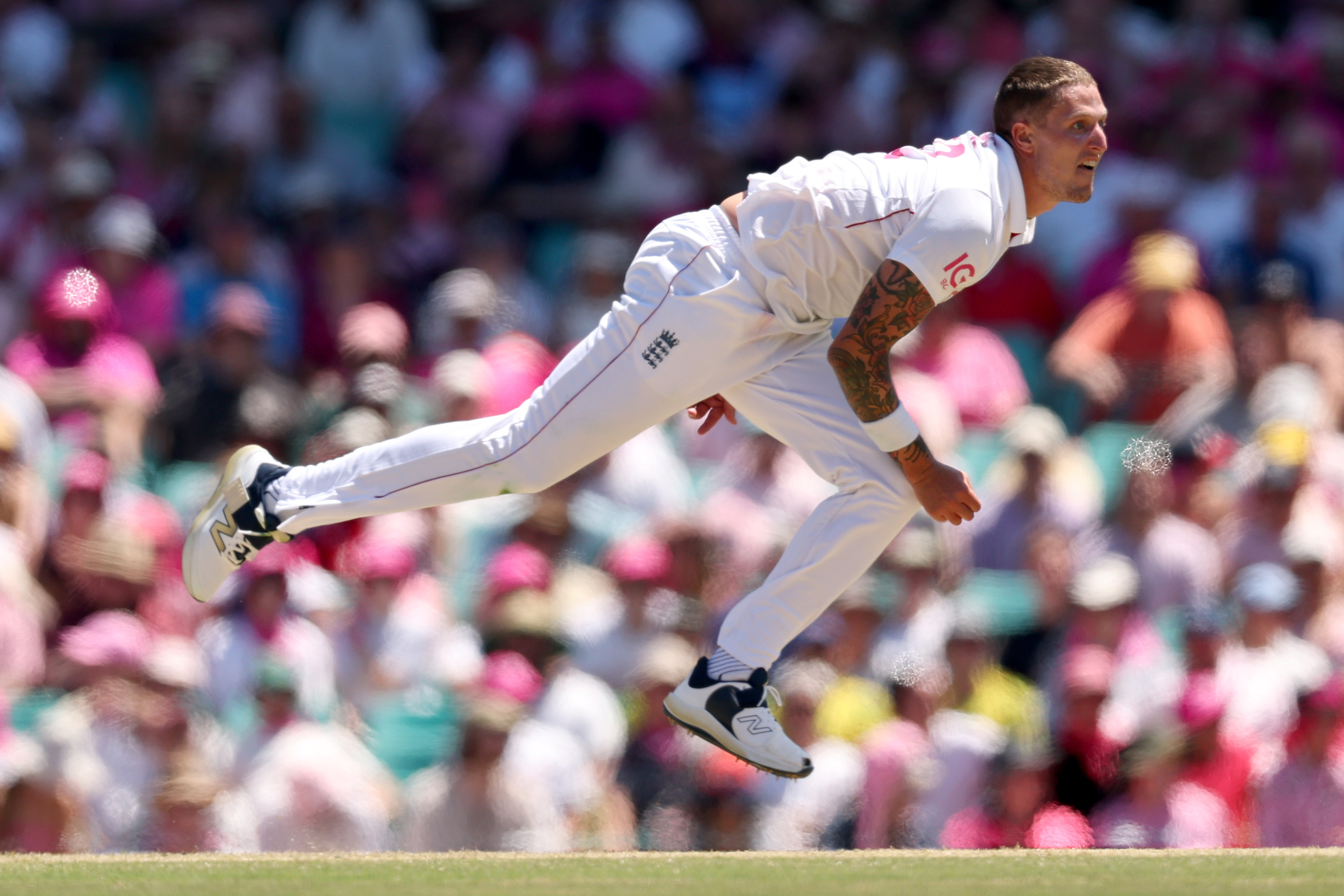
Carse has managed a haul of 22 wickets despite England’s woeful tour
CAMERON SPENCER/GETTY IMAGES
The three wickets he took on this middle day of the final Test — Michael Neser, Usman Khawaja and Cameron Green — took his haul for the series to an impressive 22. This is rarefied air for an England bowler in an Ashes series in Australia: since 1980, only James Anderson, with 24 in a winning cause for Andrew Strauss’s team 15 winters ago, has claimed more.
Of the five bowlers who have managed 20 wickets in this period — Darren Gough did so twice in the 1990s — Carse has the best strike rate but also the highest economy rate, which pretty much sums up how he operates. He is incapable of operating with the metronomic accuracy that was Anderson’s staple but finds other ways to challenge the batsmen.
Astonishingly, his strike rate of a wicket every 34.5 balls is the lowest for any England fast bowler taking 20 wickets in a series in Australia — lower than Harold Larwood in 1932-33, Frank Tyson in 1954-55 or John Snow in 1970-71.
Carse can count among his victims Australia’s best batsman, Travis Head, four times, once in each of the first four Tests — and he should have had him again here before lunch when, on 121, Head took on a short ball and swung high to deep mid-wicket, where Will Jacks inexplicably grassed a regulation chance.
Please enable cookies and other technologies to view this content. You can update your cookies preferences any time using privacy manager.
Enable cookiesAllow cookies once
It is true that Head had in effect won the game by the time Carse dismissed him in Perth, but in the subsequent games each contest was very much alive and Carse removed him for scores of 33, 10 and 46. He has also dismissed Steve Smith twice, similarly Khawaja.
When he first played Tests for England last winter, Carse generally came on as first or second change, and won a reputation for making things happen when the pitch and the ball were not offering much. He would bowl short and hit the pitch hard. That continued to be his role at the start of this series, but injuries to Jofra Archer and Gus Atkinson left England short of new-ball operators and Carse, 30, was asked to step up.
His use of the new ball has been underwhelming, to say the least. He took a wicket in his opening spell in both innings in Adelaide but his lack of consistency meant that Australia’s top order were not required to play at as many balls as they should have been. This was also the case in Melbourne, and both at the MCG and here he made no meaningful impact in his opening spell.
The frustrating thing is that when he does pitch the ball up he can sometimes get it to swing. The ball that had Neser caught behind moved nicely, and the ball that trapped Khawaja leg-before was secured with a very full delivery that swerved before striking him on the foot.
Remarkably, Carse has taken more wickets bowled or leg-before in this series than the forensic line-and-length merchant Anderson did in 2010-11 — five to three.
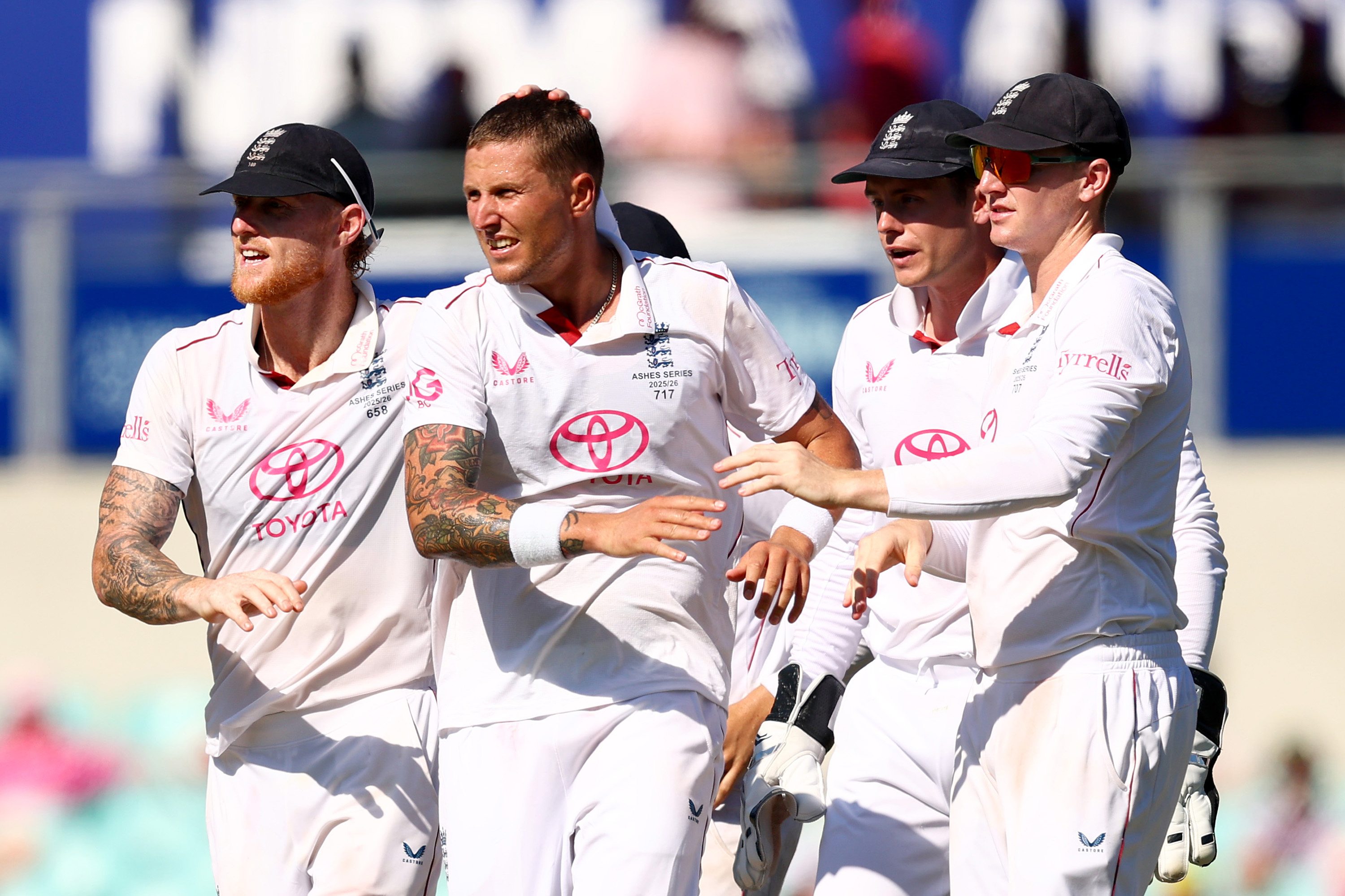
The onus has often fallen on Carse with England’s bowling elsewhere very much in crisis mode
ROBERT CIANFLONE/GETTY IMAGES
This does hint at the tantalising prospect that Carse may one day develop the skills to swing the ball off a full length on a regular basis, but that must be a long-term ambition rather than something that can be conjured up at mid-tour notice, which seemed to be England’s rather wishful thinking.
Let’s be clear, though, England’s bowling is in crisis mode at the back end of this series and they have few cards to play. They do not have a frontline spinner worthy of selection and are down to the bone with their seamers. After weeks sitting on the sidelines, Matthew Potts was plainly not ready for this game. He has been down on pace and has taken some terrible punishment. Carse and Josh Tongue are being asked to do what they can in difficult circumstances.
However, even in extremis, Ben Stokes has refused to shift his messaging. He was asked before the game whether he would consider opening the bowling himself, because he can swing the ball as well as anyone, but he rebuffed the idea.
“I’ve heard I should be batting three and now I should open the bowling as well, plus captaincy,” he said. “Don’t underestimate the consistency of language you use to your players and the role they have in the game. To all of a sudden change that, what does that do for their confidence as the game goes on? That’s a huge thing. With the ball I have a role, and the other guys have a role.”
This seems a little perverse. If Stokes was the best new-ball bowler for this game, he should have opened the bowling. It is the end of the series and next summer, hopefully with more resources available, someone such as Carse can go back to doing what he does best, which is taking wickets with the old ball.