
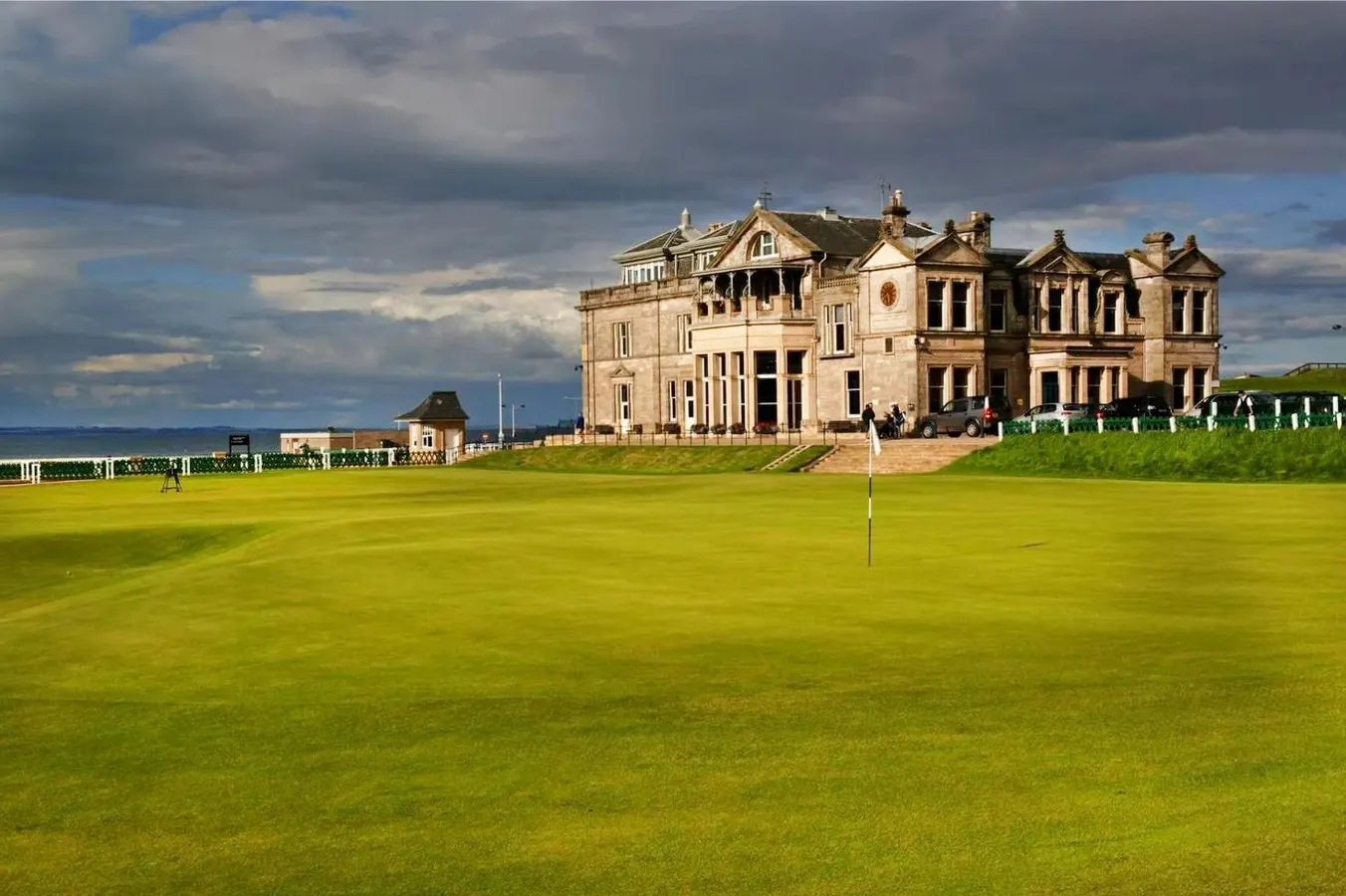
St Andrews, The Royal and Ancient Golf Club Of St Andrews, Old Course
Getty
With busy schedules and constant digital noise, real quiet is now a rare treat. For players at the world’s most exclusive golf and country clubs, that quiet is a big part of what draws them in.
At these private elite clubs, there’s no rush to tee off or finish a round. Members recognize one another, and the greens are always in perfect condition. The whole place feels set apart from the outside world, and many courses ban cell phones. The real appeal goes beyond golf for these members; it’s about having space, a steady routine, and a close-knit community that’s hard to find anywhere else.
Private clubs have always brought people together. Business deals happen on the fairway, friendships start in the locker room, and weekends are spent with family lunches, swimming, and meals together instead of looking at screens. For many, joining a private club is less about getting better at golf and more about finding a place that feels like home and keeping traditions alive through generations.
Clubhouse at Augusta National Course
Getty
Golf is still often called the “Gentleman’s Game,” but the sport has changed over time. Many top clubs now welcome women as full members, and there is more focus on building a lasting culture instead of just being exclusive. Even so, joining these clubs is not easy. Membership costs a lot, waiting lists are long, and many clubs only accept new members by invitation. For some, this exclusivity makes the clubs even more attractive.
Every two years, Platinum Clubs of the World reviews private clubs and ranks those that are hardest to join and maintain high standards. For 2026–27, the list includes 150 clubs from around the world, rated on golf, governance, financial health, service, facilities, and long-term planning.
The program began in 2009 and uses 125 panelists from 24 countries. Many of these panelists visit clubs several times over the years. They look at more than just reputation. While history is important, the daily management of a club also counts. This method led to the biggest change in this year’s rankings.
For the first time, Augusta National Golf Club is not ranked No. 1. The Royal and Ancient Golf Club of St Andrews has taken the top spot. This change is not a criticism of Augusta, but a reminder that tradition by itself is not enough to lead. Even the most famous clubs are measured by how well they adapt, invest, and maintain high standards.
Ayodhya Links golf club in Thailand
Ayodhya Links
In other parts of the rankings, clubs that made steady improvements saw results. Congressional Country Club moved up from No. 7 to No. 4 after years of investing in its courses and the member experience. Sunningdale Golf Club reached the Top 10 for the first time, which is a big achievement for one of England’s most respected clubs.
The Top 20 list is still dominated by American clubs, with twelve based in the United States. Scotland and France each have two clubs on the list. England, South Korea, Thailand, and Australia each have one, which shows how elite private golf is becoming more global.
According to David V. Smith, president of Club Leaders Forum, recognition carries meaning well beyond bragging rights. “It’s not just about prestige for members,” he noted. “It validates the work of management and staff, who are responsible for maintaining standards year after year.”
The Vintage Club in Indian Wells, California
The Vintage Club
Rathan Kumar, founder and CEO of MobiCom, agreed but added another perspective. He explained that Platinum Clubs offer members access to other elite private clubs around the world through affiliated platforms. This means members can enjoy benefits at more than just one location.
Clubs in New Zealand and China cracked the Top 20 and are seen as strong contenders for future rankings. Their progress shows the increasing influence of the Asia-Pacific region in private clubs.
This year’s list shows that staying at the top requires constant effort. A club’s history can help, but it is not enough. The most successful clubs keep investing in their courses, staff, and culture.
An aerial image of the Congressional Country Club in Maryland featuring the largest clubhouse in America.
GettyHere are the Top 20 Golf and Country Clubs in the World honored with Platinum Status for 2026-2027:
1. The Royal and Ancient Golf Club of St Andrews (Scotland)
The Royal and Ancient Golf Club, founded in 1754, has played an important role in golf’s history. Although it does not own the Old Course, the club’s impact on the game through its rules, traditions, and leadership is unmatched. Membership is by invitation only, and the club prefers to keep a low profile. Its top ranking this year shows not only its rich heritage but also its strong leadership and ongoing importance today.
2. Augusta National Golf Club (Georgia)
Augusta National, known for hosting the Masters Tournament, is famous for its exclusive membership and strict traditions. The club values consistency more than change. Although it lost its top ranking this year, its reputation remains strong and shows that even the most famous clubs must adapt to new standards.
3. Golf de Morfontaine (France)
Golf de Morfontaine sits just north of Paris and has a deliberately understated feel. Designed for the Duc de Guiche, the course has stayed much the same over the years. The clubhouse looks more like a private home than a large club. With few members and a focus on privacy, Morfontaine is often called the most exclusive golf club in continental Europe.
4. Congressional Country Club (Maryland)
Since 1924, Congressional Country Club has brought together political, business, and civic leaders. The club’s recent upgrades to its course and amenities have helped it climb in this year’s rankings. While the clubhouse is the largest in America, the design also blends its history with modern features.
5. Baltusrol Golf Club (New Jersey)
Baltusrol has a strong history in championship golf. A.W. Tillinghast designed both the Upper and Lower courses, which have hosted many of the sport’s most important tournaments. Today, while competition is still a key part of the club, there is a growing focus on member experience and long-term sustainability instead of just celebrating past achievements.
6. The Royal Melbourne Golf Club (Australia)
Royal Melbourne is often seen as the standard for Australian golf. Its West Course is regularly listed among the top courses in the world. Even with its international reputation, the club keeps its membership small and focuses on tradition, course quality, and careful management rather than showing off.
7. Ocean Reef Club (Florida)
Ocean Reef feels more like its own community than a typical golf club. Located on a gated peninsula, it offers golf, homes, a private marina, and many amenities. To join, members need a sponsor and a large financial investment, which helps keep the club private, secure, and focused on long-term residents.
8. Shinnecock Hills Golf Club (New York)
Shinnecock Hills is one of the oldest golf clubs in the United States. It combines American history with a links-style design inspired by British courses. Tee times are hard to get, access is limited, and the club values tradition. Its regular hosting of major championships shows how important it remains today.
9. Pine Valley Golf Club (New Jersey)
Pine Valley is often called one of the world’s toughest courses, built to challenge both skill and self-control. Membership is exclusive, guests are carefully chosen, and the club focuses on serious golf. Lately, small steps toward inclusion have shown slow but real change.
10. Sunningdale Golf Club (England)
Located outside London, Sunningdale is respected for its twin championship courses and understated culture. The club’s rise into the Top 10 reflects long-term consistency rather than sudden change. Known for balancing tradition with approachability, it remains one of England’s most admired private clubs.
11. Muirfield (Scotland)
Muirfield, home to The Honourable Company of Edinburgh Golfers, is one of the world’s oldest golf clubs. When the club began admitting women in 2017, it marked a major cultural change. Muirfield is still known for its strict approach to golf and its very selective membership.
12. Boca West Country Club (Florida)
Boca West offers a unique kind of exclusivity, focusing on its size and amenities instead of rarity. With four championship golf courses and a large residential area, the club highlights lifestyle and community while still upholding private-club standards.
13. Merion Golf Club (Pennsylvania)
Merion’s East Course is one of the most respected championship venues in the U.S. The club avoids modern changes that could affect its unique character. It keeps access limited and stays committed to protecting the course and the traditions of the game.
14. Oakmont Country Club (Pennsylvania)
Oakmont is known for being tough. It has few trees, deep bunkers, and fast greens, all of which make the course very demanding for players. The club is proud of this reputation and has not tried to make the course easier to attract more people.
15. Cypress Point Club (California)
Cypress Point sits on the Monterey Peninsula and is known for both its beautiful landscape and its golf. Membership is very limited, daily play is restricted, and the club values privacy over publicity. Its charm comes from its sense of restraint, in both its design and its culture.
16. The Vintage Club (California)
The Vintage Club in Indian Wells offers desert golf along with a strong residential community. High-profile members value privacy, consistency, and service, and the club aims to keep a controlled, low-density setting instead of growing its profile.
17. Haesley Nine Bridges (South Korea)
Haesley Nine Bridges shows how Asia is becoming more influential in elite private golf. The club is recognized for its careful design and excellent service, earning a strong international reputation while keeping its membership very exclusive.
18. Les Bordes (France)
In recent years, Les Bordes has been carefully updated, combining traditional course design with new facilities. Its growth is part of a larger trend of European private clubs focusing on long-term goals instead of quick recognition.
19. The Los Angeles Country Club (California)
Even though LACC sits in the middle of Los Angeles, it feels separate from the busy city. The club is recognized for its discretion, strong architecture, and members who prefer privacy to publicity. While major championships have drawn attention, the club still keeps its focus inward.
20. Ayodhya Links (Thailand)
Ayodhya Links stands out as one of Southeast Asia’s most exclusive private clubs, known for its limited access. Its recognition highlights Thailand’s growing role in the global private-club scene and shows how standards in the region are rising.
MORE FROM FORBESForbesThe Top 10 Golf Courses In The World, According To Golfweek—Where To Stay And How To PlayBy Jim Dobson
country clubs