
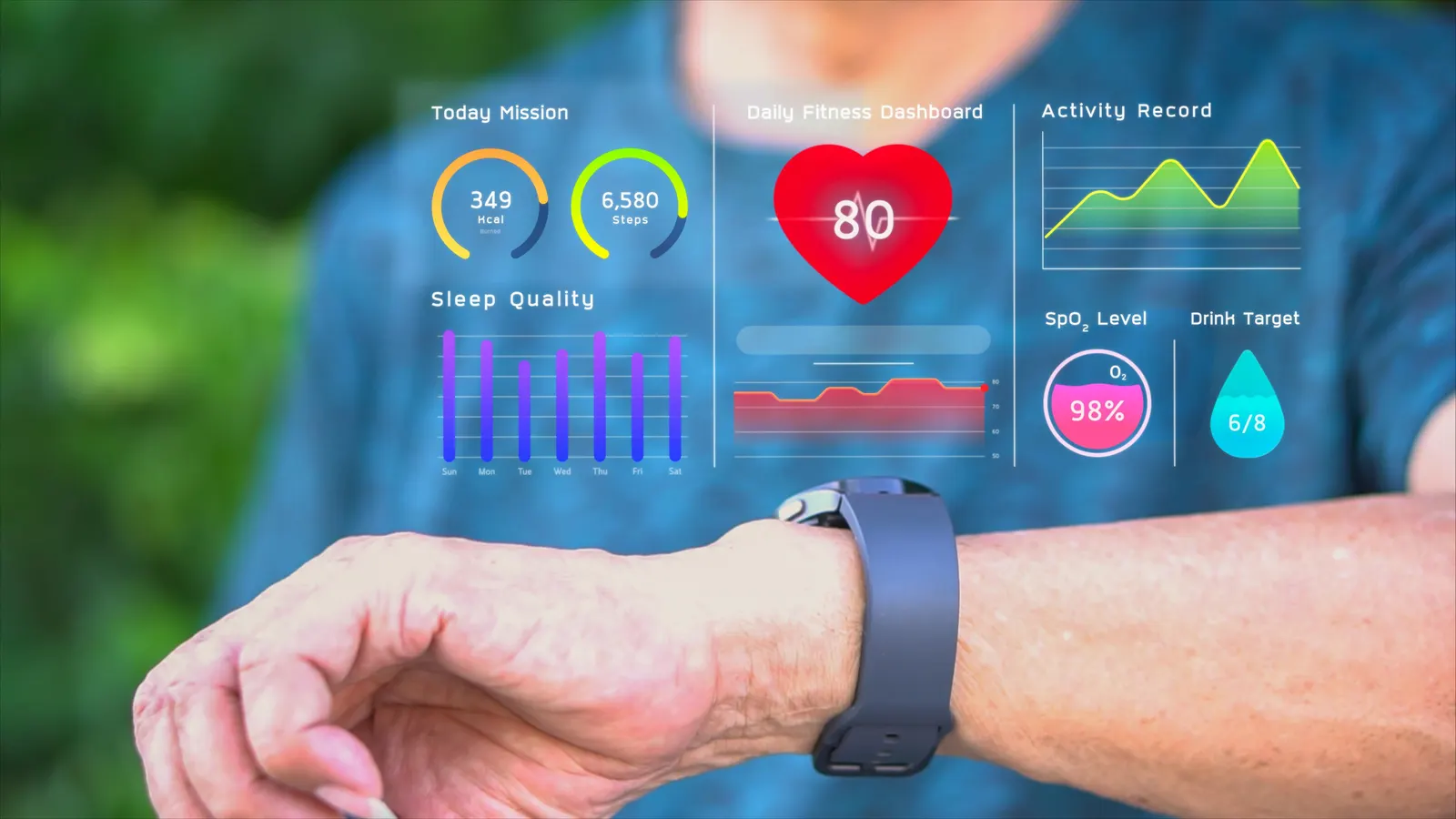
Technologies that manage, monitor, and motivate health in support of longevity are no longer for occasional checkups; they’re becoming part of the daily infrastructure of living longer.
getty
Before heading to speak at this week’s Consumer Electronics Show (CES) in Las Vegas, I found myself lingering longer than usual in stores like Best Buy and Apple. CES is where the tech industry unveils its vision of the future, but retail stores reveal what consumers are actually buying. And what struck me was how much shelf space was quietly devoted to something unexpected.
What I was seeing was not just consumer electronics, but the early contours of how longevity and retirement planning are being reshaped by technology.
Not just flatscreens, games, or phones, but technologies designed to monitor, manage, and motivate my behavior in the service of one thing: buying me more time. Aisles designated as “Smart Home” were adjacent and nearly seamless, with a growing number of kiosks promising “Health and Wellness.”
Sleep trackers. Recovery scores. Health dashboards. Coaching apps. Devices that promise not just productivity or entertainment, but longevity itself. What used to live in clinics, research labs, or wellness retreats is now packaged, priced, and placed on retail shelves.
Longevity, it seems, has gone mainstream. Longer life is no longer just the result of genetic luck from choosing your parents well; it’s now a consumer good.
From Windfall To Operating Expense
We often talk about longevity as a gift of extra years granted by science, medicine, and better living. But increasingly, longevity looks less like a windfall and more like an operating expense, something we actively manage, maintain, and pay for over time.
In other words, longevity is starting to resemble the new run rate of living.
In business, run rate refers to the ongoing costs required to keep operations running: rent, payroll, infrastructure. It’s not a one-time investment; it’s the cost of doing business. The price of staying in the game.
Longevity is quietly becoming that kind of expense for individuals, especially in retirement.
Over the past decade, aging well has shifted from adopting medical advice alone to an infrastructure of daily life. A growing ecosystem of technologies and services, often grouped under the label AgeTech, has emerged to support longer, healthier lives.
The Consumer Electronics Show (CES) held each year in Las Vegas connects innovators, decision makers, media, influencers, visionaries, and potential customers across the entire technology ecosystem.
China News Service via Getty Images
Wearables now estimate functional age and even the pace at which we’re aging. Advances in epigenetics reinforce the idea that daily behaviors influence how our genes express themselves. Artificial intelligence promises increasingly personalized biology, tailoring interventions to individuals rather than averages.
Strength, sleep, and recovery are no longer lifestyle suggestions; they’re treated as essential systems maintenance, prompted by a ring, a watch, or some other wearable or a ‘bot that pings, blinks, or buzzes.
None of this is inherently problematic. Much of it is beneficial. But it changes the economics of living longer.
Previous generations planned for healthcare costs primarily at the end of life. Today’s consumers are increasingly budgeting, explicitly or not, for decades of longevity management: subscriptions, devices, coaching, diagnostics, specialized food systems, home adaptations, and the time and attention required to keep it all running.
Longevity has become something we don’t just experience or have the good fortune to enjoy. It’s fast becoming something we operate, something we manage, something we buy.
The New Retirement Equation
This shift has profound implications for retirement.
For most of the 20th century, retirement planning revolved around a simple question: Will my money last? That question still matters. But it’s no longer sufficient. A second question has joined it: What will it cost to maintain a long life?
That cost is not just financial. It’s cognitive, emotional, and behavioral. Managing a longer life means managing complexity over time. Healthspan, brain span, muscle span, and other evolving spans call for investments in technology, new routines, and an endless reservoir of motivation and discipline. And while technology and focused behaviors can extend the runway of functional life, they do not automatically design quality of life.
Consider what this means across the roughly 8,000 days many people now navigate after work ends. A span of time roughly equal to other major life epochs, birth to adulthood, or early adulthood to midlife.
Wearables can tell us how well we slept, but they cannot tell us how to structure long, unprogrammed days. Platforms can optimize recovery, but they cannot replace identity after work ends. Sensors can detect risk, but they cannot guarantee that someone notices when something goes wrong.
Much of today’s longevity ecosystem assumes a social support infrastructure that increasingly does not exist. More people are aging alone. Families are smaller and more dispersed. Informal caregiving networks are thinner. Longevity is being lived longer, but often more solo.
The next frontier for AgeTech will not be better sensors or more personable robots, but better scaffolding for daily life.
The Hidden Costs Of Extended Life
This is where the idea of longevity as a run rate becomes uncomfortable, because it reveals a gap between what we are optimizing and what people actually need to live well over extended lives.
The risk is not that we are investing too much in longevity science or technology. The risk is that we are underinvesting in the lived experience of longevity, such as connection, structure, meaning, and mattering to other people. These don’t show up on dashboards or apps, but when neglected, they carry real costs: isolation, disengagement, and a declining quality of life, despite the splash of a smiley face on a bedside robot display or a watch face indicating that all health goals were met today.
There is also an equity dimension that deserves more attention. The emerging longevity marketplace assumes access to technology, affordability, information, flexibility, agency, and choice. Longevity is increasingly framed as a matter of personal responsibility: manage your data, manage your habits, manage your risk. But responsibility without an affordable and accessible infrastructure of advice, services, and related support quickly becomes luxury that few can experience.
Preparedness, not aspiration alone, will determine who truly benefits from a longer life.
A Wake-Up Call For Financial Professionals And Retirement Planning
For financial professionals, this shift should be a wake-up call. Retirement planning can no longer focus solely on assets and income streams. It must also recognize longevity management as an ongoing cost of living. A cost that spans health, technology, housing, care, and social connection.
The question is no longer just whether money will last, but whether life itself is sustainably designed across those 8,000 days after work ends.
As I head to CES this week, I’m struck by how much of the future on display will be about time: buying it, managing it, extending it. But time, it turns out, is not free.
The most important question we now face is not whether we can buy more time. It’s whether we understand the true run rate of living longer and whether we’re designing lives, technologies, and plans that help people live those extra years well.