
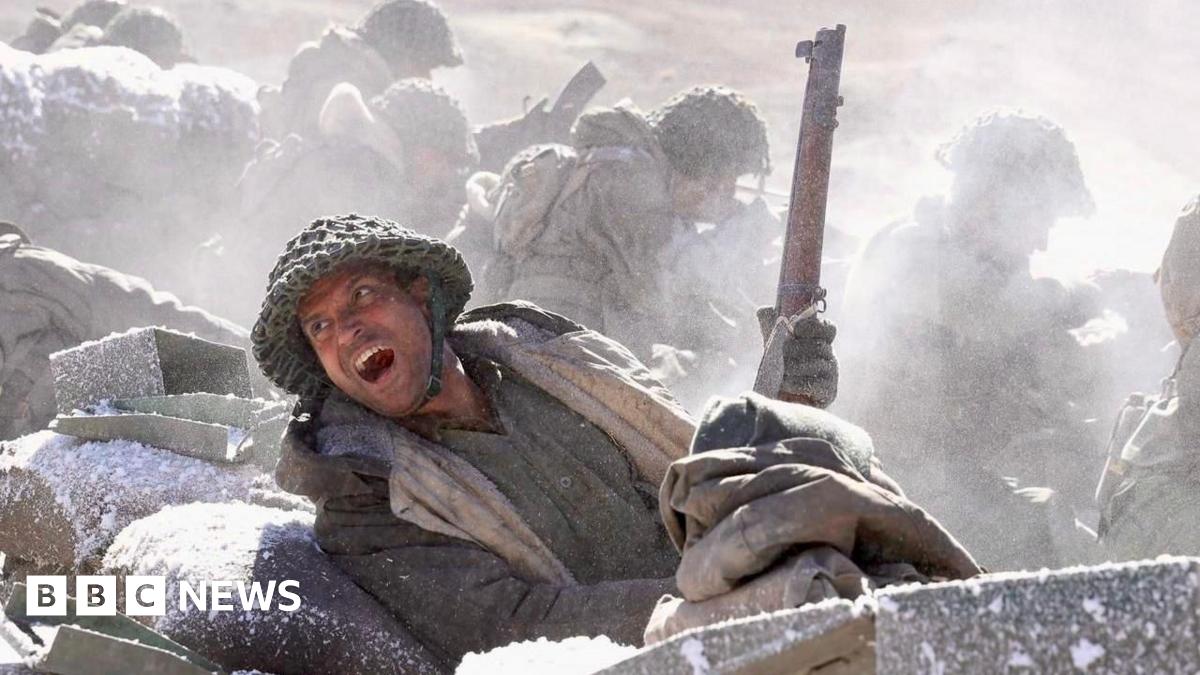
The battle took place on the night of 18 November from 3:30am to 8:15am.
The pass was close to Chushul airstrip, which was “the primary nerve centre at a time when road network connecting the region with the rest of India was largely absent”, Yadav says.
Only five of the 120 men survived. Major Singh, who was among the dead, was posthumously awarded India’s highest military honour Param Vir Chakra for his courage and leadership. Twelve other soldiers received gallantry medals.
But initially when the survivors told their superiors about their audacious last stand, “tragically, no-one believed them”, says Kulpreet Yadav, former navy officer and author of the 2021 book Battle of Rezang La.
“The morale was low, we had bitterly lost the war, thousands of our soldiers, including a brigadier, were taken by China as prisoners of war. So, no-one believed such a heroic last-stand was possible,” he adds.
It was widely believed that the soldiers posted at Rezang La had either run away from the battle or had been taken as prisoners of war.
“It was only three months later when the war was behind us, that a shepherd chanced upon the destroyed bunkers, empty shells, used gun-cartridges and bodies frozen in snow. And for the first time, an accurate account of the battle could be created.”
The soldiers – from the C (Charlie) Company of 13 Kumaon battalion – were deployed at the pass under Major Singh’s command.
He had been advised by his superiors to consider tactical retreat in case they ran out of ammunition, but when he discussed it with his men, they told him, “We’ll fight till last man, last bullet”, Yadav says.
“When Chinese soldiers attacked the pass, C Company was prepared for a fight. But the Indian post was soon overwhelmed.”