
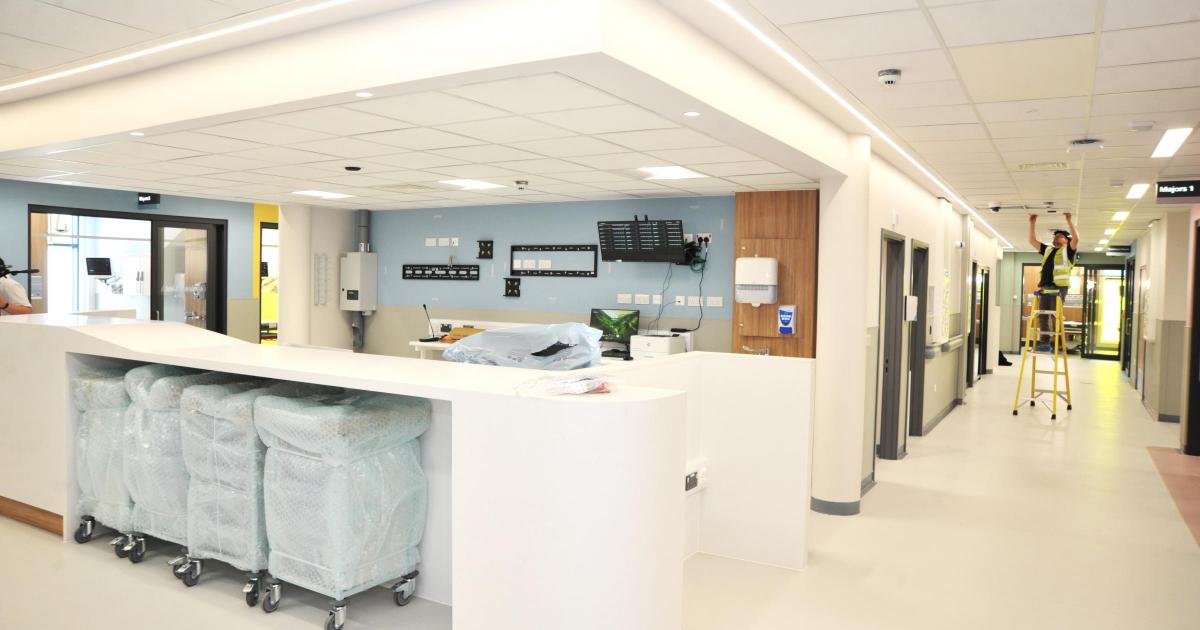
On Monday afternoon, the hospital trust warned that their services were under pressure and advised patients not to call 999 or attend the urgent care departments unless they were critically or life-threateningly ill.
Some patients in the Emergency Department are waiting for beds to be made available before they can be moved onto a ward.
This is having a knock-on effect on the ambulance service, as the emergency vehicles are stuck waiting for their poorly passengers to be transferred into the building and are left temporarily unable to respond to incoming 999 calls.
An amber cold-health alert issued by the UK Health Security Agency and the Met Office is in place until Sunday afternoon.
Anna Henson said: “Was taken in by ambulance on Tuesday night for a heart problem. A&E was full and when I came home at 2am.
“Medical assessment packed people on trolleys. Feel for every member of staff, they’re doing a wonderful job under very difficult circumstances.
“I was given first class care, yes I had to wait but that’s life in our A & E department at present. Our government needs to get a grip, they are faling our health care professionals and us.
Carl Burgess said: “I was in A&E for 10 hrs Sunday, luckily didn’t have to be admitted. The nurses and doctors were doing their best and I have complete sympathy for them as they are working in such difficult conditions.”
Jackie Cook told of how her husband had to go to A&E on Saturday, when the waiting time was six and then nine hours, but did not get a bed until “late Sunday”.
Malcolm Woods observed that “if you call 111, they often tell you to go to urgent care or A&E”.
GWH’s warning sparked further calls for a second hospital to be built so that the current one would be overwhelmed by demand less often.
Rachael Workman said: “Everyone agrees we need another hospital, so why won’t the government listen?
“People are going to die because they’re too afraid to turn up to the hospital, don’t want to wait, have been warned against it, etc.”
Darryl Duncan pointed out: “All very well saying we need another hospital but we can’t fully staff the one we already have.”
A Great Western Hospitals NHS Foundation Trust spokesperson said: “Great Western Hospital, like the wider NHS, is currently facing very high demand from patients arriving at our urgent and emergency care service.
“Our teams are working tirelessly to treat patients as quickly as possible and are working closely with social care colleagues to support people to return home as soon as they are able, helping to free up hospital beds.
“Local people can help us by only coming to the hospital if they really need to, and by using the NHS 111 service online or by phone in the first instance, which can direct them to the most appropriate healthcare setting.
“For many conditions, this may be a GP practice, a minor injuries unit or a community pharmacy rather than a hospital.
“With high levels of flu and other respiratory illnesses, flu-like symptoms such as headaches, fevers and sore throats can often be managed at home through rest, staying hydrated and the safe use of common medicine-box items such as paracetamol and ibuprofen.
“People are also urged to take extra care during the cold weather by keeping warm, checking on vulnerable friends, family or neighbours, and ensuring their home medicine box is appropriately stocked.”