
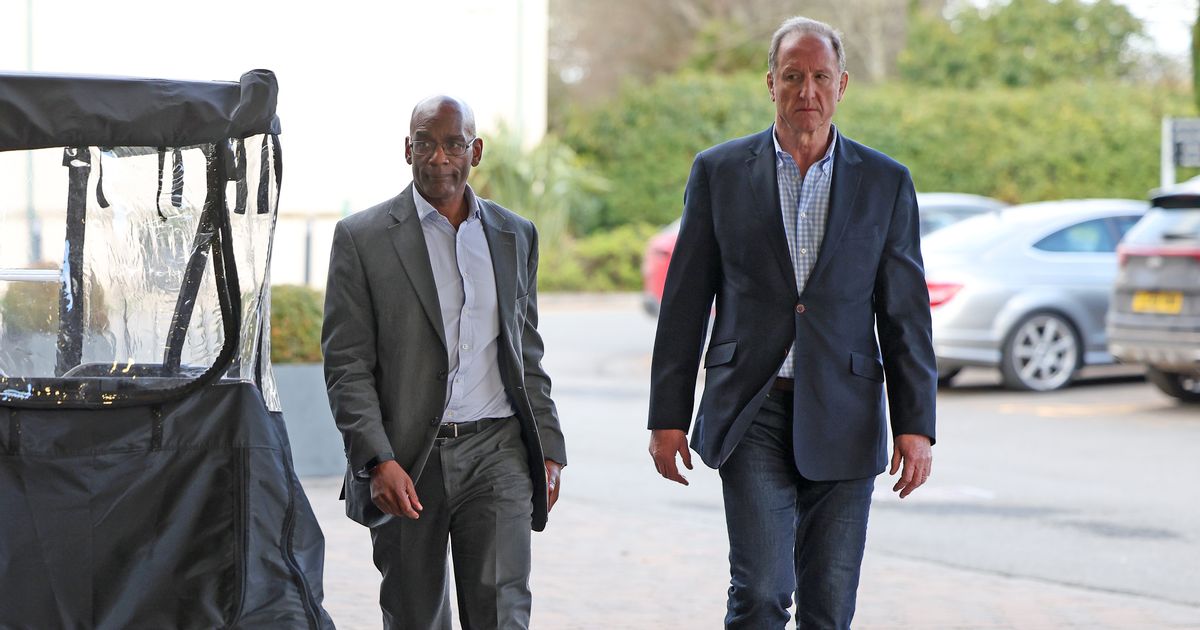
Malcolm Wall is one of the most powerful figures in Welsh rugby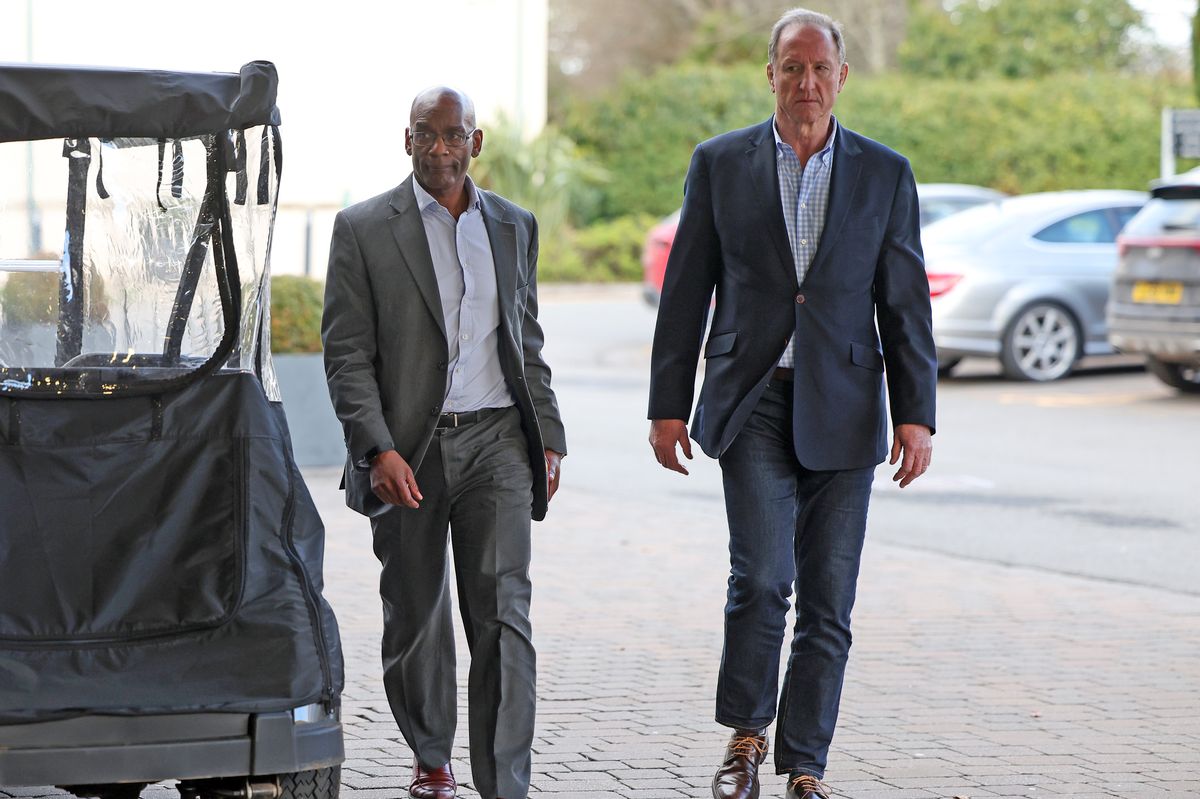 PRB chair Malcolm Wall, right
Last week the Central Glamorgan Rugby Union urged member clubs of the Welsh Rugby Union to trigger an extraordinary general meeting (EGM).
One of the motions centred on a vote of no confidence in WRU chair Richard Collier-Keywood and Professional Rugby Board chair Malcolm Wall. Collier-Keywood has been front and centre of the WRU’s plans to radically alter the face of the professional game, but the vast majority of Welsh rugby fans wouldn’t recognise Wall if he walked past them in the street.
So, who is this man who operates in the shadows yet holds one of the most powerful positions in Welsh rugby?
Wall was appointed as the independent chair of the PRB in March 2022 to replace the highly-regarded Amanda Blanc.
He came on board with an impressive reputation within English rugby, having served as chair of Harlequins on two separate occasions.
Wall has enjoyed a successful career in the media, starting at Southern, Anglia and then Granada Television before becoming deputy CEO of Meridian Broadcasting in the early 90s.
He also led multinational media company United Business Media as COO over a four year period before being made a CEO for Virgin Media LLC in 2006.
Wall’s tenure as chair of the PRB has coincided with the most tumultuous period in Welsh rugby history.
There was the sexism scandal which forced former WRU CEO Steve Phillips to resign, a player strike that almost resulted in Wales’ Six Nations clash with England in 2023 getting postponed and the governing body’s latest attempts to restructure the professional game.
The role of the PRB chair should be to establish a positive relationship with Wales’ professional clubs based on honesty, integrity and transparency.
It should also be to co-ordinate the views of the pro clubs and seek to achieve consensus, challenge in a positive way the views of those clubs in order to achieve outcomes which are in their best interests of rugby in general, while also representing their collective views on the WRU board.
When the players chose strike action Wall made a rare public appearance as a guest on the BBC’s Scrum V programme where he apologised “for the stress and discomfort” the players were put under during a period where there was a contractual freeze.
There are those within the game who question how the PRB chair can actually remain independent while also sitting on the WRU board.
This has often been deemed as a conflict of interest with the PRB chair caught between the WRU and the four professional clubs.
Take the current situation where the WRU has demanded complete control of all rugby operations, including central contracts, yet the funding directors at the three independent clubs are all strongly opposed to this.
Stuck between a rock and a hard place.
The chair of the PRB is undoubtedly an incredibly difficult role to fulfil and there have been significant challenges outside of Wall’s control.
But he is in charge of the professional game and it has struggled badly over the past few years to the point where the WRU wants to cut the number of professional teams from four to three.
The men’s national side have only won twice in 20 Test matches and have back-to-back Wooden Spoons to their name, while the women’s national team have also seen results get worse.
Wales’ four professional clubs – Cardiff, Dragons, Ospreys and Scarlets – have all struggled to compete in both the United Rugby Championship and European competition while a number of leading players like Dewi Lake, Jac Morgan and Aaron Wainwright are all leaving Welsh rugby.
Clearly, Wall and Collier-Keywood are footing the blame for Welsh rugby’s latest crisis as a number of community clubs look to oust the pair of them.
Throughout his time in Welsh rugby Wall has tried to broker several deals which would have arguably put the professional game in Wales on a much stronger footing.
But the chronic self-interest which has held Welsh rugby back for generations put paid to those ideas.
If the EGM does become a reality – and WalesOnline has been told they have the required number of clubs – then one motion will be a vote of no confidence in Collier-Keywood and Wall.
In Wall’s case it is a bit of a red herring because his tenure as chair of the PRB ends in March but he would clearly not be able to stand again if there was a vote of no confidence.
His legacy as chair of the PRB will be decided over the next few weeks as the WRU tries to reach consensus on a new structure for the professional game.