
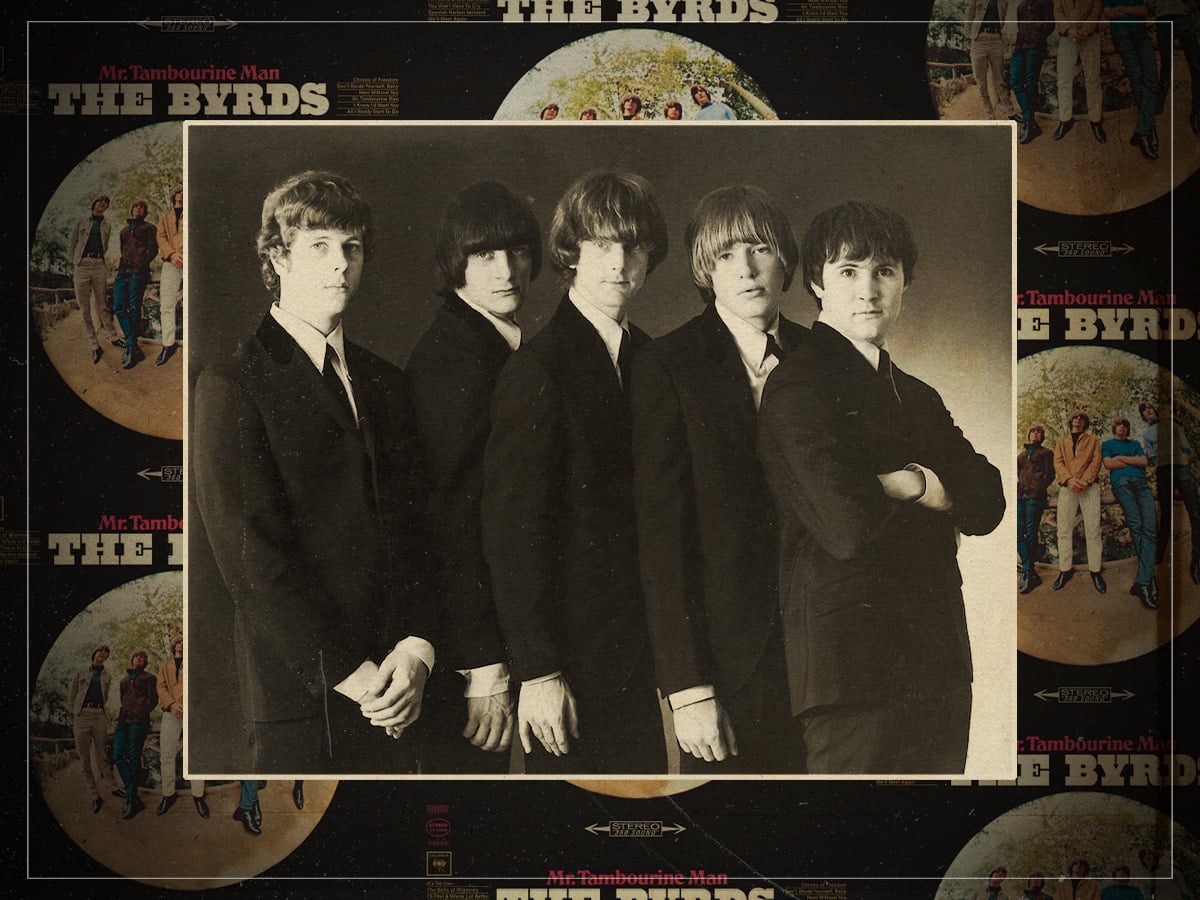
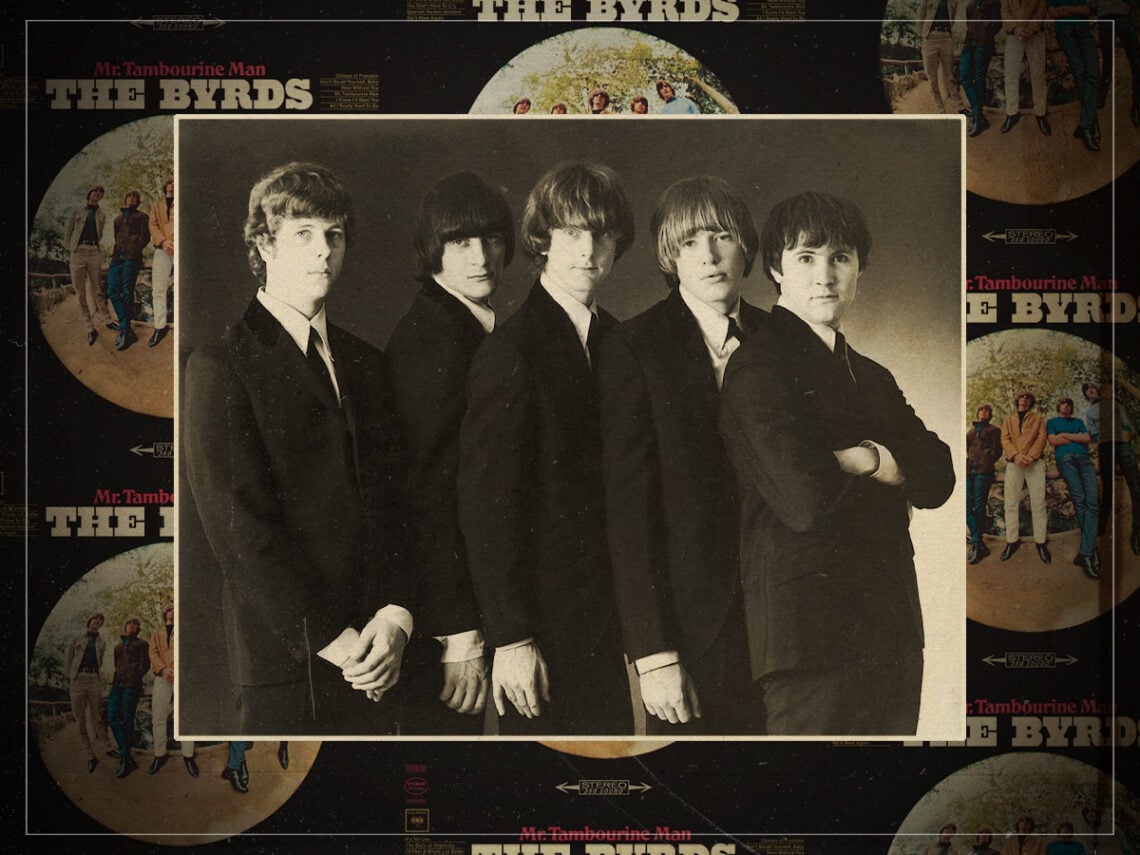
(Credits: Album Cover / KRLA Beat / Beat Publications, Inc.)
Fri 9 January 2026 20:21, UK
In February 1964, Bob Dylan attended Mardi Gras in New Orleans, Louisiana, while on a cross-country road trip with friends, where he was inspired to begin writing and composing his single ‘Mr Tambourine Man’.
Upon returning home to New York in mid-March of that year, Dylan would complete ‘Mr Tambourine Man’ by late April. According to July Collins, Dylan finished writing the song at her home, and debuted it live in London, at the Royal Festival Hall on May 17th. The song would eventually find its first home on the acoustic side of his fifth album, 1965’s Bringing It All Back Home, but for nearly a year, it went through phases, re-recorded multiple times in a search for perfection (or, the closest thing to it) in balancing Dylan’s signature acoustic guitar with an electric lead, and these attempts would be the first of many iterations.
Just five days after Dylan recorded his final version, a burgeoning country rock band, The Byrds, released their interpretation of ‘Mr Tambourine Man’ as their debut single, on April 12th, 1965, and in early 1964, The Byrds were formed from three musicians who’d sprung from the coffeehouse circuit in the folk music scene: Roger McGuinn, Gene Clark and David Crosby, with McGuinn, in particular, fascinated with The Beatles, often reinterpreting their songs in an acoustic style as a solo artist. Clark, equally fanatical, joined him in performing Beatles covers and Beatlesque versions of traditional folk tunes.
This would form the basis of what eventually grew into The Byrds’ sound: an honouring of the folk tradition with an electrified, British invasion-inspired sensibility. Calling themselves the Jet Set, the trio, soon joined by drummer Michael Clarke, would hone their sound at World Pacific Studios, where Crosby had grown familiar recording his own material, and began working with Crosby’s associate, producer Jim Dickson. In August 1964, Dickson came into possession of a recording of the then-unreleased ‘Mr Tambourine Man’ from Dylan’s publisher, performed by Dylan with Ramblin’ Jack Elliott, believing it to be a suitable cover for the band. Though the musicians were unimpressed, they saw potential for experimentation.
Changing the song’s time signature, The Byrds (then, still known as the Jet Set) approached their rendition with a rock band arrangement, resulting in a more upbeat, melodic sound than Dylan’s slower, more traditional technique. The Byrds also performed an abridged version of ‘Mr Tambourine Man’, only using Dylan’s second verse, out of four, for their recording. Dickson invited the songwriter to World Pacific to hear the band perform, to which he was astonished. “Wow, man!”, he remarked, as quoted in Johnny Rogan’s 1998 book The Byrds: Timeless Flight Revisited, “You can really dance to that!”
Dylan’s approval soothed any reservations the band held about recording the song, and soon, reborn as The Byrds (inspired by the notion of flight and The Beatles’ intentional misspelling), the band would record their final version of ‘Mr Tambourine Man’ for Columbia Records in Hollywood.
Ironically, McGuinn was the only official Byrd to play on the recording; their producer, Terry Melcher, believed that The Byrds had yet to master their performance as a unit and, in their place, hired proficient session musicians. Performed with a full, electric band, ‘Mr Tambourine Man’ was given a new life, taking Dylan’s story of “a trip upon a magic swirlin’ ship” and amplifying its spiritual tone.
“I was singing to God, and I was saying that God was the Tambourine Man,” McGuinn told Rogan in 1997, “and I was saying to him, ‘Hey, God, take me for a trip, and I’ll follow you.’ It was a prayer of submission.”
Upon its release, The Byrds’ single reached number one on the Billboard Hot 100 and the UK Singles Chart and became the first Dylan cover to reach the top of a pop music chart. In turn, The Byrds sparked the folk rock boom of the late 1960s, beginning a new tradition of poetic, political lyricism with rock music stylings.
Considered the “first folk rock smash hit,” ‘Mr Tambourine Man’ gave way for the term “folk rock” to proliferate the music press.
Related Topics
The Far Out Bob Dylan Newsletter
All the latest stories about Bob Dylan from the independent voice of culture.
Straight to your inbox.