
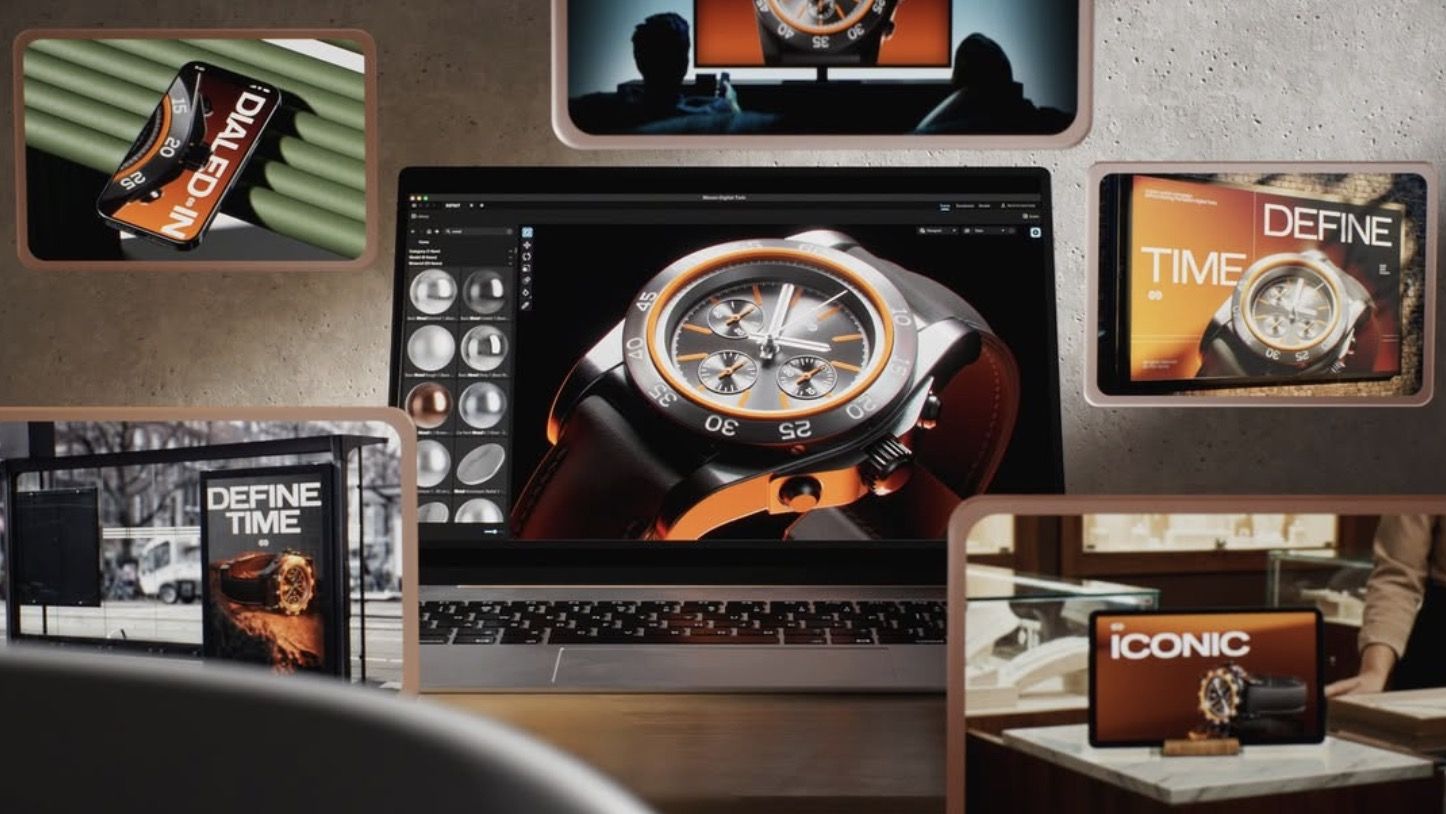
10 January 2025: Maxon has clarified that Maxon Digital Twin will be standalone application and not part of ZBrush or any other existing product. The company says the product is not an AI agent and does not train on user content. The AI-enabled tools are optional integrations that can be used at the user’s discretion. The company sees the main audience as marketing communicators in consumer packaged goods who seek to maintain brand and product integrity across different promotional formats and ad platforms.
Almost all of the major creative software developers are betting big on AI. Adobe is the most notable example, developing its own Firefly generative AI models and packing AI tools into legacy apps like Photoshop and Illustrator.
Maxon, which owns the 3D software ZBrush and Cinema 4D, is jumping on the AI train with the announcement of Maxon Digital Twin. Many 3D artists are not impressed.
You may like
Maxon Digital Twin was set to get a demo at CES 2026 in Las Vegas this week. So far, the company has provided little information about the tool online, and it’s not even clear whether it will be part of an existing app or a new one.
The tool is intended to eliminate the need for studio shoots by turning a 3D product model into a “marketing-ready asset with AI-generated backgrounds” while keeping the product “100% accurate by auto-matching lighting/reflections/perspective,” the company says.
Maxon published the same post on several of its social accounts, but it was on the ZBrush account on X that the news made the biggest splash – probably not the way the company was hoping.
Every response is negative. Many artists are expressing surprise at Maxon’s inability to “read the room” and its prioritisation of new AI tools over the improvements that users have been asking for.
“Is all this genAI bullshit the only way there’s budget to keep developing ZBrush?” one artist wonders. “There’s plenty of quality of life features your users have been asking for and this ain’t it.“
“Do any of these art software companies even look or read what their users or artists say, like, even a little bit?” someone else asked.
“I like how I can’t undo from merging my subtools together, or deleting them, it’s very modern feeling! Anyway lets add AI slop,” another person wrote.
Users also have questions about what AI model is being used and what data was used to train it. Some say the news justifies their decision to stay on a perpetual licence rather than a Maxon subscription, and some even suggest that they’ll move to Blender.
It’s not clear whether the tool will become part of ZBrush, which Maxon obtained with its acquisition of Pixologic in 2021. Posting on the ZBrush account might not have been the way to reach Maxon Digital Twin’s intended audience.
As a sculpting app, ZBrush’s focus has been on 3D artistry. AI can be employed to speed up artists’ workflows, but this tool seems more like it’s intended to bypass them. That said, Adobe has adopted the strategy of focusing on a broader audience of marketers rather than artists and designers. Perhaps Maxon is following suit.
The release date for Maxon Digital Twin has yet to be announced.