

The government is hoping a new map showing how well local authorities are maintaining their roads and fixing potholes will hold poorly performing councils to account and drive improvement across England.
British Cycling has welcomed the move and warned that, for cyclists, potholes “are far more than annoyance” and pose a real danger of serious injury or death.
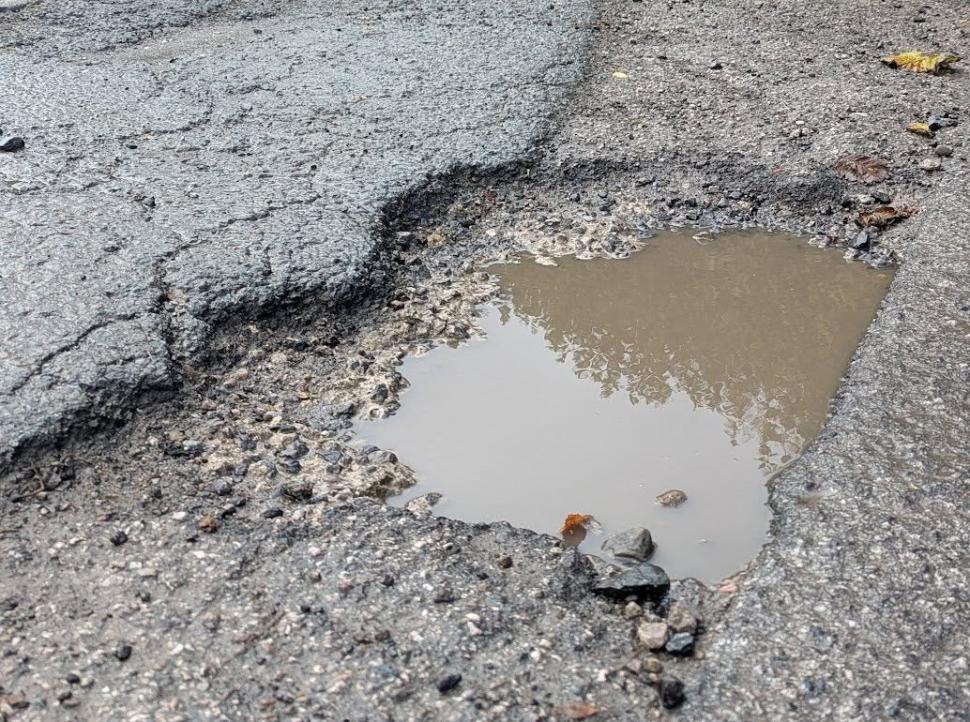 Pendle pothole (credit: Cllr David Whipp/Facebook)
The government announced £7.3 billion of funding for road maintenance at the Autumn Budget, a figure the Department for Transport says is a record, a new traffic light ratings system for England today launched to “let [the] public see which local highway authorities are fixing potholes effectively” and which are falling behind.
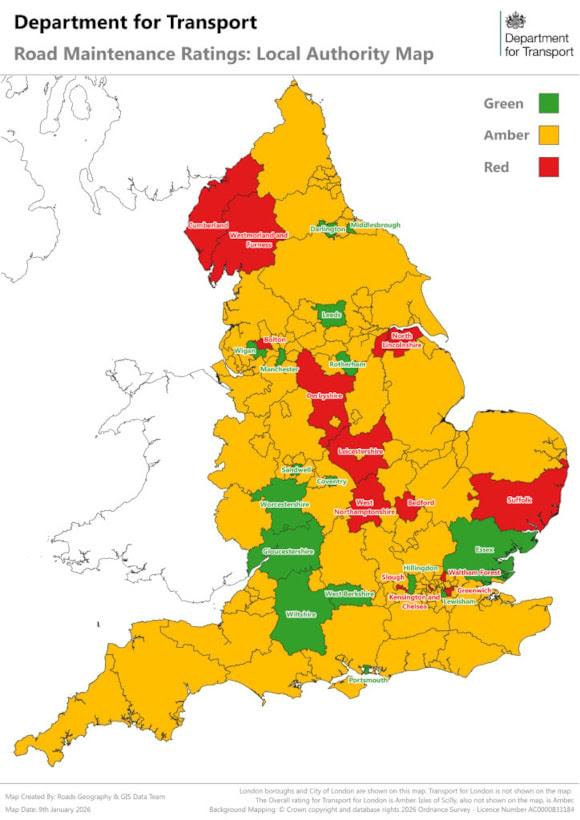 Department for Transport traffic light ratings for potholes (credit: Department for Transport)
Areas such as Leeds, Manchester, Gloucestershire, Wiltshire, Essex and Worcestershire have, the Department for Transport says, demonstrated “they are following best practice such as investing in more long-term preventative measures rather than just patching up potholes, while also maintaining good road conditions and investing significantly into improving local roads”.
Most councils fall into the amber rating, which suggests Local Highways Authorities in those areas “showed some of these qualities with room for improvement in individual areas”.
The worst performing areas, coloured in red such as Suffolk, Leicestershire and large parts of the north west of England are “not yet meeting the expected standards in one or several areas measured by the ratings”. This could include the current state of the roads, their plans for preventing potholes or investment into maintaining their local roads more widely.
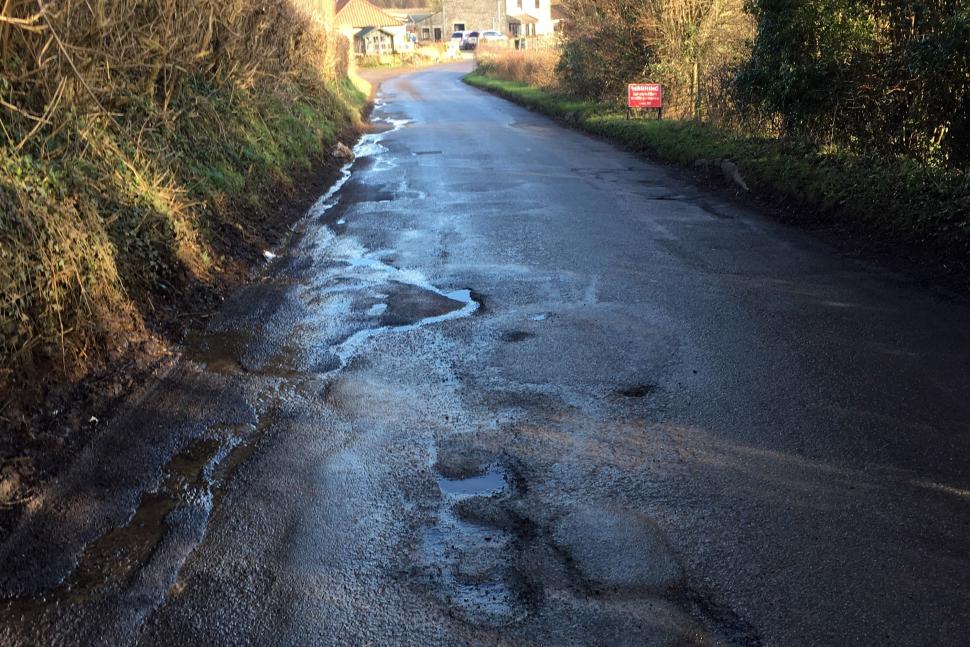 Ford Road Potholes in Hinton by Tass Whitby (credit: road.cc)
The DfT said any area rated red will receive “dedicated support to bring them in line with best practices, backed by £300,000 worth of expert planning and capability assistance”. The government department also suggested that access to full future funding allocations “will be linked to performance, ensuring councils are encouraged to get on with the job and use taxpayer money efficiently”.
As mentioned earlier, British Cycling has welcomed the news and was involved in the announcement of the new ratings, alongside the AA, RAC and Local Council Roads Innovation Group.
Caroline Julian, the brand and engagement director at British Cycling, said: “For cyclists, potholes are far more than an annoyance. One unexpected impact can cause a serious crash, life changing injury or, in the worst cases, a fatality. Safe riding depends on safe roads, and a smooth, well-maintained surface isn’t a luxury for cyclists, it’s essential for their safety.
“This new mapping tool is a step forward. It gives riders clear insight into how well their council is maintaining the routes they rely on every day, whilst holding decision makers to account.”
 Pothole (credit: Malachy Quinn/Twitter)
AA president Edmund King suggested research had shown fixing potholes was the top transport demand for 96 per cent of its members.
Simon Williams, the head of policy at the RAC, said while “there are examples of good road maintenance practice taking place, this isn’t consistent across the country”.
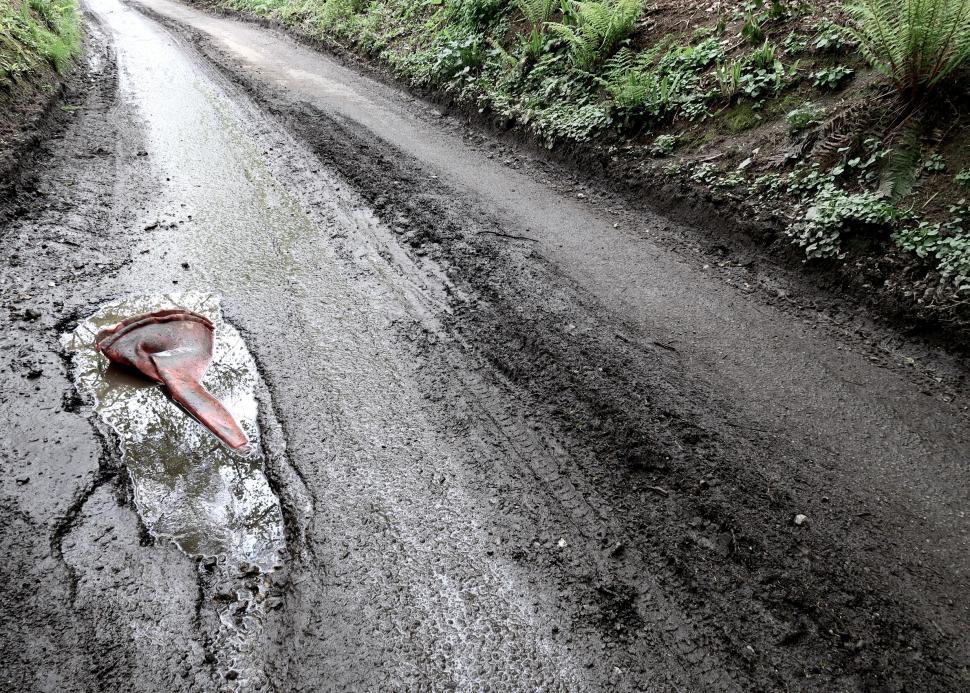 pothole 1 – VecchioJo (credit: road.cc)
“We hope this initiative, plus the promise of longer-term funding for councils to allow them to plan and carry out much-needed preventative maintenance, means we’re finally on the way to having smoother, better roads.”
The announcement comes in the same week the government unveiled the first Road Safety Strategy in over a decade, with the stated aim of saving thousands of lives on the nation’s roads by tackling drink driving, improving training for young drivers, and introducing mandatory eye tests for older motorists.
The content of the announcement included commitments to consult on reducing the drink-drive limit, as well as introducing a three or six-month minimum learning period, to “give learner drivers more time to develop their skills in varied conditions such as night driving, adverse weather, and heavy traffic”.
The DfT also announced a consultation on mandatory eyesight testing for those over 70, as well as developing options for cognitive testing too. While the content of the strategy has been welcomed by many, some within the cycling-campaigning world have suggested it does not go far enough and more could be done to protect vulnerable road users.