
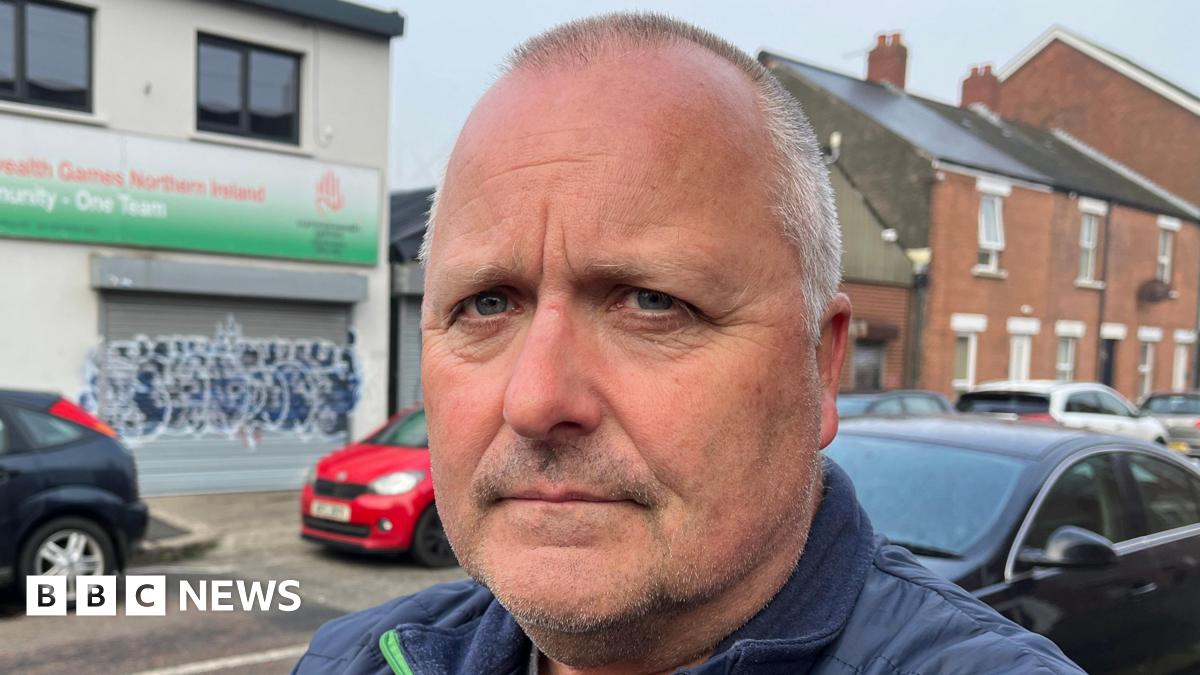
Speaking to BBC Radio Ulster’s Nolan Show, Heatley said the CGNI has written to the Executive Office “on a number of occasions”.
“We have met with civil servants and they operate within parameters set by politicians. They were very helpful conversations that we had but it didn’t progress anything,” Heatley said.
He added that the CGNI reached out to the five main political parties, but “quite sadly only two of them have met with us”.
Speaking to reporters at Stormont, the first minister said: “This is an issue for the organisation themselves, who have actually taken on board the feelings of their athletes – the people that actually compete for them.
“They didn’t feel themselves that what they had was reflective or inclusive so I commend the work they’re doing and whatever I can do to help them, I’m here to do so, but I do believe that the suggestion that’s been mooted – that they go with their own team logo – I think that’s a fine way forward.”
Democratic Unionist Party (DUP) leader Gavin Robinson told reporters on Monday that he is “not sure why there seems to be a quest to delve into a political row”.
“I see members of our community, be they unionist, nationalist, of Protestant faith or Roman Catholic faith, all proudly standing by the Northern Ireland flag when they participate in games,” Robinson said.
“So the injection of this unnecessary political request, I don’t think is helpful. I’m not sure what the outcome is going to be either, but from our perspective there’s no need for change.”
The Ulster Banner was the flag of the former Government of Northern Ireland from 1953 until it was was abolished in 1973.
While in the Olympics, athletes from Northern Ireland can choose to compete under the Union Flag (Team GB) or tricolour (Team Ireland), in the Commonwealth Games the Ulster Banner has been used as the flag of the Northern Ireland contingent.
Unlike the Olympics, the four contingent parts of the UK compete separately at the Commonwealth Games, meaning none is represented by the Union Flag.
The Union Flag has no official status in Northern Ireland nor any other part of the United Kingdom.