
(Credits: Far Out / YouTube Still)
Fri 9 January 2026 19:37, UK
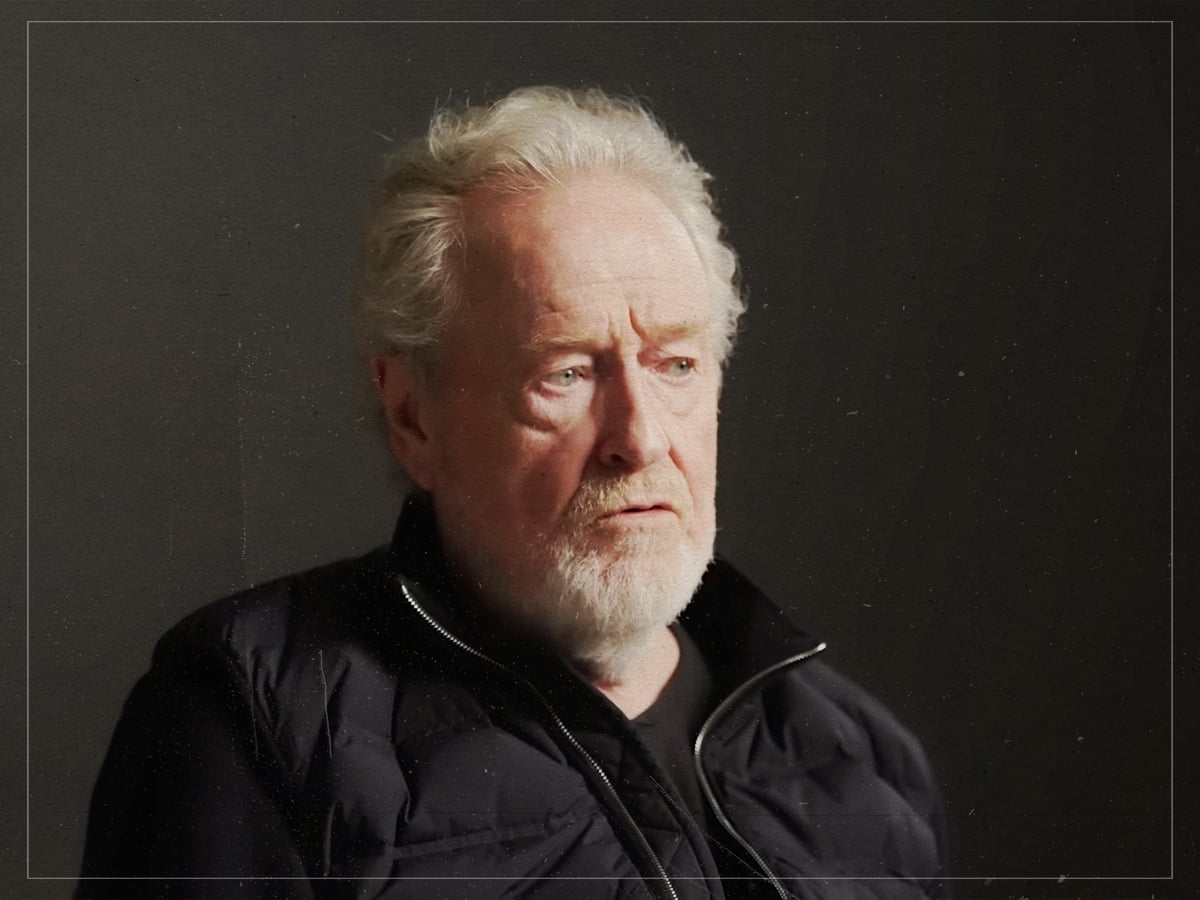
Although he’s never been a director pigeonholed by any one genre, an insight into his three favourite films does make a great deal of sense as it applies to Ridley Scott‘s career, with their influences being felt on his filmography in a number of ways.
Science fiction doesn’t feature, not that it prevented Scott from helming two of the greatest ever made through Alien and Blade Runner, each of which has cast a shadow over the genre so large, looming, and all-encompassing that he’s been left with no other choice but to acknowledge how many modern-day greats are indebted in one way or another to the work he put it.
He’s only tackled fantasy once, too, but even then, it saw him partner up with a fresh-faced Tom Cruise before extensive dental work rejigged the future A-list megastar’s teeth into that megawatt grin that’s been plastered on posters ever since. Legend was ambitious, but it wasn’t particularly good, and as a result, neither the director nor the star have ever dabbled in the fantastical again.
Since the turn of the millennium – when Gladiator single-handedly resuscitated a largely obsolete genre and won five Academy Awards including ‘Best Picture’ – Scott has been returning to the well of the historical epic more often than not, but even at that, he was plenty familiar with sweeping tales set in the ancient past.
Not that anyone really remembers 1992’s entirely unremarkable 1492: Conquest of Paradise, though, which marked the first time the filmmaker corralled a stacked cast of recognisable names into the same ensemble and then took audiences on a journey into major events that unfolded in centuries past. In a post-Gladiator world, however, it’s a medium he can’t seem to keep himself away from.
 The acclaimed director, Ridley Scott. (Credits: Far Out / Alamy)
Kingdom of Heaven, Robin Hood, Exodus: Gods and Kings, The Last Duel, Napoleon, and his upcoming Gladiator sequel are all cut from the same cloth, even if the results have been inconsistent. Still, it makes a lot more sense that Scott would keep mounting expansive and expensive productions awash with varying degrees of authenticity and accuracy, considering he named David Lean’s Lawrence of Arabia as one of his all-time favourites in a conversation with the BBC.
It is without a doubt one of the most spectacular movies ever made, and has been routinely cited by countless filmmakers as a strong influence on everything they have ever done, including none other than Steven Spielberg. The Saving Private Ryan director claimed he watches the movie before embarking on any new project.
Even when he’s not anchored in history, Scott has become famed for his large-scale action sequences, meticulous shot composition, and impeccable staging, which can be traced right back to his lifelong love of Akira Kurosawa’s Seven Samurai, another seminal motion picture that left a noticeable imprint on his output. Combine the scope of Lean’s classic with the spectacle of Kurosawa’s, and in the broadest sense of the term, you get one of Scott’s historical epics. The great ones, at least.
“Much is often made of the fact that I use more than one camera to shoot a scene,“ Kurosawa wrote. “This began when I was making Seven Samurai, because it was impossible to predict exactly what would happen in the scene where the bandits attack the peasants’ village in a heavy rainstorm.
“If I had filmed it in the traditional shot-by-shot method, there was no guarantee that any action could be repeated in exactly the same way twice. So I used three cameras rolling simultaneously. The result was extremely effective, so I decided to exploit this technique fully in less action-filled drama as well, and I next used it for I Live In Fear (1955).”
Citizen Kane rounds out the trio, and while that’s acceptable and some would argue standard response from a cinephile and filmmaker born in 1937, there’s not a direct comparison that can be made between Orson Welles’ masterpiece and Scott’s back catalogue in terms of a conventional drama rooted in some semblance of reality that’s nonetheless the unfiltered result of its chief architect’s vivid imagination.
That might sound harsh to some degree, but on the other side of the coin, there isn’t really anyone who can be directly compared to Welles or Citizen Kane, which endures as one of the most striking and enduring debuts of any creative mind in Hollywood, with the writer, director, and producer unleashing his unforgettable assault on the cinematic senses on the world while he was still in his mid-20s.
Scott had done his fair share of drama over the decades, sure, but his best work always tends to come when there’s a heightened aspect to his productions, whether they be cosmic, historical, off-kilter, or slathered in cinematic style. As it applies to his all-time favourite films, the DNA of Lawrence and Arabia and Seven Samurai is there for all to see. Citizen Kane? Not so much, but then again, Welles’ film is one-of-a-kind for innumerable very good reasons.
Ridley Scott’s three favourite films:Seven Samurai – Akira Kurosawa Citizen Kane – Orson Welles Lawrence of Arabia – David Lean
Related Topics