
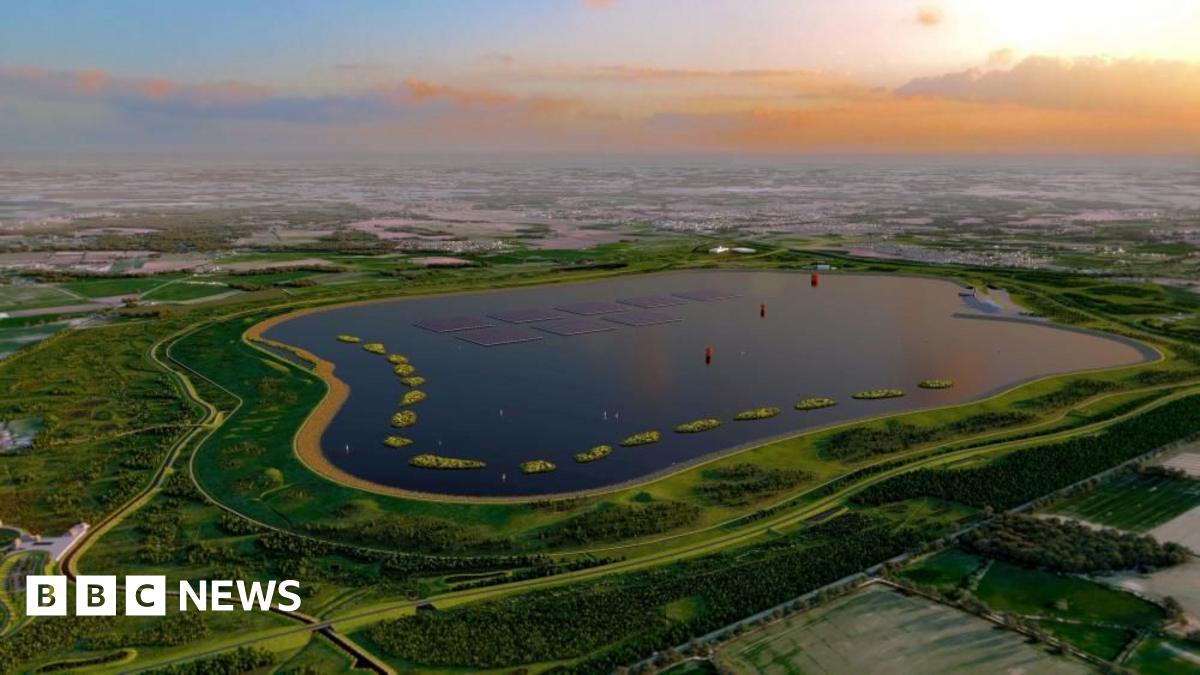
Among the businesses affected is V1 Flight, owned by Hal Colliver, whose airstrip is on land earmarked to be flooded for the reservoir.
He said he had not yet received any formal direct contact from Thames Water but described the site as “unique”.
“To lose, in my opinion, such a valuable piece of farmland for generations forever would be absolutely devastating and the prospect is is truly terrifying,” he said.
“There’s a wider concern about the environmental impact and the displacement of all the incredible wildlife that we’ve got here.”
He described the reservoir plans as a “red herring” and said fixing leaks would be more “cost effective” in securing water supplies.
Olly Glover, Liberal Democrat MP for Didcot and Wantage, said Thames Water was focused on “glossy public event consultations” rather than debating the proposals.
“Thames Water has got pretty wobbly finances and the cost liability for this reservoir already is increasing before even a spade has gone in the ground,” he said.
“That could land on the government’s desk and surely they don’t want that given that public finances are already very fragile.”
He said there were “lots of questions” about the traffic plans and the impact of lorries on the locality during construction.
Fellow Liberal Democrat MP for the neighbouring Oxford West and Abingdon, Layla Moran, last week questioned the ability of Thames Water to deliver the project.
She called the failure of the company “inevitable” during a Westminster Hall debate.
Among those in favour of the project, chairman of the Institute of Civil Engineers National Reservoir Infrastructure forum Terry Fuller said it would help meet an expected shortfall of nearly 5bn litres of water a day across England by 2050.
He said: “It really is quite an order of magnitude of additional water that we’re going to need.
“And of course the pressure for that is heightened by climate change, the need to build drought resilience and population growth.
“What we are in danger of doing at the moment is over-abstracting water from our rivers and watercourses.
“There’s no doubt about it when you build a reservoir, it’s a massive change to to that landscape.
“But there are ways of making it sit gently and well within that landscape and so that it isn’t an eyesore it actually becomes a resource which people will want to go and visit.”
Thames Water hopes to start building the facility in 2029, with the reservoir operational from 2040.