
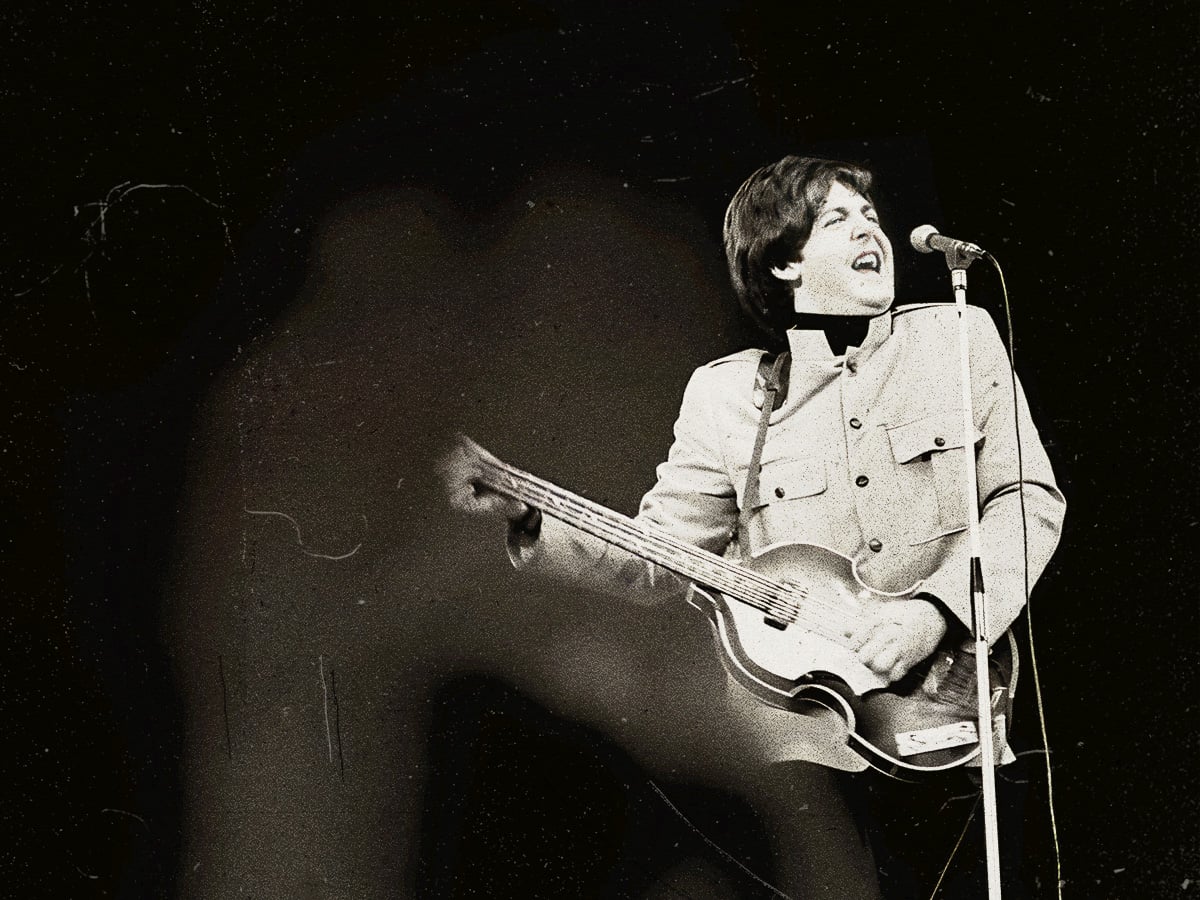
(Credits: Bent Rej)
Tue 13 January 2026 15:28, UK
At the back end of 1965, The Beatles released Rubber Soul, an LP that would change the course of rock history by challenging an entire generation of popular artists to up their album game. Not least The Beach Boys’ Brian Wilson, who began putting together Pet Sounds after listening to The Beatles’ latest output.
The whimsical pun of its title aside, Rubber Soul is a challenging record that sees the Fab Four dabble in a variety of genres. These genres extended to the austere German folk balladry of John Lennon’s composition ‘Girl’ and French chanson on Paul McCartney’s ‘Michelle’.
‘Michelle’ famously originated in a joke impression of French music that McCartney put on at parties during his teenage years. Nevertheless, it developed into a sophisticated minor-key lament for a girl who’s just out of reach, with some lines of real French supplied by the teacher wife of McCartney’s friend Ivan Vaughan. It went on to earn the Lennon-McCartney songwriting partnership, an Ivor Novello Award, and a Grammy.
How did McCartney happen upon the name Michelle? He just said he liked it. And teacher Jan Vaughan came up with a nice French rhyme for it, “ma belle”, so it stuck. But is there more to it than that?
Was ‘Michelle’ a real person? John Lennon in the heady days of Beatlemania. (Credits: Bent Rej)
As with all Beatles songs, there are all sorts of rumours about the truth behind ‘Michelle’. They range from Paul McCartney having a brief love affair with a French aristocrat to his admiration for the French actor and pin-up model Michèle Mercier.
The most persistent rumour is that of a French flight attendant who travelled with The Beatles on a flight from Paris to London. When the flight arrived at its destination, a crowd of ecstatic fans welcomed the band.
As they exited the aircraft via a gangway, the crowd rushed towards them. The French flight attendant was swept up in the ensuing maelstrom and crushed to death. Her name was Michelle. And Lennon and McCartney felt so upset by what had happened that they wrote a song dedicated to her memory.
None of The Beatles or their associates have ever given any credence to this emotive story, which tugs on the heartstrings enough to make many people wish it were true and repeat it blindly. Although there are many substantiated stories – and video images handed down to us – of hysterical youngster becoming ill and fainting at their concerts, no one is known to have died due to a crowd crush. If they had, it would surely have been all over the news at the time. Yet, there is no historical record of such an event.
More likely, the name Michelle popped into McCartney’s head subliminally when, during the recording sessions for Rubber Soul, Lennon asked him to recall the mock French ditty he used to sing at parties. Whose parties? The parties of Lennon’s teacher at the Liverpool College of Art, Austin Mitchell. Then again, “Mitchell, ma belle” doesn’t quite have the same ring to it.
Why didn’t Bob Dylan like the song?
The truth is, The Beatles would have been nowhere near the incredible band they were without the influence of Bob Dylan. The expert songwriter helped to craft ideas and shape songs in a way that completely inspired the Liverpudlians. His use of confessional songwriting would become a blueprint that the band, and especially John Lennon, would take on with both hands. And, likewise, Dylan was inspired by them, too.
Dylan would often lament how easily the band could write melodies that not only appealed to musicians but reached far and wide, infiltrating radio airwaves and making them into the behemoth group they were. But Dylan did not like ‘Michelle’, later calling the track a “cop out”.
“I’m just saying The Beatles have arrived, right?” explained Dylan during one interview. “In all music forms, whether Stravinsky or Leopold Jake the Second, who plays in the Five Spot, the Black Muslim Twins, or whatever.”
The singer-songwriter elaborated in a sneery fashion: “The Beatles are accepted, and you’ve got to accept them for what they do. They play songs like ‘Michelle’ and ‘Yesterday’, a lot of smoothness there.” But he switched up on the songs, quite quickly, “Yeah, it’s the thing to do, to tell all the teeny boppers ‘I dig The Beatles’, and you sing a song like ‘Yesterday’ or ‘Michelle’. Hey God knows, it’s such a cop-out, man, both of those songs.”