
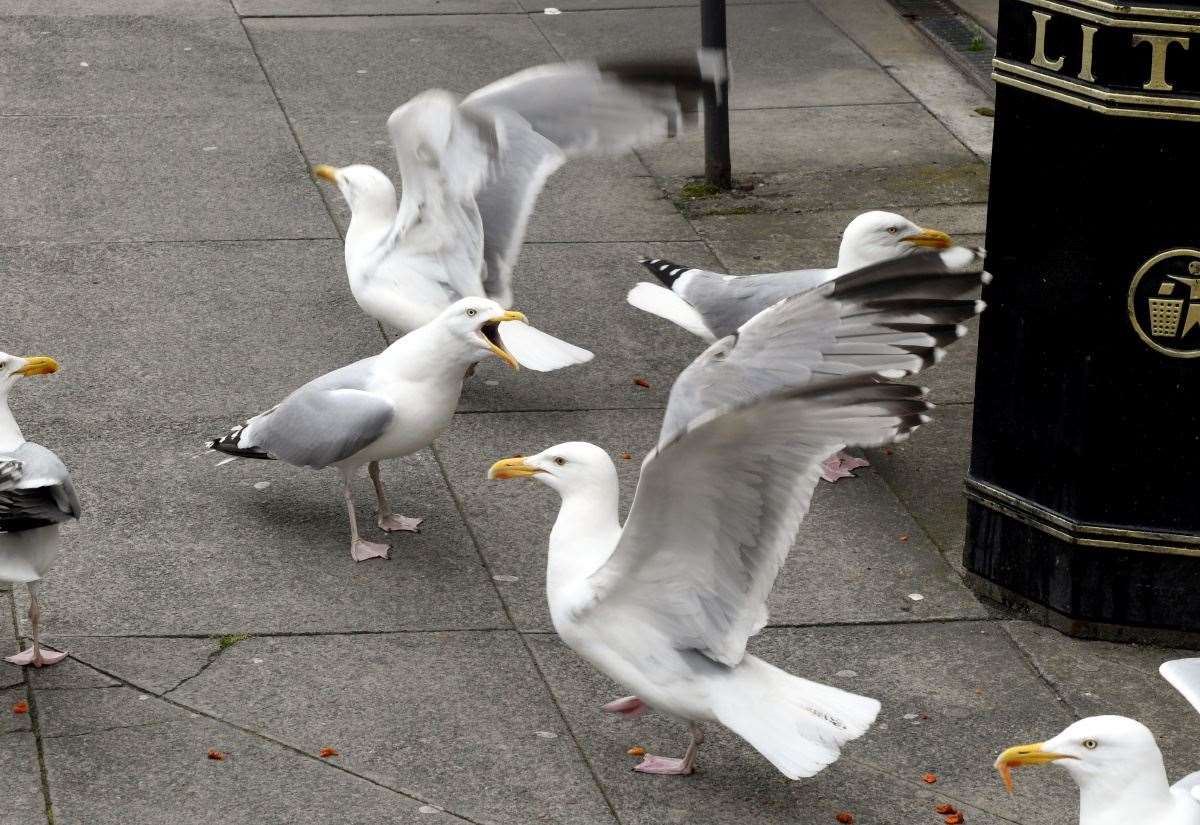
 Gulls in urban areas often attract criticism – but a charity worries about a decline in their numbers.
They are the dive-bombing scourge of many towns.
But the Royal Society for the Protection of Birds (RSPB) Scotland is promoting coexistence with urban gulls after saying that tens of thousands of nests and eggs have been destroyed legally, threatening the future of the species.
It says it is “deeply concerned” that NatureScot has demonstrated a “lack of caution regarding the cumulative impact of licensed control on gulls”.
The campaign aims to raise awareness that most gull species are in decline and are protected by law, encouraging people to adopt non-lethal solutions to reduce conflict.
Wick community councillors offer their view on scorrie nuisance
Contrary to popular perception as a nuisance, many gull species in Scotland, such as the Herring Gull, Common Gull, and Great Black-backed Gull, are on the red list of conservation concern, having experienced significant population declines.
Gulls have moved to urban areas due to pressures in their natural marine and coastal habitats, including dwindling fish stocks, climate change, and development. Cities offer safe nesting sites on roofs and abundant food sources from discarded litter.
A recent report published by NatureScot reveals licensed control could be contributing to declines in gull species which are already facing significant threats.
“Gulls can be polarising, but many people aren’t aware that in Scotland a number of our gull species are in serious trouble,” the charity said in its monthly news posting.
“Across their UK range they face threats from development, persecution, non-native predators and climate change.
“All of Scotland’s gull species are declining with Herring Gulls, Common Gulls and Great Black-backed Gulls currently Red-listed on the Birds of Conservation Concern.
“Gulls are facing many pressures across both marine and urban environments, but it is particularly concerning to see the devastating impact licensed control may be having on our threatened populations as shown in a recent report published by NatureScot.
“The report which focused on the five species of gull that most commonly breed in Scotland – Herring Gull, Lesser Black-backed Gull, Great Black-backed Gull, Black-headed Gull and Common Gull – revealed that the level of control permitted by NatureScot between 2020-2024 could be contributing to the declines in all five species.
“RSPB Scotland has had concerns regarding the scale of licensed control of gulls for some time but the findings of the report, compiled by the BTO (British Trust for Ornithology), reveals the sobering reality of the high level of licensed control permitted by NatureScot and the potential impact on these threatened seabirds.
“Despite being Red-listed, in 2020 for Herring Gull alone NatureScot issued licences to destroy 52,865 eggs and 19,334 nests. This increased to 82,374 eggs and 31,245 nests by 2021 and 103,020 nests by 2022.
“Through population modelling, the report shows that had the level of control permitted in this period continued, with all licences being used to their fullest extent, the Scottish Herring Gull population could have reduced by 50 per cent in less than 25 years.
“The impact on other gull species was even more severe, with Great Black-backed Gull, Black-headed Gull and Common Gull predicted to go extinct within 25 years if subjected to these levels of control. While NatureScot brought in stricter guidelines in 2024 which has reduced the total number of licences, the report shows species like Herring Gull and Great Black-backed Gull could still undergo population declines due to the level of licensed control.
“Gulls are remarkable birds and masters of adaptability. They are the soundtrack to our summers and play an important role in our ecosystems. As they face significant declines, we need to speak up for them.
“We are deeply concerned that NatureScot has demonstrated a lack of caution regarding the cumulative impact of licensed control on gulls when they are already struggling. Population modelling must be done before any species that is known to be in decline is subject to this scale of licensed control.
“It is well understood that seabirds are facing multiple pressures and licensed control cannot be considered in isolation. For example, HPAI (bird flu) has caused mass mortality in many seabirds in the UK since 2021 and early indications are pointing towards a risk of high disease outbreaks this winter also.
“We have met with NatureScot to discuss these concerns, and whilst their engagement with the issue and strengthening of licensing requirements in recent years is welcome, this report highlights that the number of licences issued in 2024 would still be sufficient to reduce the populations of two of our Red-listed gull species.
“External pressures on our seabird populations show little sign of reducing and with an increasing spotlight on the impacts of urban gulls it is crucial that licensing is done correctly. NatureScot has a duty to balance the needs of protected species and people, as well as a duty to prevent any detrimental impact on the population status of protected species. We will continue to carefully analyse the outputs of this report and its findings on the impact of licensed control.”
NatureScot has updated guidance for gull licensing in response to the significant and serious declines in all five species that breed in Scotland.
The move will reduce the number of licences that are issued to control gulls in towns and cities each breeding season, following new evidence on the extent to which populations are struggling.
NatureScot says its aim for dealing with urban gull problems is prevention.
It advises measures such as removing nesting material before the breeding season, and nets, spikes and wires to discourage birds from nesting on roofs.
Do you want to respond to this article? If so, click here to submit your thoughts and they may be published in print.